
Brussels, Belgium – February 28, 2026 — Brussels Morning Newspaper — In 2026, EU foreign policy tensions have intensified following sharp divisions among member states over the recent US and Israeli strikes on Iran. Emergency consultations in Brussels exposed contrasting national priorities, underscoring deeper structural differences within the European Union’s approach to security, diplomacy, and strategic autonomy.
European leaders convened at EU headquarters seeking a coordinated position. While public statements emphasized shared concern for regional stability, internal negotiations reflected varying interpretations of alliance loyalty, economic exposure, and geopolitical risk.
Emergency Summit Reveals Policy Gaps
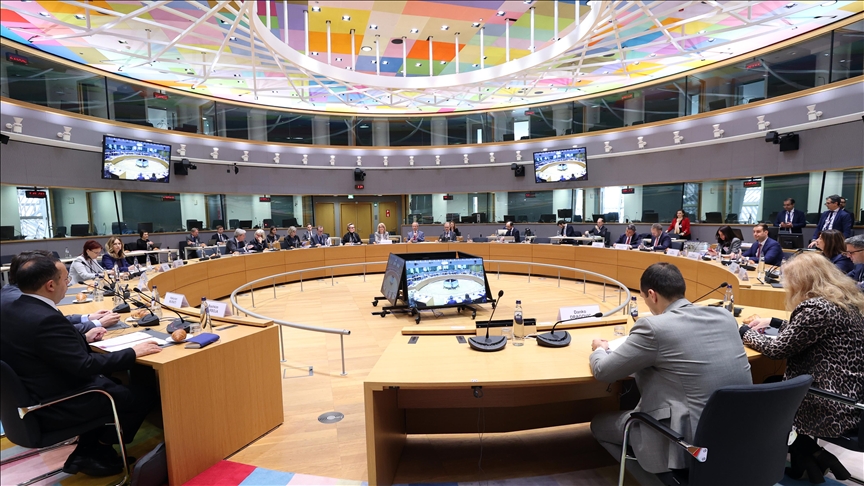
The emergency summit in Brussels brought together foreign ministers and heads of state from across the bloc. Discussions focused on whether the EU should explicitly support allied military actions or prioritize diplomatic de escalation.
Some Eastern European governments framed the strikes as necessary deterrence aligned with NATO commitments. Western European leaders, however, warned that escalation could destabilize energy markets and trigger broader regional consequences.
These differences highlight how EU foreign policy tensions emerge during moments requiring swift collective action.
Alliance Loyalty Versus Strategic Autonomy
A central debate revolves around Europe’s global identity. Should the EU act primarily in alignment with transatlantic allies, or assert a more independent geopolitical role?
Recent events have sharpened EU foreign policy tensions around this issue. Supporters of close alignment argue that unity with democratic partners strengthens deterrence. Advocates of autonomy contend that Europe’s influence grows when it positions itself as a mediator rather than a participant in confrontation.
A senior EU official noted,
“Europe must balance solidarity with strategic judgment to protect long term stability.”
Energy Security and Economic Exposure
The Middle East remains vital to global energy supply. Instability in the region directly affects European households and industries.
Oil prices experienced brief volatility following the strikes. Finance ministers expressed concern that sustained disruption could reignite inflationary pressure and undermine economic recovery.
These economic realities contribute to EU foreign policy tensions, as member states weigh fiscal stability against geopolitical commitments.
Domestic Political Pressures
Foreign policy decisions are influenced by internal political landscapes. Coalition governments in several countries face pressure from opposition parties demanding either stronger alliance solidarity or stronger peace advocacy.
Public opinion across Europe reflects similar divisions. Demonstrations in major cities revealed a spectrum of views, from calls for firm security alignment to demands for immediate diplomatic intervention.
Such domestic factors amplify EU foreign policy tensions at the European level.
Institutional Coordination Challenges
The European Union’s foreign policy framework depends heavily on consensus. The European External Action Service facilitates negotiation, yet unanimity remains essential in key decisions.
During the summit, diplomats refined common language carefully to bridge differences. Despite visible debate, institutional mechanisms continued functioning.
EU foreign policy tensions have tested coordination, but not halted decision making.
Transatlantic Relations in Focus
The United States remains Europe’s principal security partner. However, recent developments have prompted renewed discussion about burden sharing and Europe’s independent capabilities.
Some policymakers argue for deeper defense integration within Europe. Others emphasize that transatlantic cohesion remains indispensable.
EU foreign policy tensions in this context reflect recalibration rather than rupture.
Regional Security Implications
Europe’s geographic proximity to the Middle East heightens its stake in stability. Escalation could generate humanitarian pressures, migration flows, and economic consequences affecting European societies.
Security experts caution that external actors may interpret visible divisions strategically. Clear messaging is therefore critical.
European envoys are expected to maintain active diplomatic engagement in pursuit of de escalation.
Media Narratives and Perception
Media coverage has amplified perceptions of division, even as diplomatic coordination continues behind closed doors.
In the digital era, rapid information flow can intensify EU foreign policy tensions by magnifying rhetorical differences. Policymakers recognize that disciplined communication forms part of effective crisis management.
Historical Context of EU Foreign Policy Tensions
European foreign policy has experienced divergence before, including debates over interventions in the Balkans and the Middle East. These episodes revealed differences but ultimately strengthened institutional coordination mechanisms.
The present situation reflects continuity with this history rather than unprecedented fragmentation.
Economic Stability and Market Confidence
Financial markets respond quickly to geopolitical uncertainty. Currency fluctuations and bond yields reflect investor perceptions of policy coherence.
Following initial volatility, markets stabilized as European leaders reaffirmed commitment to dialogue and coordinated engagement.
Maintaining predictability will remain essential throughout 2026.
Strategic Autonomy Debate Reignited
The crisis has revitalized discussion about Europe’s capacity for independent strategic action. Advocates support streamlined decision making and enhanced defense integration.
Critics caution that excessive divergence from established alliances could weaken deterrence credibility.
Managing EU foreign policy tensions requires balancing autonomy with partnership.
A Defining Moment for European Unity
As negotiations continue, Europe faces a significant test of cohesion. The ability to reconcile national differences will influence the EU’s global standing.
EU foreign policy tensions represent both challenge and opportunity. Democratic debate, when guided constructively, can strengthen long term policy coherence.
Beyond Division Toward Strategic Cohesion
The events of March 2026 underscore the complexity of governing a diverse union in a volatile world. While differences remain visible, institutional structures continue functioning effectively.
Europe’s influence will depend on its ability to transform internal debate into coherent action.
In 2026, EU foreign policy tensions serve as a reminder that unity is not the absence of disagreement, but the capacity to manage it responsibly.