
Berlin, April 5, 2026 — Brussels Morning Newspaper — is witnessing widespread protests in Germany following a controversial law requiring men aged 17 to 45 to obtain military approval before any extended stay abroad, even in peacetime. The legislation, effective since January 1, mandates that 18-year-old men complete a questionnaire assessing suitability for voluntary military service while reviving a Cold War-era clause. Critics argue it infringes on personal freedoms and complicates travel, triggering protests in Germany and agitated media coverage. While the Ministry of Defence insists approvals will be routine and sanctions unlikely, the policy underscores Germany’s broader efforts to bolster its armed forces amid security concerns in Europe.
Germany faces protests over military approval law
Protests in Germany erupted this week after a little-known clause in the country’s military legislation came to light. The law requires men aged 17 to 45 to obtain approval from the Bundeswehr before traveling abroad for more than three months. The revelation has triggered widespread unrest in Berlin and other major cities, as citizens express concern about personal freedoms and government oversight.
The legislation, which went into effect on January 1, was intended to modernize Germany’s military framework without reintroducing compulsory service. However, the clause has sparked protests in Germany because it obliges men to seek prior authorization even during peacetime, affecting activities ranging from study abroad programs to work assignments. The controversy has highlighted tensions between national defense policies and individual liberties.
The law and its requirements
The legislation requires all 18-year-old men to complete a questionnaire assessing their suitability for military service. While it does not enforce mandatory conscription, officials emphasize that knowing potential conscripts’ locations is vital for rapid mobilization if required. Men aged 17 to 45 must now obtain authorization for stays abroad exceeding three months, a policy that has prompted protests in Germany.
The Ministry of Defence clarified that approvals would generally be granted, as military service under the current framework is voluntary. A spokesperson stated that the law revives an older Cold War-era provision but stressed that it is unlikely to create practical barriers. Nonetheless, the public perceives the measure as a symbolic encroachment on personal freedom, leading to heightened criticism and protests in Germany.
Public reaction and demonstrations
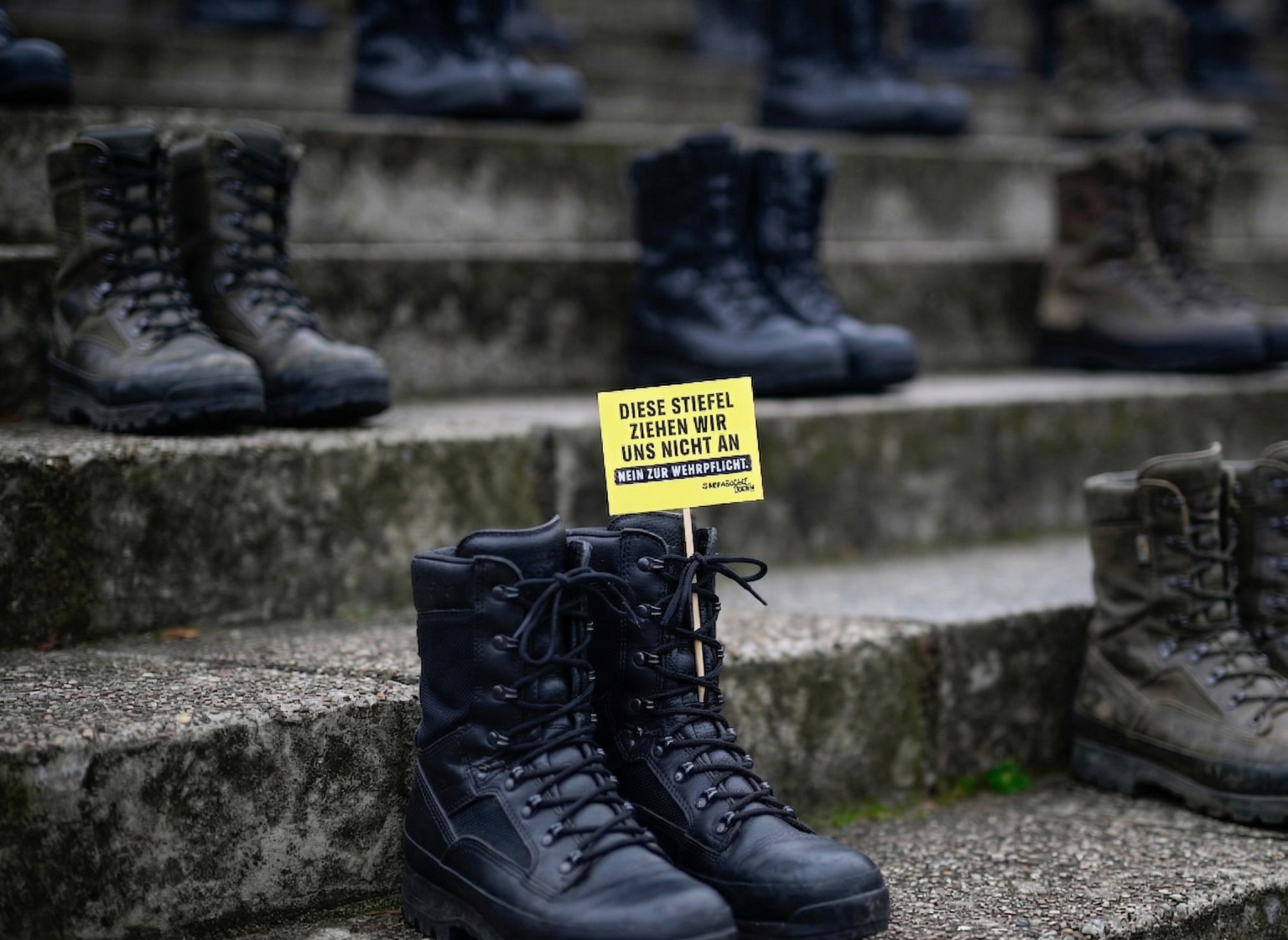
Across Berlin, approximately 150 symbolic boots were placed on the steps of the Reichstag to visually represent opposition to the law. Social media platforms have been filled with debates and criticism, amplifying the protests in Germany. Young men, students, and civil liberties groups have voiced concerns that the policy could restrict educational and professional opportunities abroad.
Protesters argue that while the law may serve a defense purpose, its application in peacetime is unnecessary. Activists have stated that the regulation amounts to excessive monitoring of citizens’ private lives. The growing scale of protests in Germany demonstrates that the measure has struck a nerve among the public, particularly those directly affected by travel restrictions.

Broader implications for Europe and transatlantic ties
The German law’s ripple effects extend well beyond national borders, signaling a shift in how European states might balance voluntary military service with strategic readiness. Analysts suggest that such measures could influence NATO’s planning, as allies track Germany’s troop readiness and mobilization potential amid tensions with Russia. For young Germans considering work or study abroad, the law adds an extra layer of uncertainty, potentially affecting international talent flows and cultural exchange. In the long term, if similar frameworks were adopted elsewhere, it could redefine citizen mobility in Europe and shape public perceptions of government oversight, with broader implications for transatlantic security cooperation and diplomatic relations.
Government explanation and context
The German government maintains that the military approval clause is intended as a precautionary measure. Defence Minister Boris Pistorius explained that the framework ensures authorities can locate potential conscripts in urgent situations. The law is designed to expand Germany’s military to 460,000 personnel by 2035, including 260,000 active soldiers and 200,000 reservists, a response to ongoing security concerns in Europe.
Officials have emphasized that voluntary service remains the cornerstone of the military system. Administrative guidance is being prepared to make the authorization process straightforward, minimizing disruptions. Despite these assurances, protests in Germany continue as citizens question whether symbolic regulations are justified in a modern democratic society.
Historical perspective
Military approval requirements for men traveling abroad are not new in Germany. During the Cold War, similar rules existed but had minimal impact on everyday life. The clause had largely faded from public attention until recent legislative changes revived it, sparking protests in Germany. Critics argue that reviving decades-old provisions undermines confidence in the government and raises questions about civil liberties.
Supporters of the law maintain that knowing the whereabouts of potential conscripts is critical for national defense. Germany’s leadership, under Chancellor Friedrich Merz, has sought to strengthen the conventional army amid concerns over regional stability and the perceived unpredictability of foreign security guarantees.
Potential consequences for citizens
The new law could affect millions of German men planning long-term stays abroad, whether for education, work, or sabbaticals. Citizens must navigate the bureaucratic requirement to obtain military approval, even though officials state that approvals will generally be routine. The controversy has intensified protests in Germany as many perceive the rule as an unnecessary intrusion.
While the Ministry of Defence assures the public that sanctions are unlikely, uncertainties remain about procedural timelines and administrative requirements. These ambiguities contribute to the perception that citizens’ rights are being encroached upon, fueling further protests in Germany.