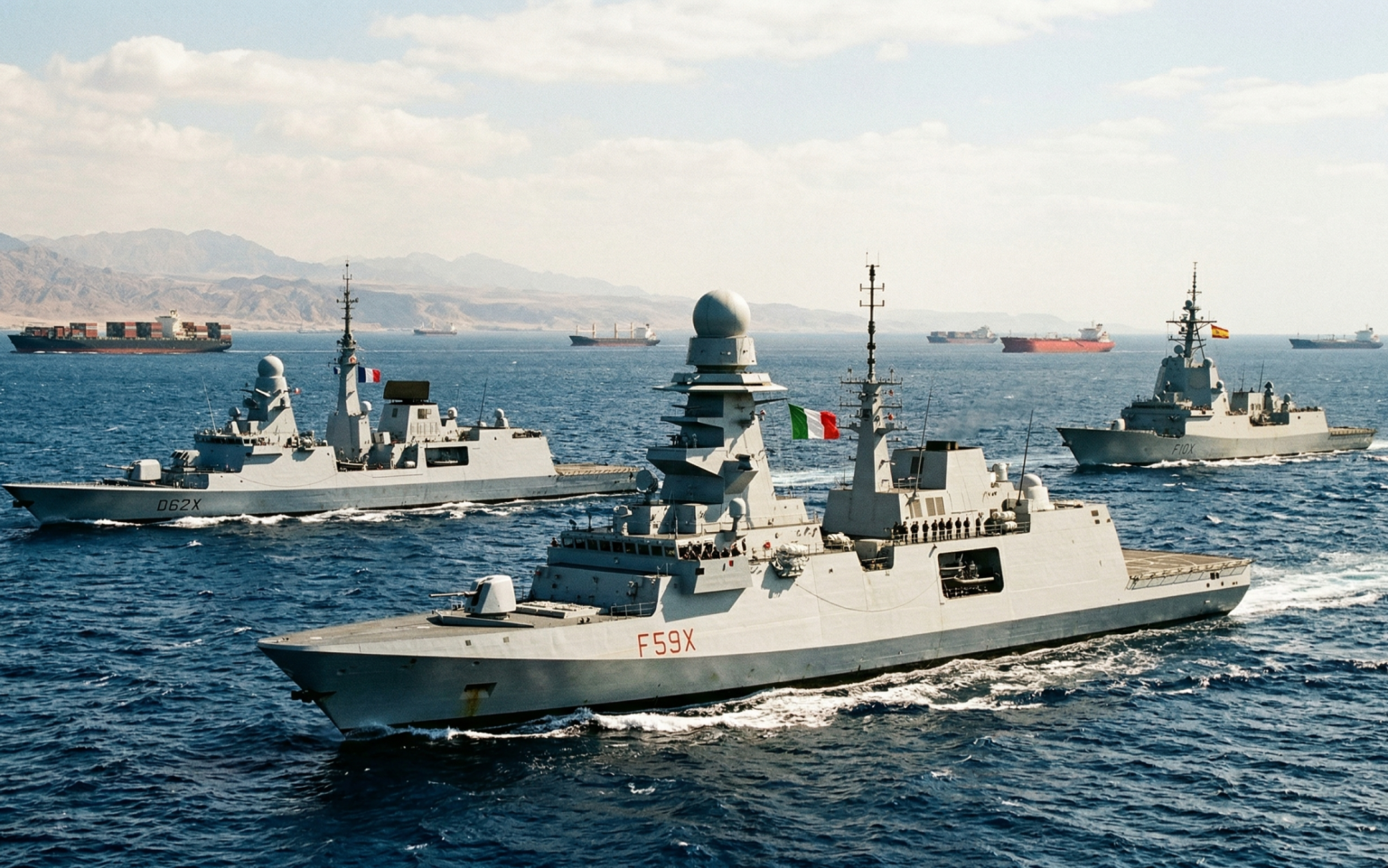
Expansion of EU Naval Missions
The updated EU mandate affects two major maritime missions: ASPIDES and ATALANTA. ASPIDES focuses on safeguarding commercial shipping from attacks, particularly from Yemen’s Iran-aligned Houthi militia. ATALANTA, which was established in 2008, combats piracy in the Red Sea and surrounding waters.
The EU explained that the expansion will enhance both missions’ capacity to monitor high-risk areas and respond to potential threats. Surveillance activities will now include intelligence-gathering, aerial reconnaissance, and vessel inspections to ensure that Red Sea security remains robust.
Protecting Commercial Shipping
Commercial shipping in the Red Sea is a critical component of global trade, with millions of barrels of oil and other goods passing through annually. The EU emphasized that Red Sea security is essential for maintaining the stability of international shipping lanes.
EU officials said that the expanded operations will focus on preventing attacks against commercial vessels, mitigating the risks of piracy, and ensuring safe navigation for international shipping companies. Enhanced maritime patrols and intelligence collection will allow the EU to identify potential threats before they escalate.
The member states said in a statement:
“Under an updated mandate, vessels and aircraft deployed in two of the bloc’s maritime missions will be authorized to collect information on suspicious activities linked to critical undersea infrastructure”
Training Regional Naval Forces
The EU expansion includes a strong focus on regional cooperation. Training initiatives for the naval forces of Djibouti and the Yemeni coast guard are designed to improve operational capabilities and strengthen local maritime enforcement.
By working closely with regional partners, the EU aims to enhance Red Sea security and build long-term capacity for rapid response to piracy, smuggling, and sabotage incidents. Officials stressed that training will cover intelligence sharing, operational planning, and coordination with EU naval assets.
EU Maritime Strategy Shapes Regional Security
The EU’s expanded presence in the Red Sea signals a shift toward a more proactive maritime strategy that could reshape regional power dynamics. Beyond immediate security concerns, this move positions Europe as a decisive actor in monitoring global energy flows and countering unconventional threats, such as covert operations by shadow fleets. For the United States, closer EU engagement may relieve some strategic pressure while strengthening transatlantic coordination. Looking ahead, sustained European naval activity could deter piracy and sabotage, influence shipping insurance costs, and prompt regional states to invest more heavily in their own maritime capabilities, potentially reshaping security and commerce across the Red Sea corridor.

Monitoring Shadow Fleets
A significant part of the expanded operations involves tracking Russia’s so-called shadow fleet, which has been used to bypass price caps on oil exports imposed by Western nations supporting Ukraine. EU naval vessels will actively monitor these ships to prevent sabotage of undersea pipelines and other maritime infrastructure.
Authorities suspect some shadow fleet vessels may be involved in covert operations targeting undersea assets. The EU’s enhanced presence in the region is intended to detect these activities early and ensure that Red Sea security remains uncompromised.
Cooperation with International Partners
The EU stressed that collaboration with international partners is central to maintaining Red Sea security. Coordination with Djibouti, Yemen, and other regional nations will allow for more effective responses to piracy, smuggling, and infrastructure threats.
EU officials noted that the new mandate promotes joint exercises, shared intelligence, and cooperative maritime enforcement. By integrating regional partners into the operations, the EU aims to ensure a comprehensive approach to Red Sea security that benefits all stakeholders.
Strategic Significance of the Red Sea
The Red Sea is one of the world’s most strategically important maritime corridors. Its security is vital for global trade and energy transportation. Analysts emphasize that enhanced EU operations will reduce vulnerabilities and safeguard critical international shipping routes.
EU officials said the expansion of naval operations demonstrates the bloc’s commitment to maritime security and stability. The initiative is part of a long-term plan to strengthen Red Sea security while supporting local naval forces and fostering regional cooperation.
Intelligence and Surveillance Upgrades
Enhanced intelligence and surveillance are central to the EU’s strategy. The updated mandate authorizes aerial reconnaissance, vessel tracking, and real-time data collection to identify threats to Red Sea security.
These measures will allow the EU to respond quickly to piracy attempts, sabotage, and other maritime risks. The intelligence capabilities will also support operational planning and coordination with regional partners.
Future of Security in Red Sea
The EU plans to maintain a robust presence in the Red Sea and western Indian Ocean, ensuring that commercial shipping and critical infrastructure are protected. Officials emphasized that the expansion is not a temporary measure but part of a sustained commitment to Red Sea security.
The combination of intelligence collection, regional training, and strategic cooperation is designed to mitigate risks and enhance stability in one of the world’s most critical maritime regions. With these measures, the EU aims to uphold safe navigation, protect undersea infrastructure, and deter piracy in the Red Sea and surrounding waters.
The expansion of EU naval operations marks a significant step toward reinforcing Red Sea security, protecting commercial shipping, and promoting regional cooperation. By integrating advanced surveillance, local partnerships, and proactive maritime patrols, the EU demonstrates its commitment to a safer, more secure maritime environment.