
More than 1,755 days have passed since the systematic deprivation of women and girls of their right to education, and nearly five years since they have been stripped of their most fundamental rights in Afghanistan. Human rights activists are once again calling for the recognition of “gender apartheid” and an end to the double standards of the international community. They emphasize that the continuation of this situation is not only an internal crisis, but also a serious threat to the future of the region and the credibility of global values.
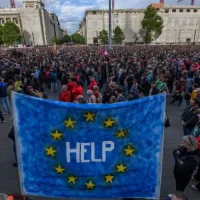
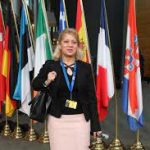
Baktash Siawash, a politician and former member of the Afghanistan parliament, has travelled from Germany to Brussels to support the people of his country especially women and girls. He held a five-day protest sit-in near the European Union institutions.
In an interview with Brussels Morning Magazine, he stated:
“The issue of gender discrimination in Afghanistan has become one of the most fundamental and decisive national and international issues. This is no longer merely a social or cultural matter; it has turned into a serious human rights crisis that requires an immediate and responsible response from the international community. The fundamental question is: why is recognizing ‘gender apartheid’ in Afghanistan so important?”
Siawash outlined three main demands to the European Union and the international community:
First, to recognize the Taliban as a terrorist group.
Second, to officially recognize gender apartheid in Afghanistan.
Third, to end diplomatic relations, halt cash remittances, and increase sanctions.
Siawash belongs to a new generation of politicians. He began his career in journalism and became one of the youngest members of parliament. Known for his outspoken voice and independent positions, he has consistently stood against corruption and injustice. His life has been marked by profound personal tragedies. His brother, Yama Siawash, a well-known journalist, was killed in a 2020 car bombing in Kabul, for which his family held the former government responsible. His father also died under mysterious circumstances in Germany.
Despite these losses, Siawash has not been silenced. Today, even in exile, he remains a voice of the Afghanistan people and a symbol of courage, resistance, and commitment to human rights.
One of the main reasons for resistance to recognizing this situation is the attempt by some actors to maintain political engagement with the Taliban. However, Siawash asks bluntly:
“A system that has deprived girls of education for more than 1,755 days, banned women from work and participation in society, and denied them even their most basic freedoms what more must it do for the world to accept that what is happening in Afghanistan is a clear example of systematic gender discrimination? Must an even greater tragedy occur for the global conscience to awaken? If values such as democracy and human rights are not merely slogans, why do we remain silent in the face of this oppression?”
Another critical issue is the recognition of the Taliban as a terrorist group. This matter appears to have been pushed to the margins. Some European countries argue that the Taliban is an existing authority in Afghanistan and has the potential to destabilize the region. However, Siawash challenges this reasoning:
“Why are strict measures taken in other cases, but not in the case of the Taliban? The European Union must end this double standard and demonstrate that human rights and the value of human life are equal everywhere.”
Ignoring the situation in Afghanistan especially the condition of women has serious and far-reaching consequences. When women are deprived of education, the next generation is also deprived of proper learning. This creates fertile ground for the spread of extremism and risks turning Afghanistan into a breeding ground for radical ideologies, a pattern already seen in other regions.
Regarding education, it must be emphasized that the issue is not simply reopening schools, but the nature and quality of the educational system. Will schools operate according to international standards, or under a restrictive ideological framework? Activists are not merely demanding that schools reopen they are calling for the recognition of gender apartheid and sustained pressure for fundamental change.
The situation of the media must also not be overlooked. Media outlets operating under Taliban control cannot function freely. In authoritarian systems, one of the most dangerous developments is the homogenization of media, education, and public thought eliminating diversity of opinion and critical discourse.
Siawash stresses that change must be structural and fundamental. Women and men must enjoy equal rights. However, within the Taliban’s ideological framework, women are not recognized as equal human beings and the Taliban themselves do not conceal this reality. Therefore, expecting meaningful reform from within the system is unrealistic; if the Taliban were to fundamentally change, they would no longer be the Taliban.
Approximately three months ago, the Taliban introduced a new penal code for the courts, consisting of three parts, ten chapters, and 113 articles. This law has intensified restrictions on women and, for the first time, has formally institutionalized many forms of repression from domestic violence to the elimination of individual freedoms. It divides citizens into categories and portrays women as subordinate beings.
According to human rights organizations, this law represents a clear example of the institutionalization of gender apartheid in Afghanistan. It demonstrates that repression particularly against women is not only practiced, but legalized and systematized.
Siawash emphasizes that the role of the people especially those living abroad is crucial. Citizens inside Afghanistan, under severe repression, are unable to protest freely. However, those living in Europe and other democratic societies have both the opportunity and the responsibility to raise their voices.
He believes that in societies where citizens’ voices matter, even a single action can make a difference. Silence, therefore, is not justifiable it is a moral failure. While scattered efforts may have limited impact, coordinated and collective action across countries can attract global attention and influence policy.
Another important point he highlights is the participation of men in this struggle. Defending women’s rights must not be seen as solely a women’s responsibility. The presence of men alongside women reflects a more accurate image of Afghanistan society and challenges the narrative that it is inherently anti-women.
In conclusion, Siawash emphasizes that Afghanistan’s crisis is not limited to education it is a system of widespread and systematic restrictions. Even if schools reopen, without structural political and social change, the problem will persist. When women are excluded from political life, reopening schools and universities alone cannot bring meaningful progress.
The Responsibility of the International Community
He calls for serious international pressure, alongside a fundamental reassessment of aid strategies. Humanitarian assistance must not strengthen the Taliban it must reach those in need directly.
Siawash criticizes the European Union and other international actors, arguing that transferring cash to the Taliban is not a solution, but part of the problem. Instead, aid should be delivered directly in the form of food, medicine, and essential services.
When financial resources are handed to the Taliban, there is a real risk they will be used to strengthen control, support extremist activities, or invest in structures that threaten both Afghanistan and the wider region.
He further argues that current justifications are neither convincing nor logical. If the goal is to support healthcare, why not procure and distribute medicine directly? Why allocate millions of dollars to a sanctioned group that lacks the capacity for transparent distribution?
There are established international mechanisms for delivering aid effectively, including organizations such as the World Food Programme, the World Health Organization, and Save the Children. These models are already implemented in other crisis regions, ensuring that aid reaches people not power structures.
The reality is that much of the aid sent in the name of the Afghan people risks falling into Taliban hands is a fact widely understood by international actors. Continuing this approach with weak justifications not only fails to resolve the crisis but also actively contributes to its continuation.
Siawash’s message to the European Union and the international community is clear:
- Recognize gender apartheid in Afghanistan
- Recognize the Taliban as a terrorist group
- End double standards
- End diplomatic relations with the taliban
- Act responsibly and sincerely
The new Taliban law is not merely a legal document it is a formal declaration of the institutionalization of repression and discrimination. It legitimizes violence against women, restricts their basic freedoms, and criminalizes disobedience.
When oppression becomes law, we are no longer dealing with isolated violations, but with an organized system of injustice.
Silence in the face of such a system is not neutrality it is acceptance.
Today, the international community faces a clear choice:
either stand for human values, or, through inaction, contribute to the legitimization of repression and discrimination.