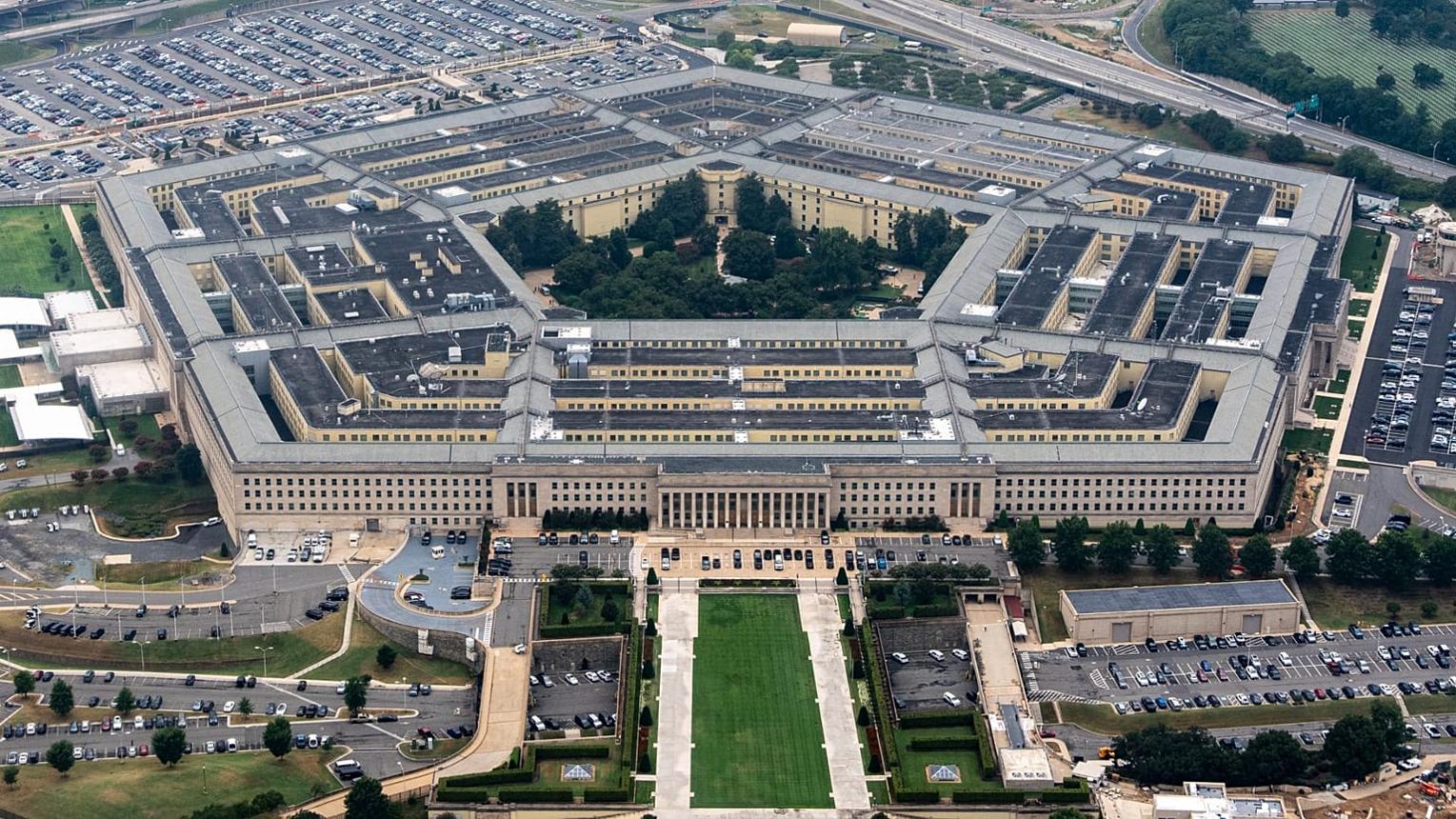
Washington, United States, 28 November – Brussels Morning Newspaper – The US Air Force Cloud One breach has raised serious concerns about the security of American military infrastructure after hackers reportedly infiltrated one of the Pentagon’s major cloud computing platforms. The intrusion, discovered during system upgrade work, has disrupted parts of the platform and prompted investigators to assess whether sensitive military, personnel and logistics information was exposed.
The incident was reported on 27 November by Reuters, citing three people familiar with the matter. The attackers’ identities, the full extent of their access and whether any information was stolen remain unknown.
The reported intrusion is particularly significant because Cloud One supports applications used across the US Air Force, including systems responsible for personnel administration, aircraft maintenance, military logistics and other operational functions.
The US military’s cyber authorities have reportedly been brought in to assess the incident, while restrictions introduced following its discovery have affected application updates and the migration of additional services.
Table of Contents
-
What happened in the Cloud One cyberattack?
-
Why the Air Force’s Cloud One platform matters
-
Cybersecurity disruption affects military operations
-
Pentagon responds to growing security concerns
-
European cybersecurity implications
-
What happens next?
What happened in the US Air Force Cloud One breach?
According to Reuters, the intrusion was identified within approximately the month preceding the 27 November report, while technical teams were working on an upgrade to the platform.
Three people familiar with the incident provided information to Reuters. The news agency was unable to establish who carried out the attack, how extensively the hackers accessed the system or whether information had been extracted.
One source told Reuters that the attackers exploited a software vulnerability to gain access to the platform’s control plane. This component provides administrative oversight and management capabilities across cloud infrastructure.
Such access can potentially create significant security risks because the control plane may provide visibility into multiple connected applications and services.
However, there is currently no confirmed evidence that the attackers accessed specific aircraft information, military deployment details or weapons inventories.
Reuters also reported that investigators had called in US Cyber Command to assess the damage. The command had not publicly commented on the investigation when the report was published.
Why the Air Force’s Cloud One platform matters
Launched in 2017, Cloud One was developed to consolidate and modernise the US Air Force’s computing infrastructure.
Rather than relying on separate systems for every department, the platform brings together cloud services from major technology companies, including Microsoft, Amazon, Oracle and Alphabet.
It supports a broad range of applications that handle military administration, personnel records, payroll, logistics and equipment maintenance.
Two particularly important systems operate through this infrastructure.
The first is Cloud-Based Command and Control, which brings together air defence radar information and other data feeds from across North America.
The second is the Theater Integrated Combat Munitions System, which helps track bombs and missiles across more than 200 US Air Force locations worldwide.
These applications demonstrate why the US Air Force Cloud One breach has attracted considerable attention from defence and cybersecurity specialists.
A successful intrusion into shared cloud infrastructure can potentially create risks extending beyond a single application. Nevertheless, the extent of any exposure in this incident remains unconfirmed.
The platform is also among the largest cloud computing environments used by the US military, according to people cited by Reuters.

Cybersecurity disruption affects military operations
The discovery of the intrusion has reportedly triggered several restrictions across Cloud One while security teams investigate and work to contain the problem.
According to Reuters, efforts to transfer additional back-office applications onto the platform have been suspended.
Updates to applications already operating through Cloud One were also blocked. This has created an additional challenge for personnel responsible for maintaining software and applying security fixes.
One source familiar with the situation said some users had their administrator privileges revoked.
These restrictions appear to be part of the response to the suspected intrusion, although the Air Force has not publicly detailed the full remediation process.
The reported disruption highlights a difficult challenge for military technology teams: securing compromised infrastructure while maintaining access to essential services.
Delaying software updates can also create operational difficulties, particularly when organisations need to address newly identified vulnerabilities.
The US Air Force Cloud One breach therefore raises questions about the resilience of interconnected military technology systems and the procedures used to protect them.
How could control-plane access create risks?
Cloud computing control planes allow administrators to manage resources, permissions, configurations and connected services.
If an unauthorised party gains access to these capabilities, the potential consequences can extend beyond the individual system initially targeted.
A source cited by Reuters compared the control plane to a universal remote, suggesting that access could theoretically provide information about aircraft operations or the movement of spare parts.
That possibility does not establish that the attackers obtained such information.
Investigators have yet to identify the precise software vulnerability involved or establish the extent of the intruders’ access.
Pentagon responds to growing security concerns
The US Air Force has declined to confirm or discuss the security status of individual networks and systems.
In a statement to Reuters, the service said it did not comment on the security posture, vulnerabilities or operational status of specific systems.
It added that it continuously takes measures to protect Department of the Air Force information, systems and mission capabilities.
The Pentagon also issued a broader response following questions about the reported incident.
According to an AFP report published on 28 November, a Defence Department official said:
“The Department of War’s systems are safe, secure, and managed 24-7 by the best experts and teams in the world.”
The official added that the department would continue maintaining mission-critical operations and applications.
However, the Pentagon did not specifically deny that Cloud One had been breached. Its statement should therefore be understood as a broader assurance about military cybersecurity rather than confirmation that the reported intrusion had been resolved.
A wider wave of US cyber incidents
The reported Cloud One incident comes amid growing concerns about cybersecurity across American government institutions.
Reuters has identified several other recently disclosed cyber incidents involving US government organisations, including the FBI, Department of Homeland Security, intelligence agencies and the Treasury Department.
These incidents have increased scrutiny of the security arrangements protecting sensitive government information.
However, there is currently no publicly established evidence connecting the Cloud One intrusion to the other reported incidents or identifying a common attacker.
The investigation into the US Air Force Cloud One breach will need to establish whether the incident involved an isolated vulnerability, compromised administrative credentials or a broader weakness in the platform’s security architecture.
European cybersecurity implications
Although the reported intrusion concerns American military infrastructure, the incident carries wider implications for European defence and cybersecurity policy.
European governments increasingly depend on interconnected digital systems to support military coordination, intelligence sharing, logistics and critical infrastructure. The security of cloud environments is therefore an important issue for NATO members and European Union institutions.
The incident also comes at a time when European institutions are facing their own cybersecurity challenges.
According to AFP, the European Commission disclosed that it had experienced an AI-assisted cyberattack in October 2026. The incident was reported alongside other cybersecurity disruptions affecting international organisations and media infrastructure.
There is no evidence linking that incident to the reported US military intrusion. However, both developments illustrate the growing importance of protecting digital infrastructure against increasingly sophisticated threats.
For European defence policymakers, the US Air Force Cloud One breach provides another reason to examine how military cloud services are secured, how access privileges are managed and how quickly vulnerabilities can be addressed.
NATO members also rely on secure information-sharing arrangements. Maintaining confidence in the systems supporting defence cooperation is essential, particularly as European countries strengthen their military capabilities and invest in digital modernisation.
The incident does not establish that European military networks have been affected. Its significance lies in the broader security questions surrounding cloud-based defence infrastructure.
Contractors and technology providers face scrutiny
Cloud One combines technology from several major providers, making its security a shared responsibility involving government authorities, contractors and technology companies.
Leidos became the platform’s prime contractor in 2026, taking over the role previously held by SAIC, according to Reuters.
The involvement of multiple providers highlights the complexity of securing large-scale cloud environments. Government customers must ensure that security controls, administrative permissions and incident-response procedures remain effective across different services.
Leidos referred questions about the reported intrusion to the Air Force, while SAIC did not respond to Reuters’ request for comment.
Neither company has publicly established responsibility for the incident.
The investigation will also be important for understanding whether existing security arrangements adequately protected the platform against vulnerabilities within its cloud-hosting environment.
What happens next?
The immediate priority for US authorities will be determining how the attackers entered Cloud One, what systems they could access and whether sensitive information was compromised.
Investigators will also need to establish whether the vulnerability has been fully addressed and whether additional security measures are required before suspended application migrations and software updates can resume.