United States, January 2026 — According to Brussels Morning Newspaper, that how the Trump Cuba policy has returned as a dominant force in United States foreign affairs, redefining Washington’s approach toward Havana through tightened economic pressure, restricted energy pathways, and conditional diplomacy. From the US capital, political signals indicate a renewed emphasis on leverage over engagement, reinforcing a strategic posture that places economic constraints at the center of regional influence. The direction adopted in Washington this year reflects broader global uncertainty, where energy security, trade alignment, and geopolitical positioning increasingly intersect.
The renewed strategy signals continuity rather than surprise. It reflects a belief within Washington that sustained pressure remains the most effective tool for shaping political outcomes in Cuba, while also sending a message to regional partners about the boundaries of US tolerance and engagement.
Origins and Evolution of US Cuba Relations
Relations between the United States and Cuba have been shaped by decades of political rivalry, economic isolation, and intermittent diplomatic openings. Since the early years following the Cuban revolution, Washington has relied on sanctions and trade restrictions as primary instruments of policy, framing them as responses to ideological divergence and governance concerns. Over time, these measures became embedded in law, shaping the rhythm of bilateral engagement.
The contemporary Trump Cuba policy draws heavily from this historical foundation while adapting to modern realities. Instead of broad symbolic actions, the focus now rests on precise economic pressure points, including energy imports, financial channels, and trade oversight. This evolution reflects a strategic calculation that targeted constraints produce more immediate and measurable effects.
Energy as the Core Strategic Lever
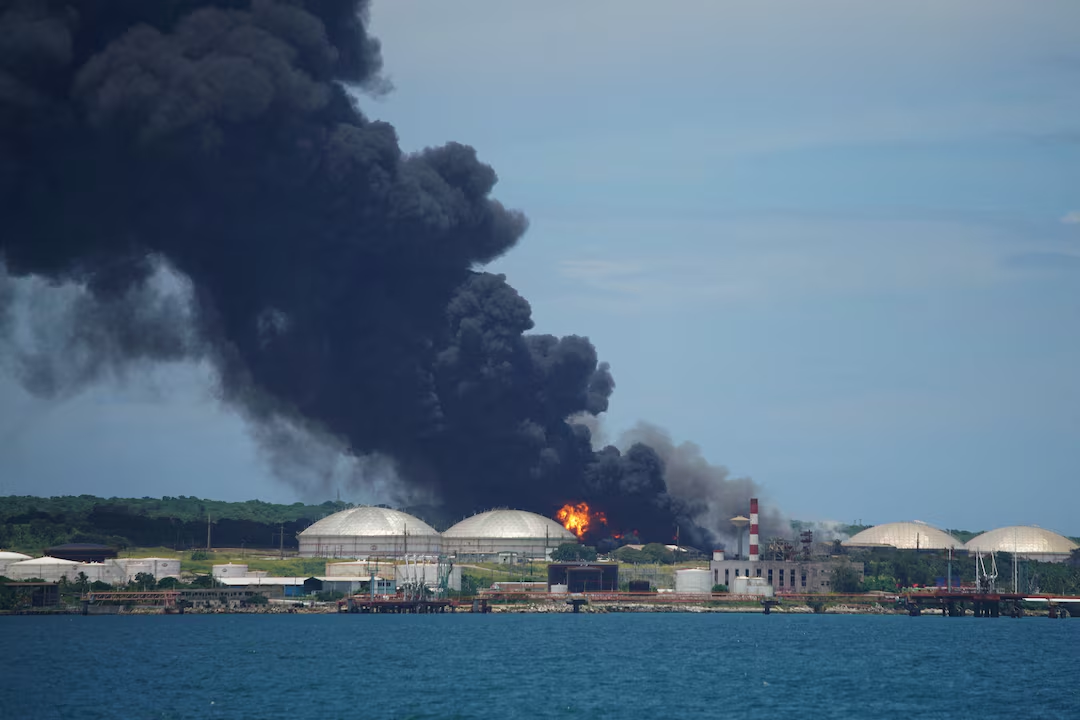
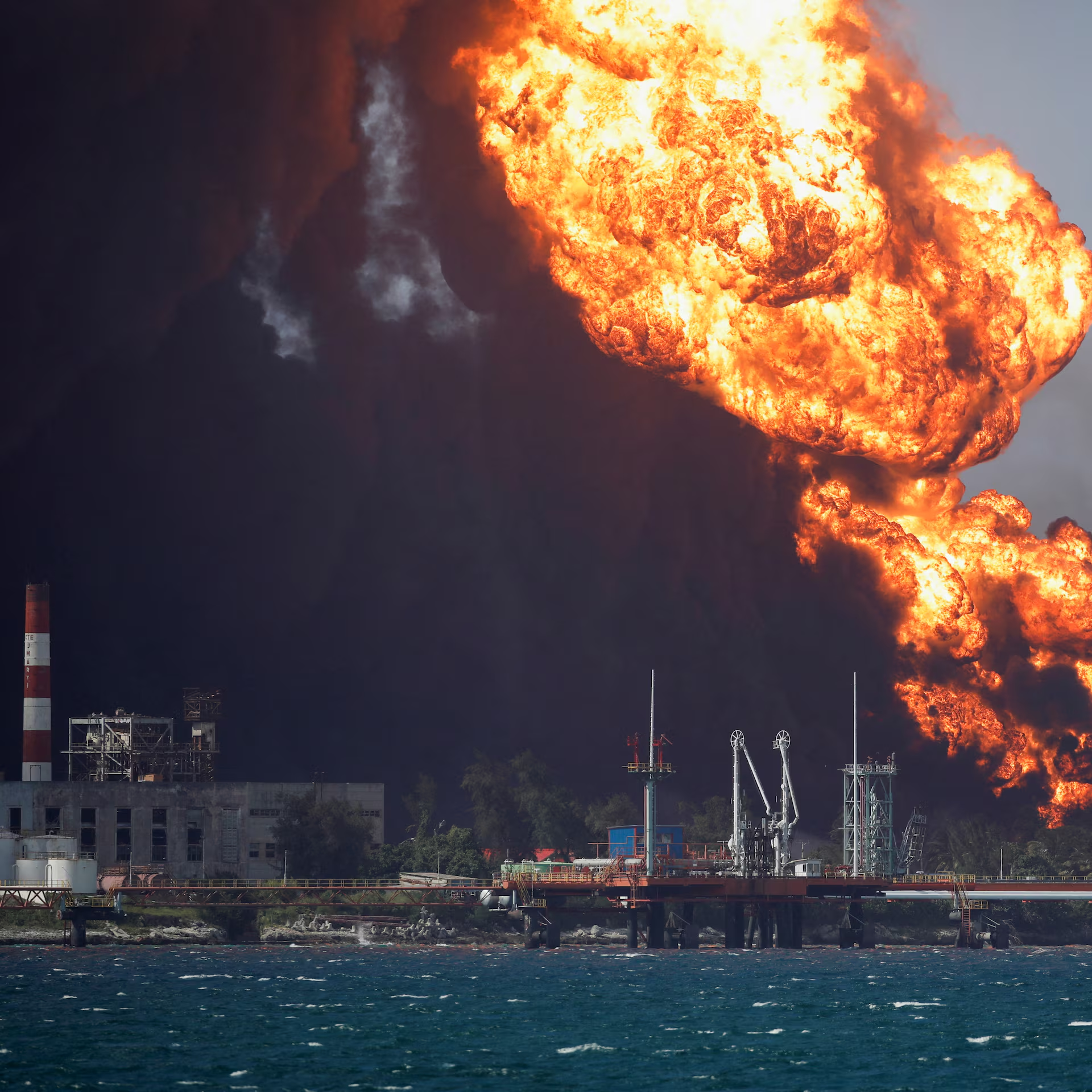
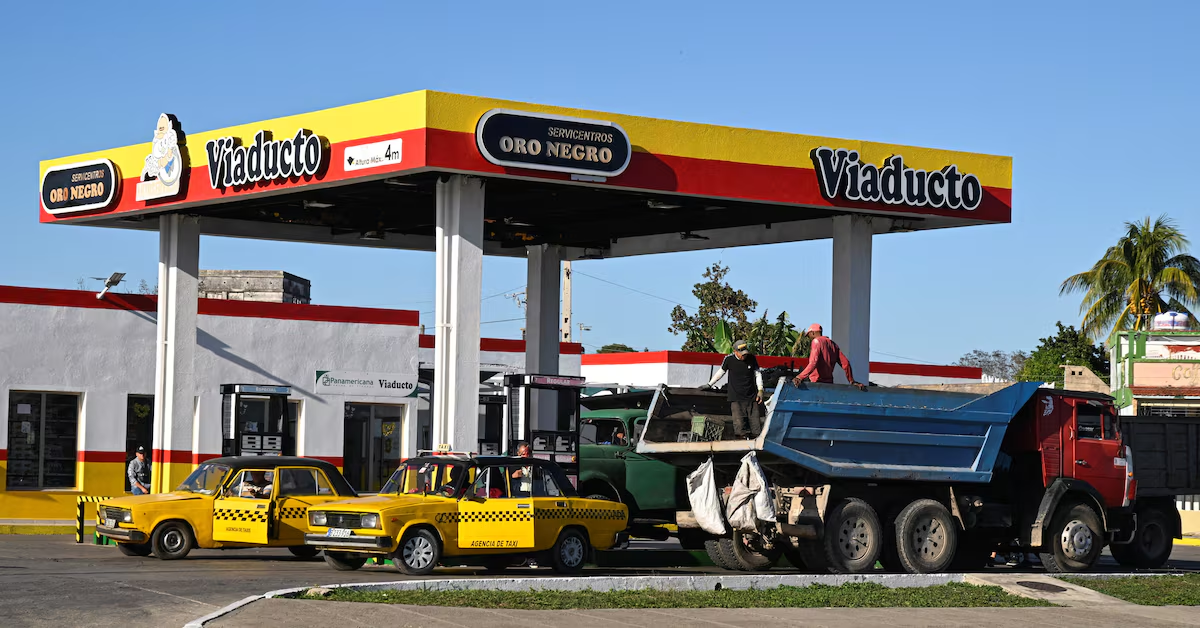
Energy lies at the heart of Cuba’s economic and social stability. Electricity generation, transportation systems, agriculture, and manufacturing all depend on consistent fuel supplies. When energy access tightens, the effects ripple across society, influencing productivity, public services, and household living conditions.
By placing energy at the center of the Trump Cuba policy, Washington targets a vulnerability that delivers rapid impact. Analysts note that energy shortages quickly translate into visible disruptions, making them a powerful instrument of pressure. This focus underscores how energy security has become inseparable from political strategy in modern diplomacy.
Trade Policy and Economic Messaging
Trade restrictions remain a central component of the current approach. Limits on exports, imports, and commercial engagement signal Washington’s unwillingness to normalize relations without substantive political and economic change. These measures also shape expectations among international partners, clarifying the risks associated with engagement.
Supporters argue that the Trump Cuba policy provides consistency and predictability by establishing firm boundaries. Critics counter that prolonged trade limits risk deepening economic stagnation and delaying modernization. The debate highlights how trade policy functions simultaneously as an economic tool and a diplomatic statement.
Financial Controls and Oversight
Financial channels represent another pillar of pressure. Enhanced oversight of transactions, banking relationships, and cross-border payments constrains the Cuban government’s access to liquidity. These measures are designed to limit maneuverability while reinforcing compliance with broader sanctions frameworks.
Within this structure, the Trump Cuba policy treats financial controls as complementary to energy and trade restrictions. While supporters view this coordination as necessary to prevent circumvention, humanitarian groups warn that restricted financial flows can indirectly affect access to essential goods and services.
Conditional Diplomacy and Negotiation Framework
Despite its firm posture, the strategy is framed as conditional rather than absolute. Washington officials emphasize that engagement remains possible if linked to concrete reforms related to governance, transparency, and regional behavior.
This philosophy defines the Trump Cuba policy, positioning pressure as a pathway toward negotiation rather than an end state. One senior policy figure summarized the approach by noting,
“Pressure is intended to create space for meaningful dialogue, not to exist in isolation.”
This perspective reflects a belief that leverage and diplomacy must operate together to achieve lasting outcomes.
Regional Responses in Latin America
Across Latin America and the Caribbean, reactions have been cautious and varied. Some governments interpret Washington’s stance as a sovereign decision rooted in domestic politics, while others express concern about broader regional consequences. Economic strain in Cuba has the potential to influence migration patterns, trade relationships, and political alignment across neighboring states.
For regional leaders, the Trump Cuba policy raises questions about balance and interconnectedness. The Caribbean’s economies are closely linked, and prolonged pressure on one state can generate ripple effects that extend well beyond national borders.
Economic Conditions Inside Cuba
Cuba’s domestic economy continues to face structural challenges, including inflation, aging infrastructure, and limited access to foreign capital. Energy shortages compound these issues by disrupting industrial output and public services. The combined effect places strain on households and state institutions alike.
Economists suggest that the Trump Cuba policy may accelerate internal adjustments, forcing prioritization of essential sectors and efficiency measures. However, limited access to technology and investment constrains the pace of adaptation, raising concerns about long-term sustainability under sustained pressure.
External Energy Partnerships and Regional Supply
Cuba’s energy system has historically relied on external partnerships, particularly subsidized oil arrangements within the region. Shifts affecting these relationships reshape the island’s energy landscape and influence broader Caribbean dynamics.
By indirectly constraining such arrangements, the Trump Cuba policy alters incentives for both Havana and its partners. The resulting adjustments affect shipping routes, refining operations, and diplomatic coordination across the Caribbean basin, reinforcing the interconnected nature of regional energy security.
Signals to Global Markets
Although Cuba represents a small share of global trade, policy signals emanating from Washington carry symbolic weight. Investors and governments interpret hardline stances as indicators of broader geopolitical trends, particularly regarding the intersection of politics and economic access.
In this context, the Trump Cuba policy communicates a broader message about conditional engagement in a fragmented global system. The emphasis on alignment and compliance resonates far beyond the Caribbean, shaping perceptions of risk and opportunity.
Domestic Political Dynamics in the United States
Cuba policy occupies a distinct place in US domestic politics, shaped by historical narratives and influential voter communities. Electoral considerations, ideological commitments, and legacy debates all contribute to the framing of policy decisions.
The renewed emphasis on the Trump Cuba policy appeals to constituencies favoring firmness while drawing criticism from advocates of engagement. This internal debate ensures that Cuba remains a recurring issue within broader discussions of US foreign policy direction.
Humanitarian Concerns and Public Debate
Humanitarian organizations caution that intensified economic pressure may worsen living conditions for vulnerable populations. Energy shortages can disrupt healthcare delivery, food preservation, and water access, amplifying social stress.
Critics argue that the Trump Cuba policy risks conflating political objectives with humanitarian outcomes. Proponents respond that structural reform is necessary for long-term improvement, even if short-term costs are significant. This tension underscores the ethical complexity inherent in sanctions-based strategies.
Adaptation and Renewable Energy Efforts
In response to ongoing constraints, Cuban authorities have explored renewable energy options such as solar, wind, and biomass. These initiatives aim to reduce dependence on imported fuel and enhance resilience.
The pressure associated with the Trump Cuba policy may accelerate interest in diversification, but progress remains uneven due to financing and technology limitations. The success of these efforts will play a critical role in shaping Cuba’s future energy security.
International Enforcement and Legal Frameworks
Sanctions enforcement depends on coordination with international partners, shipping companies, and financial institutions. Monitoring compliance across borders requires sustained diplomatic and administrative engagement.
By reaffirming the Trump Cuba policy, Washington signals its commitment to robust enforcement mechanisms, reinforcing the legal architecture that underpins modern sanctions regimes. This approach highlights how national policies increasingly rely on global regulatory cooperation.
Strategic Uncertainty and Possible Outcomes
As the year progresses, analysts debate whether sustained pressure will lead to negotiation or hardened resistance. Historical precedents offer mixed lessons, suggesting that outcomes depend on a combination of internal dynamics and external developments.
The trajectory of the Trump Cuba policy will be shaped by regional diplomacy, economic adaptation, and leadership decisions in both Washington and Havana. This uncertainty ensures continued scrutiny from policymakers and observers alike.
Caribbean Geopolitics at a Turning Point
Beyond bilateral relations, the renewed stance highlights the Caribbean’s strategic importance. Energy routes, trade corridors, and migration flows converge in a region that remains sensitive to shifts in global power dynamics.
The evolving impact of the Trump Cuba policy will influence how Caribbean states navigate relationships with major powers, balancing economic needs against diplomatic alignment in an increasingly polarized environment.
Long-Term Implications for Reform and Stability
Pressure strategies are often justified by their potential to encourage reform. Whether such outcomes materialize depends on internal political will and external engagement opportunities.
For Cuba, the constraints associated with the Trump Cuba policy may prompt gradual change or reinforce existing structures. The path chosen will shape governance, economic resilience, and regional perceptions for years to come.
The renewed hardline approach toward Havana underscores a broader philosophy that treats economic leverage as central to foreign policy. Energy, trade, and finance operate as interconnected tools designed to influence behavior and outcomes.
As 2026 continues, the Trump Cuba policy remains a defining element of US engagement in the Caribbean. Its long-term impact will depend on whether pressure translates into dialogue or entrenches division, but its influence on regional politics and economic strategy is already unmistakable.