Belgium (Brussels Morning Newspaper) November 11, 2026 – Deputy Speaker of the Parliament of Uganda and President of the Organisation of African, Caribbean and Pacific States (OACPS) Parliamentary Assembly, Thomas Tayebwa, has called for a restructured, equitable partnership between the OACPS and the European Union. Addressing the opening session of the OACPS-EU Joint Parliamentary Assembly in Brussels, Tayebwa urged European lawmakers to ensure cooperation delivers local value addition, job creation, and accessible climate finance that does not exacerbate national debt. The five-day assembly brings together approximately 160 parliamentarians to discuss global security, multilateralism, development financing, and critical raw materials under the framework of the Samoa Agreement.
- OACPS Parliamentary Assembly Opens High-Level Dialogue in Brussels
- Tayebwa Outlines Core Demands for Economic Equity and Value Addition
- Climate Financing Mechanisms and Debt Sustainability Concerns
- Implementation Status of the Samoa Agreement Across Member States
- Institutional Reforms and Regional Priorities Ahead of Global Summits
- Assembly Agenda and Multilateral Trade Policy Objectives
OACPS Parliamentary Assembly Opens High-Level Dialogue in Brussels
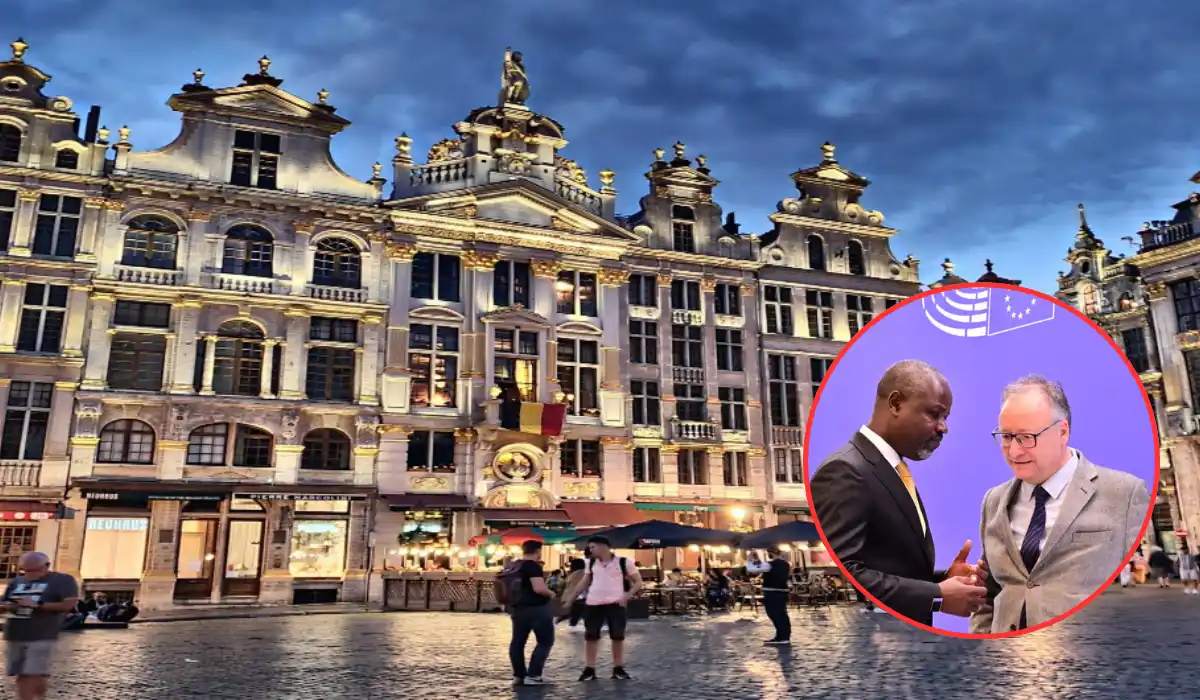
The Organisation of African, Caribbean and Pacific States (OACPS) Parliamentary Assembly officially opened its joint session with the European Parliament on Monday at the European Parliament building in Brussels. Running from November 9 to November 13, the five-day gathering convenes roughly 160 parliamentarians representing member nations across Africa, the Caribbean, the Pacific, and the European Union.
Co-chaired by Thomas Tayebwa, President of the OACPS Parliamentary Assembly and Deputy Speaker of the Parliament of Uganda, alongside his European Union counterpart, Francisco Assis, the summit serves as a central platform for establishing institutional priorities and policy alignment across the participating regions. High-profile international delegates in attendance include Nobel Peace Prize laureate and President of Timor-Leste José Ramos-Horta, President of the European Parliament Roberta Metsola, Prime Minister of Jamaica Andrew Holness, and Vice-President of the European Parliament Younous Omarjee.
The assembly opens at a crucial political juncture as member states evaluate long-term frameworks for economic development, environmental protection, and global geopolitical collaboration following recent structural updates to international treaties.
Tayebwa Outlines Core Demands for Economic Equity and Value Addition
Delivering the opening address, Tayebwa urged European and OACPS leaders to transition beyond diplomatic statements toward operational frameworks that yield measurable economic outcomes for developing nations. Presenting the consensus reached during internal OACPS Assembly discussions held over the preceding weekend, Tayebwa emphasized that future international cooperation must rest upon principles of mutual respect, equality, shared responsibility, and solidarity.
“The OACPS would like to see an economic partnership that delivers tangible benefits, including investment, local value addition, skills development and decent employment in our countries,” Tayebwa stated during his address to the joint assembly.
Central to the OACPS position is a structural shift away from traditional economic models focused primarily on the export of unprocessed raw materials. Tayebwa advocated for policies that support domestic processing facilities, regional industrial development, and local workforce enhancement. According to the OACPS leadership, allowing developing economies to retain a larger share of the value chain generated by their natural resources is essential for long-term financial stability, infrastructure development, and sustainable job creation.
Climate Financing Mechanisms and Debt Sustainability Concerns
Addressing environmental priorities, Tayebwa highlighted the escalating physical and economic impacts of severe climate events on vulnerable member states across Africa, the Caribbean, and the Pacific. Nations within these regions face severe disruptions stemming from prolonged droughts, flash flooding, coastal erosion, and rising ocean levels, which consistently strain domestic budgets and divert funding from essential public services.
Tayebwa called on international partners and funding bodies to reform climate financing mechanisms to ensure assistance remains affordable, accessible, and direct. He emphasized that financial support intended for climate adaptation and mitigation must not increase the existing public debt loads of developing countries.
The OACPS assembly reiterated that loan-heavy climate funding models undermine economic stability in regions disproportionately affected by global environmental changes. The bloc called for grants and highly concessional funding structures designed to build resilient infrastructure without burdening national accounts.
Implementation Status of the Samoa Agreement Across Member States
A key focus of the assembly is accelerating the formal ratification of the Samoa Agreement, the primary overarching legal framework governing relations between the OACPS and the European Union. The Samoa Agreement encompasses key areas of bilateral cooperation, including international trade, private investment, sustainable economic development, democratic governance, human rights, peace, and security.
Although the Samoa Agreement has been provisionally applied since January 2024, full implementation remains pending as several member states across the respective regions complete domestic legislative ratification procedures. Tayebwa urged parliamentarians and national governments on both sides of the partnership to finalize outstanding parliamentary approvals to permit the complete deployment of the treaty’s operational mechanisms.
Completing the ratification process is viewed by assembly leadership as a prerequisite for establishing legally binding commitments on trade facilitation, resource allocation, and political dialogue between Europe and the 79 member states of the OACPS.
Institutional Reforms and Regional Priorities Ahead of Global Summits
The joint assembly in Brussels forms part of a broader sequence of legislative and policy meetings organized by the OACPS leadership to strengthen internal institutional structures. In recent preparatory sessions, Tayebwa conducted briefings with Pacific parliamentarians and regional caucuses to outline proposed structural reforms aimed at enhancing the operational efficiency of the OACPS Parliamentary Assembly.
These reform initiatives focus on streamlining parliamentary procedures, boosting youth representation within legislative delegations, and fostering unified negotiation positions across the diverse geographical sub-groups of Africa, the Caribbean, and the Pacific when engaging with the European Union.
The agenda in Brussels also runs alongside broader national and regional economic initiatives among member states. Related developments noted across member delegations include institutional commitments to global climate platforms, such as the Uganda Development Bank committing Shs200m toward national pavilion operations ahead of the COP31 climate summit, alongside domestic legislative focus on regional healthcare expansion and citizen welfare.
Assembly Agenda and Multilateral Trade Policy Objectives
Over the remainder of the five-day summit, joint parliamentary committees are scheduled to examine specific policy tracks covering ocean governance, multilateral trade policy, development financing instruments, and strategic management of critical raw materials.
The OACPS member states aim to leverage the assembly debates to secure stronger representation in joint decision-making bodies and establish transparent supply chain partnerships with European markets. By aligning positions on trade access and resource processing, the OACPS seeks to ensure that legislative cooperation with the European Union produces balanced economic returns and supports sustainable industrial growth across all participating jurisdictions