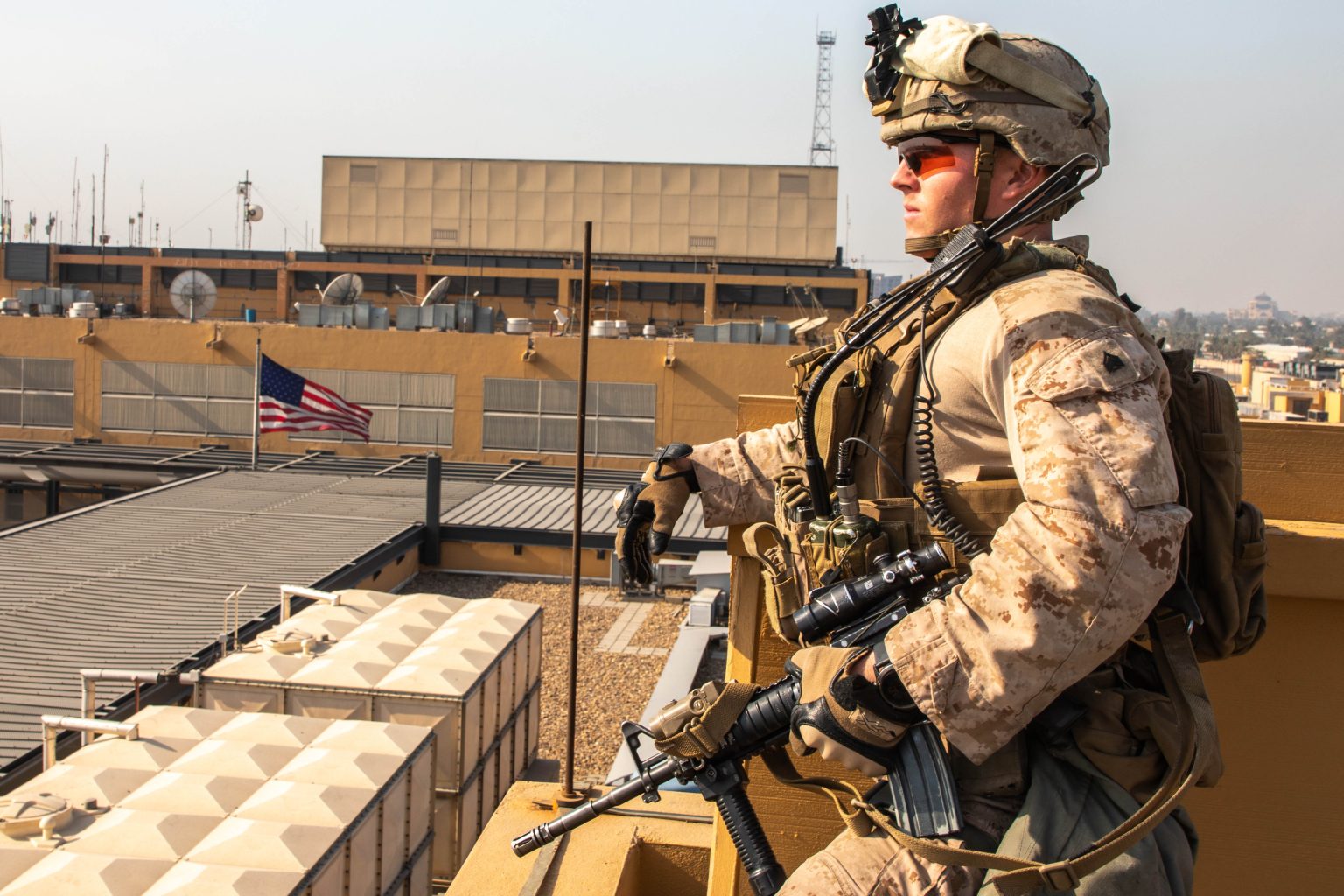
Baghdad, — March 7, 2026 — Brussels Morning NewsPaper — Concerns surrounding Middle East diplomatic security intensified after rockets were launched toward the United States embassy compound in Baghdad, prompting emergency security responses and renewed fears about the safety of diplomatic missions operating in volatile regions. The incident occurred inside Iraq’s heavily fortified Green Zone, an area designed to protect government buildings and foreign embassies.
Security sirens sounded across the diplomatic district as personnel moved into secure locations while Iraqi security forces launched an investigation into the source of the rocket fire. Early reports indicated that the attack did not cause major structural damage, but the incident highlighted how diplomatic facilities remain exposed to sudden security threats during periods of regional tension.
The situation has reignited international discussions about Middle East diplomatic security, particularly in cities where embassies operate within complex political and military environments.
Rocket Attack Triggers Immediate Response
Following the rocket launches, Iraqi security forces and international partners moved quickly to secure the surrounding area. Patrol units were deployed to search for possible launch sites while investigators began collecting evidence to determine who might be responsible.
Embassy staff followed established emergency protocols designed to protect personnel during security incidents. These procedures include sheltering in protected locations within embassy compounds until the immediate threat has passed.
Officials emphasized that these systems are a critical component of Middle East diplomatic security, allowing diplomatic missions to respond rapidly to unexpected attacks.
The Strategic Importance of Baghdad’s Green Zone
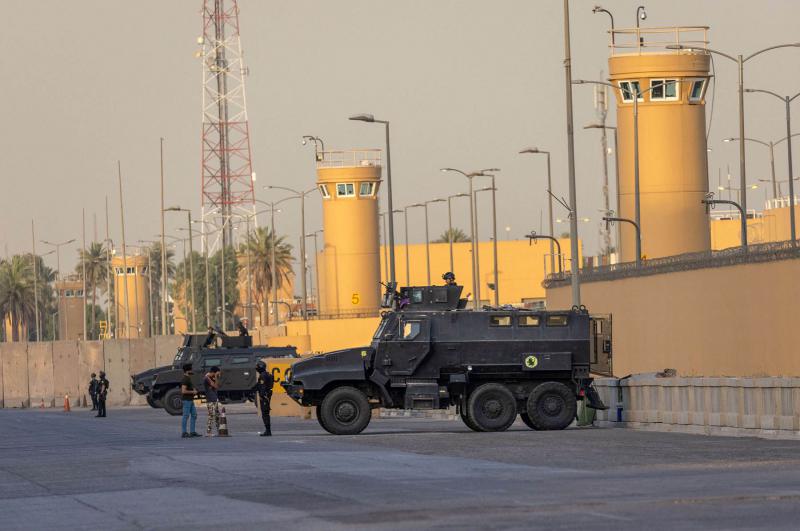
The Green Zone in Baghdad has long served as the center of Iraq’s government operations and a hub for international diplomacy. Foreign embassies, coalition offices, and government ministries are located inside the district’s fortified boundaries.
Despite extensive security infrastructure, the area has occasionally been targeted by rocket attacks launched from nearby neighborhoods. These incidents have demonstrated that even heavily protected diplomatic areas remain vulnerable.
The latest attack therefore highlights ongoing challenges tied to Middle East diplomatic security, particularly in densely populated urban environments.
Embassies as Symbolic Targets
Security experts say diplomatic compounds often become symbolic targets during times of political tension. Embassies represent the presence and influence of foreign governments, making them attractive targets for groups seeking attention or political leverage.
Attacks against diplomatic facilities rarely occur without strategic messaging. In many cases, the goal is to demonstrate opposition to foreign influence rather than cause large scale destruction.
Because of this dynamic, maintaining Middle East diplomatic security requires both physical protection and careful diplomatic engagement with local communities and governments.

Defensive Systems and Protective Infrastructure
Modern embassies are designed with multiple layers of protection intended to mitigate the impact of attacks. Reinforced buildings, blast resistant walls, vehicle barriers, and advanced surveillance systems are standard features of diplomatic compounds in high risk areas.
In addition to physical infrastructure, embassies rely on trained security teams capable of responding quickly to emergencies. These teams coordinate closely with host nation authorities to ensure that law enforcement and military support can be deployed immediately when needed.
Such security measures are essential for maintaining Middle East diplomatic security, particularly in regions where geopolitical tensions remain unpredictable.
Historical Comparison With Earlier Embassy Attacks
The current concerns surrounding Middle East diplomatic security echo several earlier incidents that shaped modern diplomatic security planning. In previous decades, embassies across the Middle East experienced rocket and mortar attacks during periods of political instability.
During the years following the Iraq War, for example, diplomatic compounds in Baghdad faced repeated threats from insurgent groups attempting to influence international policy through symbolic attacks. These incidents prompted major redesigns of embassy architecture, including reinforced construction and expanded defensive perimeters.
Similar attacks occurred in other regions as well, reminding governments that diplomatic missions can quickly become focal points during geopolitical crises.
These historical experiences continue to influence how governments approach embassy protection today.
Quote From a Security Specialist
A regional security specialist said the incident underscores how challenging embassy protection can be in politically sensitive environments.
The Expert Said.
“Middle East diplomatic security depends on intelligence sharing, strong infrastructure, and rapid response capabilities.”
The comment reflects the growing recognition that embassy protection must evolve continuously to keep pace with emerging threats.
Regional Political Implications
Security incidents involving diplomatic facilities can have far reaching consequences for international relations. Governments must determine how to respond without escalating tensions or disrupting diplomatic communication.
Embassies serve as critical channels for negotiation, conflict resolution, and economic cooperation. Any attack on these facilities therefore carries symbolic significance that extends beyond physical damage.
For policymakers, strengthening Middle East diplomatic security is not only about protecting buildings and personnel but also about preserving the ability of nations to communicate during times of crisis.
Economic and Global Impact
Events affecting diplomatic compounds can also influence economic perceptions of regional stability. Investors, multinational companies, and international organizations often monitor such incidents closely when assessing geopolitical risk.
If attacks against embassies increase in frequency, governments may face pressure to increase security spending or reevaluate diplomatic operations in high risk areas.
Maintaining strong Middle East diplomatic security is therefore important not only for political reasons but also for sustaining international business confidence and economic cooperation.
The Ongoing Challenge of Protecting Diplomacy
As investigations continue into the rocket attack in Baghdad, officials are once again reviewing the security arrangements protecting diplomatic missions throughout the region.
The situation illustrates how difficult it can be to safeguard embassies operating in complex political environments where local tensions, regional rivalries, and global interests intersect.
Strengthening Middle East diplomatic security will likely remain a priority for governments and international organizations seeking to protect diplomatic personnel while maintaining open communication channels.
A New Era of Diplomatic Risk Management
The evolving security landscape suggests that governments may need to adopt new strategies for protecting embassies and diplomatic staff. Technology, intelligence cooperation, and regional security partnerships are increasingly important tools for preventing attacks.
Ultimately, the effectiveness of these strategies will determine how successfully diplomatic missions can operate in challenging environments.
The events in Baghdad serve as a reminder that diplomacy often takes place in locations where security risks cannot be completely eliminated. Ensuring strong Middle East diplomatic security will therefore remain a defining challenge for international relations in the years ahead.