In an era where the world speaks of progress, technology, artificial intelligence, and the expansion of human rights, there still exist regions where the most basic standards of life remain scarce. Afghanistan, particularly remote districts such as Ghazi Abad in Kunar Province, stands as a living example of this global disparity. Here, children continue to struggle for those rights that are guaranteed under international law, yet have not been translated into practical reality.
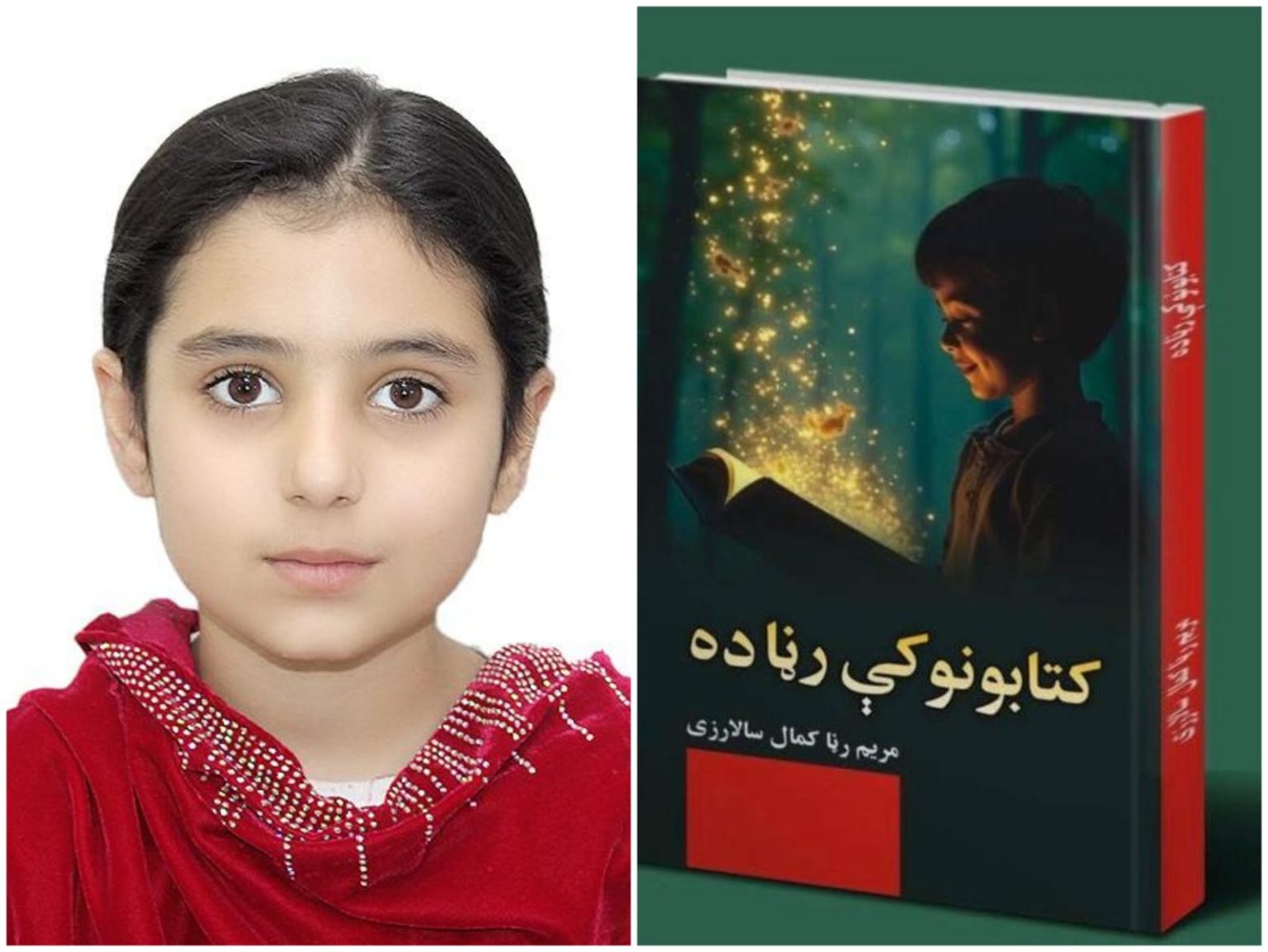
However, from within these shadows, a beacon of hope has emerged: a seven-year-old girl, Mariam Rana Kamal Salarzai. Her written work is not merely the production of a book; rather, it represents the awakening of a national conscience. It is an ethical, political, and humanitarian appeal directed toward the global conscience of the international community.
The Philosophy of the Child, the Pen, and Transformation in Afghanistan
When a child holds a pen, it is not merely an act of writing words; it is the beginning of thought formation, emotional expression, and the construction of the future. Mariam Rana Kamal Salarzai, a seven-year-old child raised in an environment devoid of standardized schools, libraries, and technological facilities, nevertheless succeeded in producing a written work that serves as a guide for children in ethics, education, hope, and humanity.
This phenomenon raises a profound philosophical question:
If a child, despite all limitations, can think so profoundly, why is the international system unable to extend its support?
International Child Rights: From Law to Implementation
Children’s rights are not merely moral concepts; they are fundamental international legal principles enshrined in global treaties and conventions designed to safeguard human dignity, justice, and universal values particularly the United Nations Convention on the Rights of the Child (CRC), which explicitly affirms that every child has the right to education, every child has the right to healthcare services, and every child has the right to protection, dignity, and balanced development.
Unfortunately, in Afghanistan especially in remote and rural regions such as Ghazi Abad District of Kunar Province these fundamental rights have not been implemented in practice and largely remain confined to documents, promises, and rhetorical commitments.
There, a child is compelled to travel several kilometers for education, a journey often disrupted by natural barriers, insecurity, and economic hardship. Many children also lack access to adequate healthcare facilities; when illness occurs, treatment is either absent or provided late and in rudimentary form. Furthermore, due to shortages of books, educational materials, and qualified teachers, children are forced into oral learning systems far removed from modern educational standards.
These conditions are not merely an internal national concern; they constitute a serious test of international commitments, humanitarian values, and diplomatic principles. The global community, which consistently advocates for children’s rights, education, and humanitarian assistance, must demonstrate that such commitments are not purely theoretical but practically enforceable.
Accordingly, the situation of Afghan children sends a clear message to the world: significant gaps remain in the implementation of justice, equality, and human rights. If these gaps are not addressed, not only will an entire generation be deprived of its rights, but global stability, peace, and future development will also be adversely affected.
A child deprived of education, healthcare, and protection cannot evolve into a healthy, active, and responsible member of society. Therefore, this is not merely a moral appeal; it is an international obligation that must be implemented with urgency so that every child, everywhere, may enjoy their fundamental rights and live within the framework of human dignity.
The Real Situation of Afghan Children
Afghan children face multiple and multidimensional challenges that deeply affect their lives, education, and future.
The foremost challenge is economic poverty, which forces many families to deprioritize education in favor of daily survival. Children are often compelled into labor or deprived of schooling altogether.
The second major challenge is the lack of educational infrastructure, particularly in remote areas where schools are scarce, buildings are inadequate, and educational resources are absent.
The third major challenge is insecurity, which not only restricts children’s mobility but also disrupts educational processes and increases familial anxiety.
The fourth major challenge is the absence of healthcare services, leaving children without basic medical care and negatively affecting their physical and mental development.
Despite these hardships, Afghan children continue to strive for education. They are not surrendering to adversity and are utilizing their limited means to acquire knowledge. This effort is not only commendable but demands serious international support, because if appropriate opportunities are provided, they can transform the future of their country and society.
Mariam Rana’s Book: A Charter of Ethics and Light
Maryam Rana’s book is not a simple collection of stories; rather, it is a profound educational, ethical, and philosophical charter containing foundational messages for the development of children’s thought, emotion, and personality.
The most important principle in this book is ethics, where honesty, integrity, and justice are presented as the pillars of human character without which a sound society cannot exist. A child learning that truthfulness despite difficulties ultimately leads to success internalizes a lifelong lesson.
The second principle is kindness, teaching children to perceive the pain of others as their own and to act with compassion toward humans, animals, and the environment.
The third principle is education, presented as the gateway to success, where ignorance is darkness and knowledge is light.
The fourth principle is hope, instilling the belief that no hardship is permanent and that darkness is always followed by light.
The fifth principle is courage, enabling children to defend truth, confront fear, and resist adversity.
The sixth principle is responsibility, teaching that every action has consequences and every individual is accountable for their behavior.
Collectively, these principles are not only essential for child development but also fundamental for building a morally sound, ethical, and progressive society.
International Politics and Ethical Responsibility
International politics must not revolve solely around power, influence, and economic interests; rather, it must be defined and implemented based on human values, justice, and human dignity.
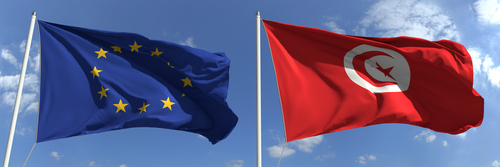
The European Union, NATO, and numerous international organizations consistently emphasize human rights, child protection, and educational development. However, the fundamental question remains whether these commitments exist only in rhetoric or are implemented in practice.
The situation of Afghan children, particularly in remote regions, is a real test of these claims. If the international community is genuinely committed to its principles, it must translate these values into practical action, support Afghan children, and create conditions enabling them to move toward a dignified, secure, and hopeful future.
Diplomatic Principles and Urgent Needs of Afghan Children
According to international relations and diplomatic principles, humanitarian assistance must be:
Impartial, free from political, ethnic, or geographical bias
Sustainable, ensuring long-term impact rather than temporary relief
Needs-based, prioritizing the most vulnerable populations
In this framework, Afghan children in remote regions are in urgent need of:
Construction of standardized schools
Provision of books and educational materials
Training and professional development of teachers
Establishment of healthcare centers
Special support for girls’ education, as it is a cornerstone of societal development
These are not mere requests but expressions of humanitarian justice, human dignity, and international responsibility.
Establishing a Sustainable Development Framework for Afghan Children
Creating a sustainable development framework for Afghan children is not only a national necessity but also a global responsibility. International studies consistently show that access to quality education transforms not only individual lives but entire societies.
Economic impacts include poverty reduction and increased productivity.
Social impacts include reduced crime rates and improved civic responsibility.
Health impacts include better hygiene practices and improved maternal and child health outcomes.
Girls’ education, in particular, has a multiplier effect, transforming entire families and communities.
Mariam Rana Kamal Salarzai’s Work: Not a Book, But a Global Movement
Her work must not be seen merely as a child’s achievement but as the beginning of a global movement:
A movement to amplify children’s voices
A movement to highlight the importance of education
A movement to awaken global conscience
The world today stands before a critical moral and humanitarian test: whether it will hear the voices of Afghan children or ignore them. Silence will deepen inequality and expand humanitarian crises, whereas timely action can save a generation and strengthen global peace, justice, and stability.
The Philosophy of the Pen of Light
Maryam Rana writes:
“Every human being can be like light.”
This is not merely a literary statement; it is a universal message.
Light means:
Knowledge
Ethics
Humanity
Hope
If every human becomes like light, the world will be transformed.
A Voice from Kunar
Today, a voice has risen from Kunar. It is not an ordinary voice; it is the profound message of a child, a pen, and hope. It declares:
We want education.
We want opportunity.
We do not want to be left alone.
These are not luxuries but fundamental human rights. The international community must recognize that supporting Afghan children is not only a moral obligation but an urgent global necessity.
A Commitment for the Future
Let us:
Provide books to children
Build schools for children
Offer children hope for security and development
Because a single child, a single book, and a single idea can change the world.
With highest respect.