
This month, after a year of negotiations of which I had the distinct honor of serving as chief negotiator and Ambassador-at-Large for the Peace and Unity Treaty signed between the Federation of Aboriginal Nations of the Americas (FANA) and the Supremo Consejo Nacional Indígena Mexico(SCNI). This historic agreement represents a profound advancement in international Indigenous diplomacy and marks a decisive moment for Indigenous nations seeking meaningful, sustained participation within the global community.
The treaty brings together Indigenous leadership from the Americas representing approximately 39.5 million people from 69 distinct Indigenous nations throughout Mexico, including the Governors of the Pueblos Originarios de todo el País.
This unification is widely recognized as one of the largest diplomatic consolidations of Indigenous peoples in modern history. It reflects a deliberate choice to move beyond fragmentation and toward collective engagement grounded in peace, sovereignty, and mutual respect.
Chief Ronald Yonaguska Holloway, FANA’s Minister of International Affairs, aptly described this moment as one of the most significant convergences of Indigenous leadership in modern history, emphasizing that the treaty establishes a durable framework for cooperation while reaffirming a shared commitment to peace, cultural revitalization, and diplomatic partnership.
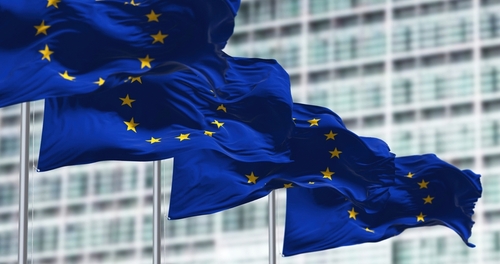
From a European perspective—and particularly from Brussels, a center of multilateral governance—this development merits close and thoughtful attention. One of the treaty’s most tangible outcomes is the strengthening of Indigenous engagement within the United Nations system. Europe’s own postwar history offers a powerful parallel.
The European project emerged from the recognition that peace is sustained through cooperation, institutions, and shared commitments across cultures and borders. Indigenous diplomacy today reflects that same understanding: unity strengthens sovereignty rather than diminishing it, and peace is built through structured engagement rather than exclusion.
Her Excellency Ambassador Maria Lorena Cosme, FANA’s Ambassador to the United Nations and Director of Indigenous Outreach, has described this moment as an expression of actionable sovereignty—the Creator-given right of Indigenous peoples to govern themselves while engaging collectively on the international stage.
The United Nations itself benefits from this consolidation. Unified Indigenous diplomacy allows for clearer communication, coordinated advocacy, and structured engagement, providing the UN with a reliable and organized partner capable of contributing Indigenous perspectives to negotiations, advisory processes, and implementation strategies.
Chief Ambassador Douglas Scott underscored this point by noting that unity enables Indigenous nations to influence international policy and shape human-rights frameworks with greater authority, strengthening the credibility and effectiveness of Indigenous participation at the global level.
The negotiations were grounded firmly in lawful diplomacy and supported by legal and historical experts from Mexico, England, and the United States. Their involvement ensured accurate translation, authenticated tribal documentation, and full respect for Indigenous authority and consent—essential to the treaty’s legitimacy and durability.
This treaty is far more than a symbolic milestone. It strengthens Indigenous participation within the United Nations, enhances the effectiveness of multilateral engagement, and reinforces a collective commitment to peace, justice, cultural survival, and intergenerational responsibility.
What began as a conviction that Indigenous unity could be achieved through diplomacy evolved into a deliberate and determined effort to bring nations together in peace. To witness that original vision culminate in a treaty of this magnitude—one that strengthens Indigenous sovereignty, advances participation at the United Nations, and affirms unity as a force for global good—is an honor I will carry for a lifetime, as will my family and the Federation Of The Aboriginal Nations.
To have played a leading role with our senior Diplomatic Team Chief Ronald Yonaguska Holloway, UN Ambassador Lorena Cosme, Chief Ambassador Douglas Scott, Lord Robert Orville Thomas, Legal and Compliance expert Chief Raymond Two Hawks Watson and Richard Stasior in shaping a moment of history is both humbling and a source of profound pride.


Dear reader,
Opinions expressed in the op-ed section are solely those of the individual author and do not represent the official stance of our newspaper. We believe in providing a platform for a wide range of voices and perspectives, even those that may challenge or differ from our own. We remain committed to providing our readers with high-quality, fair, and balanced journalism. Thank you for your continued support.