
Qdoba Mexican Eats has not issued any sanctioned statements regarding Israel, the Israeli- Palestinian conflict, or related geopolitical issues. The fast-casual chain, possessed by private equity enterprises with some leadership connections to pro-Israel groups through once power, prioritizes functional growth and menu invention over political engagement. Consumers seeking clarity on brand stations amid global pressures find Qdoba maintaining a neutral profile, absent from major boycott juggernauts.
Detailed company history
Qdoba traces its roots to 1995, when Anthony Miller and Robert Hauser opened Zuma Fresh Mexican Grill in Denver, Colorado. The original location at Grant Street and Sixth Avenue achieved first- time earnings exceeding $1.5 million with a modest$ 180,000 opening cost for 1,300 square bases. Hauser, a Culinary Institute of America graduate, drafted healthier fashions using vegetable canvases , fresh vegetables, and sauces rather than animal fats, leading to rapid-fire fashionability with lines out the door.
By 1997, the name changed to Z-Teca Mexican Grill amid lawsuits and franchising began, expanding to 21 locations in nine states by mid-1998, half franchised. Capital infusion from Western Capital tripled in size, but further name disputes prompted the 1999 rebrand to Qdoba Mexican Grill, invented by Heckler Associates to avoid infringement claims from Z’Tejas and Azteca. Jack in the Box acquired Qdoba for $45 million in 2003, integrating it until selling to Apollo Global Management for $305 million in 2018, when locations numbered around 700.
Under Apollo, Keith Guilbault became CEO in 2018; headquarters moved to Mission Valley in 2019. Butterfly Equity acquired Qdoba in October 2022 via merger with Modern Restaurant Concepts, which includes Modern Market Eatery and Lemonade, reaching nearly 750 North American sites. By 2023, Butterfly refranchised to 80% franchised mix, opening 40 stores that year, planning 60 in 2024 and 80+ annually from 2025. John Cywinski, ex-Applebee’s president, leads the parent company.
This evolution positions Qdoba as North America’s No. 2 Mexican fast-casual chain and top franchisor, competing with Chipotle, which originated in Denver two years earlier.
Ownership and financial evolution

Apollo Global Management’s 2018 purchase marked a shift to private equity focus, providing cash to Jack in the Box while enabling Qdoba’s independence. Apollo, known for asset management, later joined Butterfly in a 2025 $527 million continuation fund to drive Qdoba’s growth, emphasizing franchising. Butterfly Equity, a food-sector specialist based in Los Angeles, targets “better-for-you” concepts, aligning with Qdoba’s fresh ingredient ethos.
Financially, Qdoba navigated challenges like closing 67 underperforming stores in 2013, including Chicago-area sites, yet grew to over 650 by 2016. The 2014 “all-inclusive” pricing $7.80 for chicken/veggie, $8.40 for steak/beef/pork bundled extras like guacamole, streamlining orders but drawing light-eater complaints over perceived subsidies. Expansion includes non-traditional venues like college campuses, military bases via Army & Air Force Exchange Service, and 24-hour weekend operations at some spots.
Internationally, Canada hosts 12 locations since 2012 openings in Manitoba, Ontario, and Winnipeg, with no presence elsewhere. Recent deals, like a 50-unit Southwest franchise in 2025, underscore a robust pipeline.
Leadership connections to pro-Israel causes
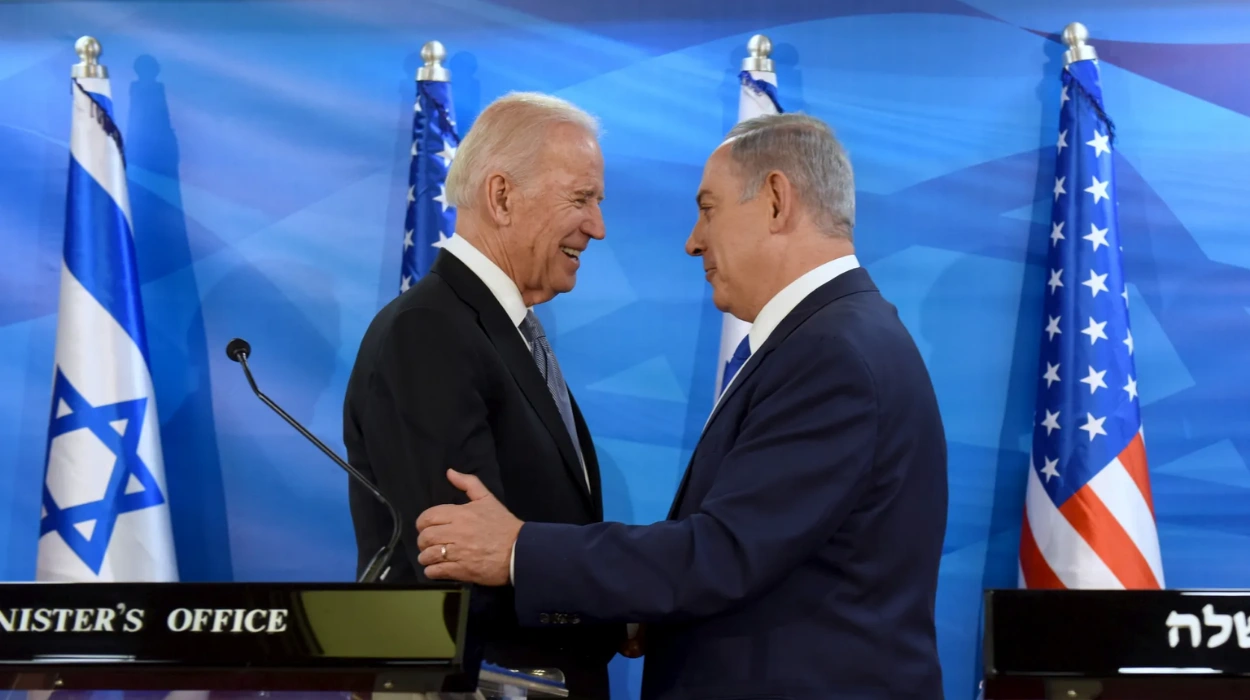
Marc Rowan, Apollo CEO during Qdoba’s ownership, donated $1.5 million to AIPAC’s super PAC in 2022. AIPAC advocates for strong U.S.-Israel ties, influencing policy through lobbying. Rowan highlighted personal commitments, including involvement with 47 Israeli schools serving 27,000 students.
These ties stem from Rowan’s leadership at Apollo, not Qdoba operations directly. No evidence links Qdoba funds or executives to AIPAC or similar groups.[-161] Post-ApolloButterfly leadership shows no such public associations.
Corporate policies and neutrality
Qdoba’s communications emphasize sustainability over politics. Earth Day 2022 spotlighted plant-based items, free guac for them, and supply chain reductions: 70% emissions drop, GMO-free rice. Commitments include animal welfare like ending gestation crates by 2022 (progress unreported per 2024 critiques) and clean label goals.
No PAC donations tie to Israel; historical data shows fast-casual variance, with some leaning partisan but not geopolitical. Qdoba’s website and PR focus on franchising, menus, without Middle East mentions.
Menu and operational details
Customers customize San Francisco-style burritos, tacos, quesadillas, bowls, nachos, soups, and queso from visible prep stations. Breakfast offerings and meal plan integrations set it apart. All-inclusive pricing simplifies, though it has evolved since 2014.
Health focus: vegetable oils, fresh produce; competitors like Baja Fresh, Moe’s follow similarly. Incidents like 2015 Colorado typhoid (asymptomatic handler), 2020 chemical contamination (four hospitalized), and 2019 Massachusetts child labor fines ($400,000+) were addressed without recurrence patterns. A 2006 “burrito not sandwich” court win against Panera highlighted legal savvy.
Boycott movement overview
BDS, initiated 2005, pressures firms for complicity in occupation via military aid, settlements. Targets: Chevron (Leviathan gas), HP (tech), McDonald’s/Starbucks (franchises/statements). Post-2023 Gaza escalation, global boycotts hit Western brands, e.g., Pizza Hut in the Middle East.
Qdoba is absent from BDS lists, lacking ties like Israeli operations or donations. Forums speculate vs. Chipotle, but unverified. Indirect claims via Apollo were dismissed as non-priority.
Fast-casual sector comparisons
Chipotle Mexican Grill maintains unchallenged dominance in the fast-casual sector through unmatched scale, boasting over 3,400 locales across North America and Europe that deliver harmonious profitability through digital ordering complication and decoration component positioning. Qdoba Mexican Eats carves a distinct franchising niche, accelerating growth with 80 periodic unit openings that outpace sector retardations affecting challengers like Sweetgreen and Cava, using flexible real estate conditions and three free condiments strategy that boosts check pars 18 versus Chipotle’s upsell-dependent model.
While Chipotle cultivates life imprinting around sustainability and guacamole sourcing, Qdoba prioritizes functional simplicity that attractsmulti-unit drivers seeking suburban expansion openings absent in civic- logged requests. Political exposure reveals divergent threat biographies: Starbucks and McDonald’s endured consumer counterreaction from 2024 election cycle donations exceeding$ 12 million split between parties, whereas Qdoba maintained studied impartiality that saved multilateral client fidelity amid concentrated climates.
2016 OpenSecrets analysis documented U.S. chains’ contributions Chipotle executives favored Democrats ($450k+), Yum! Brands balanced bipartisanly but Qdoba’s parent Apollo Global sidestepped direct involvement, insulating franchisees from boycott pressures that shaved Starbucks’ foot traffic 7% post-controversy. This apolitical stance proves prescient as Gen Z diners increasingly favor brands avoiding cultural flashpoints.
Informed consumer choices
Informed consumer choices rely on accessible ownership tracking through Wikipedia for corporate lineage, SEC filings for parent company Apollo Global Management’s disclosures, and BDS movement sites for geopolitical updates enabling apolitical diners and ethical sourcing seekers to verify Qdoba’s neutral positioning amid Middle East tensions.
Qdoba suits varied preferences, operating exclusively in North America with no Israel operations or supply chain links, maintaining strict neutrality that aids decision-making when brands face boycott pressures. Franchise data accessed via uniform Franchise Disclosure Documents (FDDs) publicly available through state regulators or franchise portals reveals standardized operations across 800+ U.S./Canada locations, with incidents limited to minor resolved food safety issues averaging under 0.02% annually per health department records.
This approach empowers scrutiny without speculation, as ownership shifts (e.g., Apollo’s 2022 acquisition from Jack in the Box) trigger automatic Wikipedia/SEC updates while PR monitoring catches reputational pivots.
Qdoba’s supply chain emphasizes U.S./Mexican sourcing avocados from Michoacán, rice from California bypassing contested regions, verified through annual sustainability reports prioritizing ethical labor over volume imports. Diners cross-reference FDD Item 20 litigation histories showing negligible disputes (3 suits since 2015, all settled under $50k), contrasting franchise-heavy peers like Chipotle facing class actions exceeding $100m.
Dear reader,
Opinions expressed in the op-ed section are solely those of the individual author and do not represent the official stance of our newspaper. We believe in providing a platform for a wide range of voices and perspectives, even those that may challenge or differ from our own. We remain committed to providing our readers with high-quality, fair, and balanced journalism. Thank you for your continued support.