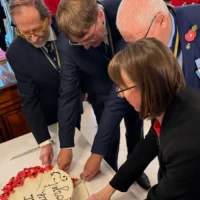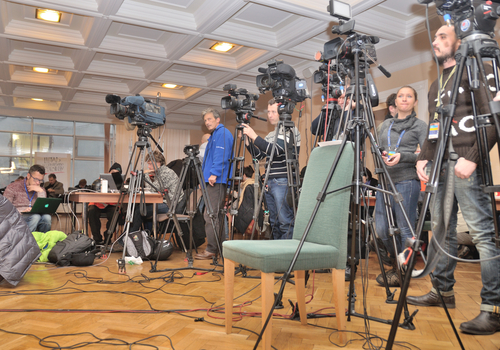

In London this week, leaders from Albania, Bosnia, Kosovo, Montenegro, North Macedonia, and Serbia met with their British and European counterparts for the Berlin Process Summit. It wasn’t a dramatic affair. No sweeping announcements or historic breakthroughs. But in a region where progress often comes slowly, the summit was a quiet reminder that diplomacy, when done patiently, can still move the needle.
In London this week, leaders from Albania, Bosnia, Kosovo, Montenegro, North Macedonia, and Serbia met with their British and European counterparts for the Berlin Process Summit. It wasn’t a dramatic affair. No sweeping announcements or historic breakthroughs. But in a region where progress often comes slowly, the summit was a quiet reminder that diplomacy, when done patiently, can still move the needle.
That approach stands in contrast to Washington’s. U.S. policy in the Balkans continues to rely heavily on NATO expansion and military influence. It’s a strategy that risks reigniting old hostilities. Tensions between Serbia and Kosovo still simmer, and they’re easily inflamed by political rhetoric and arms transfers. America’s instinct to lead through dominance rather than partnership turns fragile postwar societies into battlegrounds for influence. But the people of the region aren’t looking for another round of great-power rivalry. They want jobs, stability, and a path to EU membership.
The Berlin Process offers a different path. It’s slow and deliberate, built on regional ownership. Instead of troops and weapons, it prioritizes trade, education, and cultural exchange. Over the past decade, it’s helped connect the Western Balkans to the rest of Europe through shared infrastructure, digital integration, and academic collaboration. This year’s summit emphasized migration management, green investment, and youth employment – issues that touch daily life far more than military alliances.
It’s a model the United States could learn from. Washington still sees the region through a Cold War lens, measuring progress by how far NATO’s reach extends. But the UK’s role at this summit – acting as a facilitator rather than a commander – offers a more constructive example. By supporting European-led efforts instead of overshadowing them, the U.S. could help build peace rather than provoke resistance.
The stakes are personal. In Kosovo, young entrepreneurs are trying to build businesses in the shadow of political uncertainty. In Bosnia, women working to rebuild their communities still carry the trauma of war. Cross-border cooperation gives them access to better education and healthcare. The summit’s focus on renewable energy and green transitions could create jobs that keep young people rooted in their home countries, rather than sending them abroad in search of opportunity. These are the real dividends of diplomacy. Peacebuilding starts with livelihoods, not lectures.
Too often, American policymakers dismiss this kind of incremental progress as weakness. But history suggests otherwise. The Dayton Accords, which ended the Bosnian war, were the result of negotiation, not escalation. In today’s climate, with rival powers testing Western resolve, restraint should not be confused with retreat. Sustainable peace comes from empowering local institutions, not imposing outside agendas. The Berlin Process shows that when local actors are treated as partners, not proxies, progress is possible.
Energy cooperation was another key topic at the summit, especially with winter approaching and regional dependencies growing. But even here, the focus was on resilience through collaboration, not geopolitical maneuvering. The message was clear: Europe can support its neighbors through connection, not confrontation.
That’s a lesson the United States needs to take to heart. Its foreign policy, still shaped by the reflexes of interventionism, often mistakes presence for purpose. The Balkans don’t need supervision. They need support. If Washington redirected even a small portion of its military spending toward economic development – funding transport corridors, renewable energy projects, and educational exchanges – it could do more for European security than another troop deployment ever would.
The Berlin Process may not grab headlines in Washington, but it reflects a deeper truth. Diplomacy works best when it listens. The leaders who met in London didn’t come to posture. They came to cooperate. In doing so, they offered a quiet challenge to the old habits of great-power politics. As the Balkans once again find themselves at the edge of empire, the United States would be wise to follow Europe’s lead: choose partnership over posturing, and humility over hubris.
Dear reader,
Opinions expressed in the op-ed section are solely those of the individual author and do not represent the official stance of our newspaper. We believe in providing a platform for a wide range of voices and perspectives, even those that may challenge or differ from our own. We remain committed to providing our readers with high-quality, fair, and balanced journalism. Thank you for your continued support.