
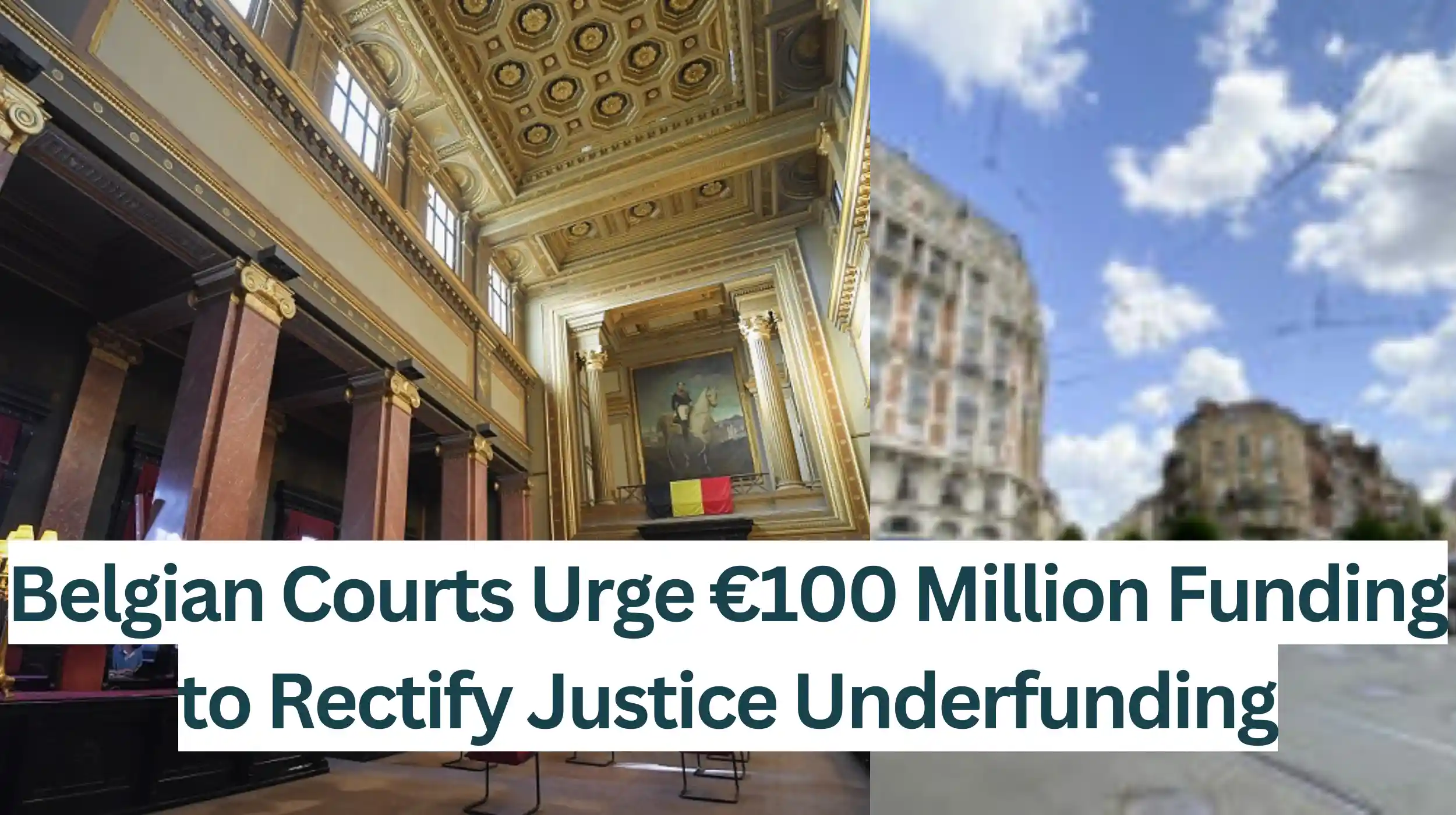
Brussels (Brussels Morning) – Belgian judicial bodies call for a €100 million boost to address underfunding, reduce workload, and enact legislative reforms to ensure a fair and efficient justice system ahead of national elections.
An injection of €100 million is required for the Belgian court system in the next State allocation to assure an “independent, accessible, efficient and timely” justice system, three national bodies have cautioned. In a joint memo published ahead of the upcoming national elections, the College of Courts and Tribunals, the College of Public Prosecutors, and the Court of Cassation have urged spending growth to address continued underfunding of the Belgian judicial system.
They express that this would reduce the workload of judges and court clerks, persist in the digital transformation of the court system, back litigants, and make the legal profession more appealing.
How does Belgium’s justice spending compare internationally?
According to figures from the European Commission for the Efficiency of Justice, Belgium paid just over €1 billion on the judicial system as a whole in 2020, or around 0.22% of the country’s GDP (gross domestic product). The Belgian courts emphasise that this is below the average of 0.3% of GDP supported by other European countries in their justice systems.
The courts state that if Belgium wished to reach in line with the European median spend on justice, the State would have to go outside the €100 million boost which the three bodies are calling for and press an additional €443.5 million into the judiciary’s annual funding.
Why do judges and court staff work excessive hours?
An examination of the workload of judges and court staff last year by the College of Courts and Tribunals discovered that they work many more hours than envisaged by law. The three arms of Belgium’s judiciary said that to meet the current caseload, there ought to be an immediate 26% increase in the number of judges (officers who act as judges in lower courts) and a 19% growth in the number of court clerks.
What reforms are proposed for Belgium’s justice system?
The memo issued also outlines a number of key factors which the College of Courts and Tribunals, the College of Public Prosecutors and the Court of Cassation state are “essential” to a high-quality legal system.
These include the mobilisation of human, material and financial resources, their involvement in conclusions and ICT (information and communication technology) reforms, the magnificence and well-being of the judiciary, and the performance of management autonomy and data protection rules.
The three components of the Belgian judicial system called for the next legislature to push ahead with a bill which was first arranged between the courts and the government in 2014. If enacted, this would give more significant decision-making power and functional independence to the judiciary. In the same vein of independent management, the memo calls for the justices of the peace and police tribunals in Brussels to be given their own oversight committee, in line with elsewhere in the country.