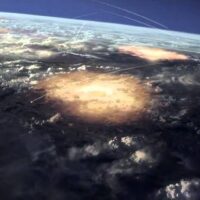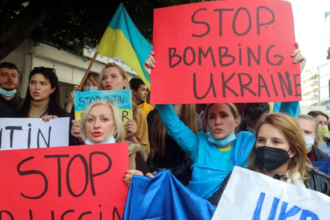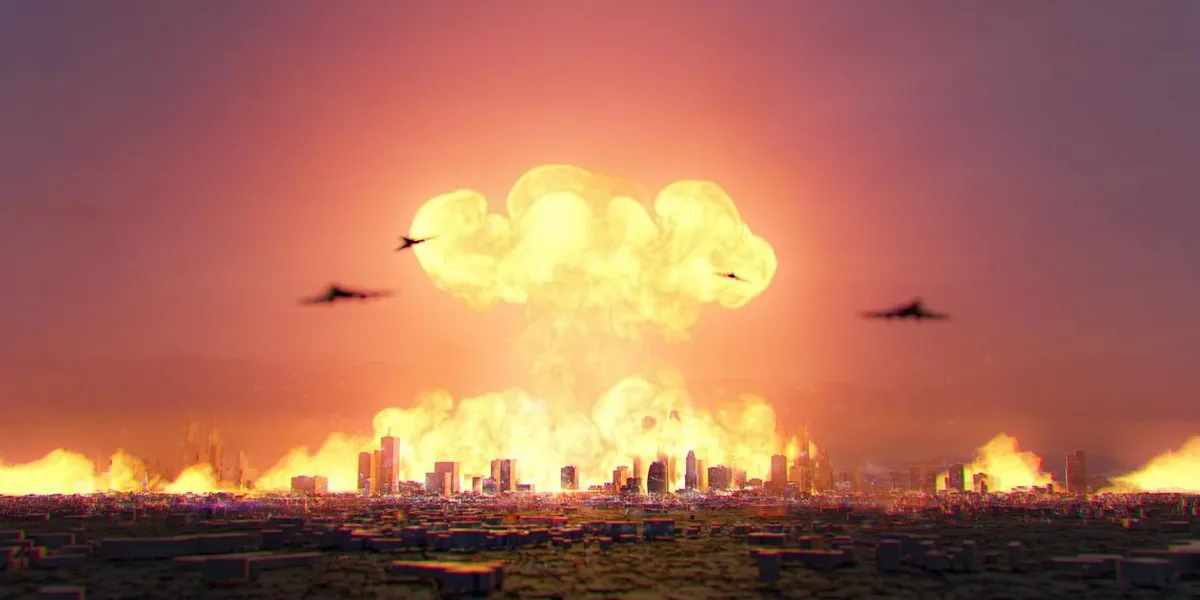
Fears have been raised that the crisis in Ukraine might escalate into a nuclear war due to Moscow’s recent revival of Vladimir Putin’s nuclear threats against the West. Sources claim that a key ally of the Russian president boasted that the West would not intervene even if Russia used a nuclear weapon in Ukraine, claiming that this is because political leaders on the other side of the ocean and in Europe are not going to perish in the event of a nuclear apocalypse. Let’s find out about the countries that survive nuclear war.
- 1- Iceland
- 2- Canada
- 3- Australia
- 4- Newzealand
- 5- Norway
- 6- Sweden
- 7- Greenland (Denmark)
- 8- Fiji
- 9- Nepal
- 10- Sri Lanka
- Estimated Immediate Casualties and Injuries in a US-Russia Nuclear Conflict
- Long-term Global Consequences
- Variation in Probabilities and Uncertainties of Nuclear Conflict
- Survivability and Human Adaptation
- Emerging Threats and Modern Nuclear Arsenal Trends
According to research published a month ago, Argentina and Australia have the highest chance of seeing at least some aspects of their civilization surviving for the first 10 years following a nuclear war. Below is a list of countries Alex Rejba, a seasoned survivalist, compiled that would survive during Nuclear War:
1- Iceland
Iceland is a North Atlantic island nation. It has approximately 300,000 inhabitants and 103,000 square kilometres. Due to its remoteness, lack of military, and geothermal energy, Iceland is one of the safest nuclear war zones. Nuclear missiles cannot reach Iceland without being noticed due to the North Atlantic Ocean’s isolation. Iceland’s limited population and size would limit damage from a nuclear missile.
2- Canada
Canada is a top nuclear war survivor. NORAD is Canada’s primary military partnership with the US. They even organize military drills. If a nuclear bomb attacked one nation, the other would likely help. Canada has a big landmass and a dispersed population. This reduces the risk of a nuclear attack destroying the nation. In an assault, many sections of Canada are rural and sparsely inhabited, reducing deaths.
3- Australia
Australia is a leading nuclear war safety contender. Australia’s wide, barren continent with few large population centres explains why. A nuclear strike on Australia would be difficult, and the small population would limit losses. Australia’s military relationship with the US would safeguard it in a nuclear conflict. No one would invade Australia knowing that the U.S. possesses a huge nuclear arsenal.
4- Newzealand
New Zealand is frequently seen as a tranquil, lovely nation. Did you know that recent research ranks it among the top nations that can survive a nuclear war? The University of Southampton study, published in Nature Communications, examined which nations might survive a nuclear blast. Due to its tiny population, distance from nuclear targets, and lack of military infrastructure, New Zealand scored well.
5- Norway
Norway is one of Europe’s nuclear war-safe nations. The Global Peace Index rated Norway 14th most peaceful in 2021. Norway is secure from nuclear war for several reasons. First, Norway is underpopulated. A nuclear assault on Norwegian soil would damage fewer people. Second, Norway is rather isolated from other nations. Norway’s isolation reduces the likelihood of a regional confrontation that may escalate to nuclear war.
6- Sweden
Sweden is considered tranquil. Its homicide rate is the third lowest worldwide. Sweden isn’t just safe—one of the safest nations on our list. Sweden’s neutrality and non-alignment imply it doesn’t take sides in international crises or join military alliances. This reduces Sweden’s nuclear war risk.
7- Greenland (Denmark)
Greenland is the biggest island between Canada and Iceland in the Arctic Ocean. Danish Greenland has 57,000 residents. Greenland’s Inuit language and culture are rich despite its limited population. Most nuclear missiles cannot reach Greenland. If another nation launched a missile at Greenland, the ice sheet would cover much of the island, limiting damage.
8- Fiji
Many people consider Fiji to be Earth’s paradise. Fiji is a beautiful island paradise with sparkling blue oceans, untouched beaches, and verdant tropical woods. While this is true, many people overlook that Fiji is also one of the safest countries in the case of a nuclear war. In other words, it is completely cut off from the rest of the planet. Fiji island nation is isolated from other landmasses in the Pacific Ocean. Because of its remote location, a nuclear assault on this area is less probable.
9- Nepal
Nepal is one of the safest Asian nations. Given its position between India and China, this is surprising. Like South Korea/North Korea, Nepal’s neighbours wouldn’t want to drop bombs on their doorstep. Nepal’s highest mountains provide natural radiation shielding. It’s landlocked yet secluded, like an island country.
10- Sri Lanka
Sri Lanka, an Indian Ocean, is southeast of India. The nation boasts a rich culture, unique terrain, and 2,000- time history. Sri Lanka’s strands, wildlife, and remains draw excursionists. Why is Sri Lanka safe? The islet country is remote from nuclear targets. Sri Lanka has little over 20 million people and a shy structure, making it delicate for a bushwhacker to inflict expansive detriment.
Estimated Immediate Casualties and Injuries in a US-Russia Nuclear Conflict
In a 2019 simulation undertaken at Princeton University, researchers estimated that a large-scale nuclear exchange between the US and Russia would lead to an immediate death toll of approximately 34 million deaths and 57 million injuries within hours.
These estimates highlight the scale of human suffering that would ensue and the extraordinary demand on emergency personnel and health systems matters that matter far more than mere death rates. The losses from a conflict of this scale would immediately and severely diminish the infrastructure and social capacity of the impacted regions, resulting in lasting instability on the globe.
Long-term Global Consequences
Beyond the immediate deaths, nuclear war has the threat of driving long range global environmental impacts. The “nuclear downtime” miracle, which would be attributed to the debris in the atmosphere blocking the sun, would drop global temperatures, disrupt husbandry, and hang food security for the entire earth.
Indeed localized, limited nuclear conflict could lead to serious starvation pitfalls for populations on the other side of the earth. Research has shown that if there were a limited nuclear exchange between India and Pakistan, it could lead to the starvation of as many as 1 billion people due to agricultural collapse, a profound example of interconnected ecologies and the infectious capacity of nuclear warfare to create consequences across the globe from even very limited exchanges.
Variation in Probabilities and Uncertainties of Nuclear Conflict
Experts estimate the chances of nuclear war vary dramatically depending on geopolitical variables, from near impossibility to intimidating frequency. For illustration, some models unpredictably calculate an each- out nuclear war might statistically happen as frequently as formerly every 11 seconds, while others estimate it’ll be less constantly than numerous times the current age of the macrocosm.
This wide divergence shows the immense query in soothsaying nuclear conflict liability, pressing the need for conservative geopolitical operation and mindfulness.
Survivability and Human Adaptation
Literal and scientific exploration suggests total mortal extermination from nuclear warfare is doubtful. Certain geographic regions and populations might survive original explosions and radiation, although the recovery period would be dragged and fraught with societal collapse, resource failure, and heightened vulnerability to posterior pitfalls.
Survival entails complex adaptive challenges including governance, resource allocation, and reconstruction in oppressively degraded surroundings. This nuanced view frames survival not as bare physical abidance but as a profound societal bid.
Emerging Threats and Modern Nuclear Arsenal Trends
Presently, nine countries maintain nuclear magazines, but the geography is evolving. North Korea’s likely resumption of nuclear testing and the development of new low yield nuclear munitions are altering deterrence equations and trouble comprehension encyclopedically.
Similar advancements herald a more complex and potentially unstable unborn nuclear security terrain, raising new challenges for non-proliferation and transnational peace efforts.
There are other countries that survive nuclear war other than the ones mentioned above, either because of their closeness or because of their political stability and capacity to rebuild. Anyhow of where you go, always be on the lookout for signs of disaster and seek retreat in a lemon sanctum incontinently.