
US Colombia relations remain a central pillar of diplomatic engagement in 2026 as Washington and Bogotá reinforce cooperation on security, trade, and regional stability. Reporting highlighted by Brussels Morning Newspaper underscores how the long-standing partnership continues to adapt to shifting geopolitical and economic realities.
At the center of this engagement is a recognition that bilateral cooperation must adapt to new realities while preserving the foundations built over decades of close collaboration.
A Relationship Built Over Decades
The modern framework of cooperation between Washington and Bogotá has been shaped by history, geography, and mutual interests. From security assistance to economic integration, the partnership has weathered political transitions in both countries.
As US Colombia relations have matured, they have moved beyond a single-issue focus, evolving into a multifaceted alliance that touches trade, education, environmental protection, and institutional reform.
Security Cooperation Remains Central
Security continues to play a defining role in bilateral engagement. Joint efforts against transnational crime, including drug trafficking and organized networks, remain a cornerstone of cooperation.
Officials in both capitals emphasize that US Colombia relations are rooted in shared responsibility for addressing threats that extend beyond national borders and affect regional stability as a whole.
Drug Policy and Counter-Narcotics Strategy
Counter-narcotics cooperation remains one of the most visible aspects of the partnership. While strategies have evolved, the shared goal of reducing the impact of illicit drugs persists.
Within US Colombia relations, there is growing emphasis on combining enforcement with development, recognizing that long-term success depends on addressing the economic conditions that sustain illegal activity.
Economic Ties and Trade Integration
Trade relations form another pillar of cooperation. Bilateral trade agreements have expanded market access and encouraged investment on both sides.
As US Colombia relations strengthen economically, policymakers highlight the role of private sector engagement, innovation, and supply chain integration in driving sustainable growth.
Migration and Regional Stability
Migration has emerged as a shared concern, particularly as regional displacement places pressure on governments throughout the hemisphere. Colombia’s role as a host country for migrants has drawn international attention.
In this context, US Colombia relations increasingly include dialogue on humanitarian assistance, migration management, and regional coordination.
Diplomatic Alignment on Regional Issues
Beyond bilateral matters, Washington and Bogotá often find themselves aligned on broader regional challenges. Democratic governance, human rights, and crisis response feature prominently in diplomatic discussions.
Observers note that US Colombia relations provide a platform for coordinated engagement on issues that shape the political landscape of Latin America.
Defense Cooperation and Training
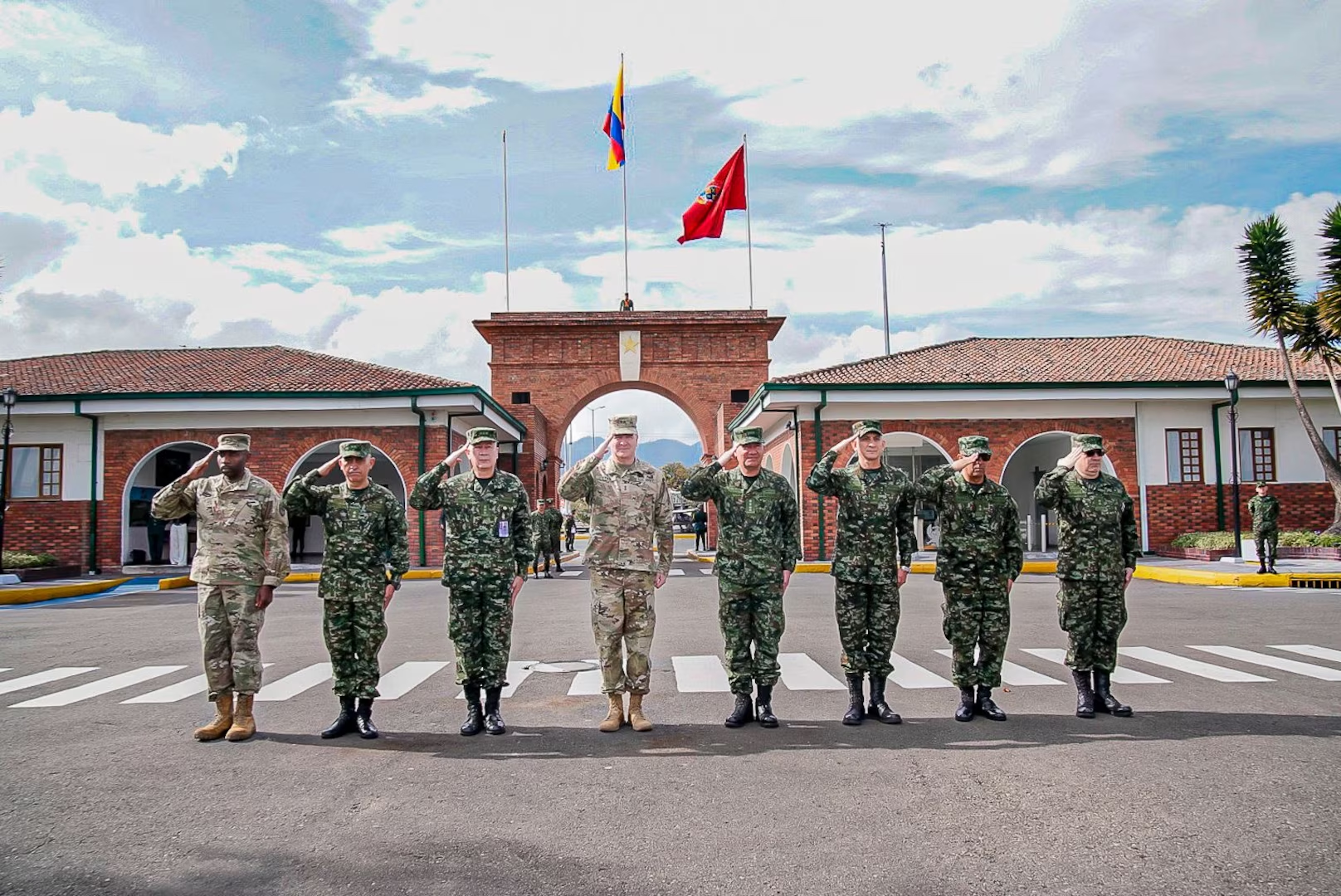
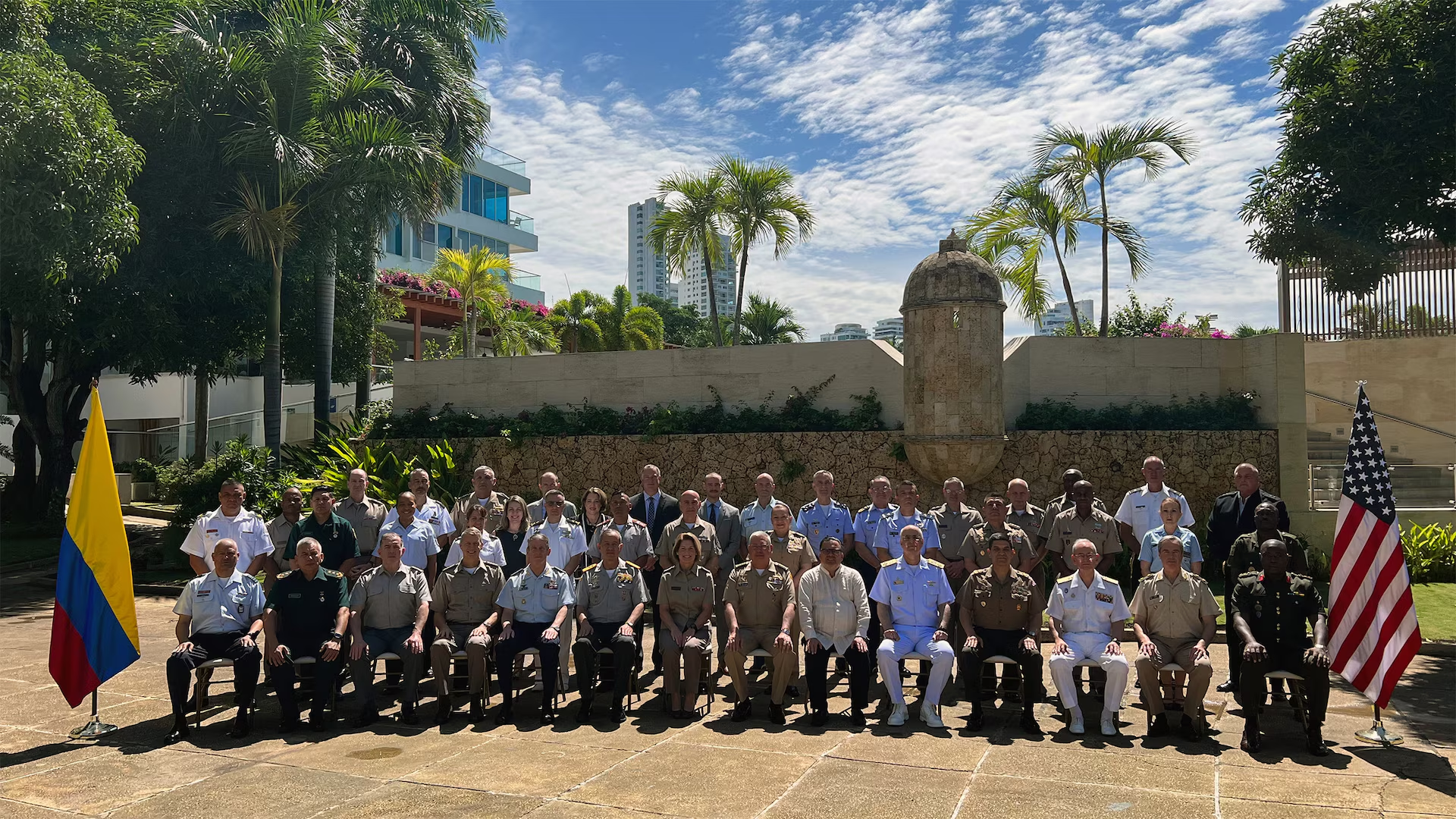
Military cooperation remains robust, with joint training programs and capacity-building initiatives aimed at strengthening institutional professionalism.
Through these efforts, US Colombia relations contribute to enhancing Colombia’s ability to address internal and external security challenges while adhering to international standards.
Environmental and Climate Cooperation
Environmental protection has gained prominence within bilateral discussions. Colombia’s biodiversity and environmental challenges intersect with global climate priorities.
As US Colombia relations broaden, cooperation on conservation, sustainable development, and climate resilience has become an increasingly important agenda item.
Political Transitions and Policy Continuity
Political change in either country often raises questions about continuity. However, the partnership has demonstrated resilience across administrations.
Analysts argue that US Colombia relations endure because they are anchored in institutional frameworks rather than individual leaders.
Congressional and Legislative Engagement
Legislative bodies in both countries play a role in shaping cooperation. Congressional oversight and parliamentary dialogue influence funding, priorities, and accountability.
Within US Colombia relations, this institutional engagement reinforces transparency and long-term commitment.
One Voice Reflecting the Partnership
“Our relationship with the United States is strategic, comprehensive, and essential for addressing the challenges we face together,” a senior Colombian official said.
Public Opinion and Domestic Perceptions
Public perception of bilateral ties matters. In Colombia, cooperation with Washington is often viewed through the lens of security and economic opportunity.
In the United States, US Colombia relations are frequently cited as an example of sustained partnership in a region marked by volatility.
Education, Culture, and People-to-People Ties
Educational exchanges and cultural programs contribute to mutual understanding. Scholarships, research collaboration, and academic partnerships foster long-term connections.
These initiatives reinforce US Colombia relations at the societal level, beyond government-to-government engagement.
Challenges and Criticism
Despite strong ties, the relationship is not without criticism. Concerns over human rights, environmental impact, and policy effectiveness periodically surface.
Addressing these issues transparently is seen as essential to maintaining credibility within US Colombia relations.
Economic Development and Investment Climate
Foreign investment remains a key driver of economic cooperation. Efforts to improve regulatory frameworks and business environments support this goal.
As US Colombia relations deepen economically, stability and predictability are viewed as crucial for attracting long-term investment.
Technology and Innovation Partnerships
Technology cooperation is emerging as a new frontier. Digital transformation, cybersecurity, and innovation ecosystems offer opportunities for collaboration.
These areas add a modern dimension to US Colombia relations, reflecting the evolving nature of global partnerships.
Regional Leadership and Influence
Colombia’s role as a regional actor enhances its strategic value to Washington. Diplomatic engagement often extends beyond bilateral concerns.
In this sense, US Colombia relations serve as a conduit for broader regional dialogue and coordination.
Measuring Success Beyond Metrics
Success is increasingly measured not only by statistics but by institutional strength and social impact.
Within US Colombia relations, there is recognition that sustainable progress requires patience and long-term commitment.
Looking Ahead to the Remainder of 2026
As the year progresses, both governments signal continuity rather than dramatic change. Incremental progress, rather than sweeping reforms, is expected.
The future of US Colombia relations will likely be shaped by pragmatic adjustments rather than ideological shifts.
A Partnership Tested and Reinforced
History has tested the resilience of bilateral ties. Each challenge has prompted reassessment and adaptation.
Through this process, US Colombia relations have demonstrated durability rooted in shared interests and mutual trust.
The Broader Strategic Context
Global uncertainty has elevated the importance of reliable partnerships. In this environment, stable alliances carry added value.
For Washington, engagement with Bogotá reinforces strategic presence in the region; for Colombia, it provides access to resources and influence.Cooperation in an Evolving Hemisphere
Latin America’s political and economic landscape continues to change. Navigating this environment requires coordination and flexibility.
Within this context, US Colombia relations remain a stabilizing factor amid regional flux.
When Partnership Becomes Policy
Over time, cooperation has moved from reactive measures to proactive strategy. Planning and coordination now anticipate future challenges.
This evolution underscores how US Colombia relations have become embedded in long-term policy frameworks.
Beyond Diplomacy Toward Shared Strategy
The relationship increasingly reflects shared strategic thinking rather than transactional engagement.
As both countries look beyond immediate concerns, US Colombia relations illustrate how sustained cooperation can adapt to new global realities.
A Relationship Still Taking Shape
Despite decades of engagement, the partnership continues to evolve. New challenges will test its flexibility and relevance.
What remains constant is the commitment to dialogue, cooperation, and mutual respect.
When Stability Depends on Partnership
In an era of uncertainty, enduring alliances matter. The future of bilateral engagement will influence security, prosperity, and regional balance.
As 2026 unfolds, US Colombia relations stand as a reminder that long-term partnerships remain essential in navigating an increasingly complex world.