

Cortina d’Ampezzo, Italy — February 18, 2026 — Brussels Morning Newspaper — A powerful Alpine storm swept across Olympic venues overnight, triggering an Olympic snowstorm delay that forced organizers to suspend freestyle skiing and snowboard competitions at the 2026 Winter Games in Cortina. Heavy snowfall combined with strong winds reduced visibility, altered slope conditions, and raised safety concerns, prompting immediate schedule adjustments.
The unexpected weather system delivered intense snowfall within a short time frame, blanketing competition surfaces and reshaping jump takeoffs and landing zones. Officials moved quickly to secure the slopes and consult with international sport federations before announcing revised timetables.
Severe Weather Alters Olympic Competition Conditions
Freestyle skiing and snowboarding depend heavily on stable, predictable snow surfaces. Athletes calculate speed and rotation timing based on carefully engineered terrain. When fresh snow accumulates rapidly, surface density changes, reducing firmness and affecting takeoff precision.
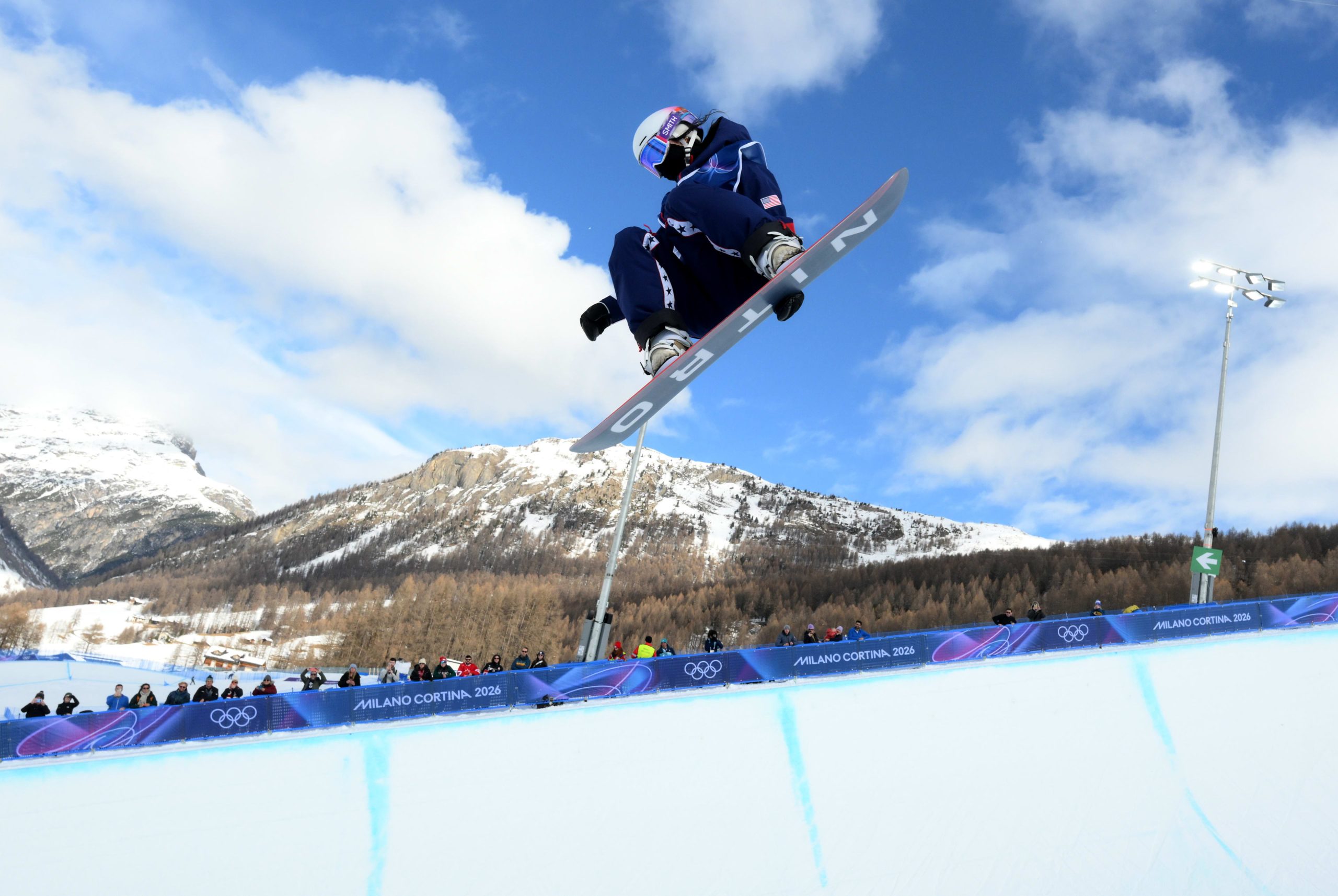
The Olympic snowstorm delay occurred after wind gusts exceeding forecast projections swept through mountain corridors, creating drifting snow patterns and obscuring visual markers. Visibility dropped significantly, particularly in higher elevation courses where halfpipe walls and slopestyle features were exposed to crosswinds.
Course inspectors noted that while snowfall is inherent to winter sports, the volume and wind intensity created conditions unsuitable for fair competition.
Safety Protocols Activated Immediately
Olympic safety committees convened within hours of the storm’s arrival. Medical teams, technical delegates, and event directors assessed slope stability and structural integrity of jumps.
The decision to impose the Olympic snowstorm delay followed established contingency procedures designed to protect athletes from unpredictable landing zones and obscured terrain lines.
A senior organizing official stated,
“Athlete safety is our absolute priority, and we will not compromise fairness or security under extreme weather conditions.”
National teams largely supported the decision, acknowledging that winter sport must adapt to nature’s volatility.
Impact on Freestyle Skiing Events
Freestyle skiing disciplines including moguls, aerials and slopestyle were directly affected. Mogul fields lost defined contours as new snow softened ridges. Aerial ramps required reshaping to ensure safe takeoff trajectories.
The Olympic snowstorm delay forced athletes to adjust training routines while waiting for course restoration. Grooming teams worked through the night using snowcats and compactors to reestablish consistent surfaces.
Technical judges will reinspect slopes before allowing resumed practice sessions. Organizers confirmed that medal events will proceed once visibility and snow density meet international federation guidelines.
Snowboard Competitions Face Rescheduling
Snowboard halfpipe and big air events encountered similar challenges. Halfpipe walls depend on compact snow to maintain vertical structure. Excess snowfall softened edges and reduced grip during aerial maneuvers.
As the Olympic snowstorm delay continued, broadcast schedules were revised and ticket holders notified of updated competition times. Officials reassured fans that all affected events would be completed within the existing Olympic window.
Snow removal crews cleared accumulated layers carefully to preserve engineered ramp angles.

Logistical Coordination Across the Olympic Network
Rescheduling Olympic events requires global coordination. Athlete transport, security, volunteer deployment and international television coverage must adapt rapidly.
The Olympic snowstorm delay activated backup scheduling systems designed for severe weather scenarios common in alpine regions. Broadcasters adjusted programming to include athlete interviews and archival highlights while awaiting slope clearance.
Organizers emphasized that flexibility remains central to hosting winter events in mountainous environments.
Economic and Tourism Considerations
Cortina d’Ampezzo’s local economy benefits significantly from Winter Games tourism. While the Olympic snowstorm delay created short term adjustments, businesses reported steady activity as visitors remained engaged in Olympic festivities.
Hospitality operators noted increased demand for indoor events and cultural attractions during the storm window.
Economic analysts suggest that weather disruptions, though inconvenient, often amplify global attention on host regions, enhancing long term tourism appeal.
Athlete Perspective and Mental Preparation
For competitors, postponement can disrupt carefully calibrated preparation cycles. Athletes peak physically and psychologically for scheduled competition windows.
The Olympic snowstorm delay required rapid mental recalibration. Coaches encouraged athletes to focus on recovery, hydration and visualization exercises.
A freestyle skier from a European delegation commented,
“We train for unpredictable conditions, but patience becomes part of the performance.”
Such resilience often distinguishes medal contenders in high pressure Olympic settings.
Broadcast and Sponsorship Adjustments
Winter Olympic broadcasts reach millions worldwide. Advertising slots and sponsorship placements are intricately timed.
Despite the commercial implications, the Olympic snowstorm delay was widely supported by sponsors prioritizing athlete welfare. Networks adjusted coverage schedules and provided continuous updates to maintain viewer engagement.
Industry observers note that real time communication during disruptions strengthens transparency and global trust in Olympic governance.
Historical Context of Weather Disruptions at Winter Games
Weather has influenced numerous Winter Games throughout history. Snowstorms, high winds and temperature fluctuations have reshaped competition timetables in previous decades.
The current Olympic snowstorm delay joins a long record of meteorological challenges faced by alpine hosts. Historically, delayed events often produce dramatic and memorable outcomes once conditions stabilize.
Mountain climates remain inherently dynamic despite advancements in forecasting technology and artificial snowmaking systems.
Infrastructure Resilience and Modern Technology
Modern Olympic venues incorporate advanced engineering solutions including drainage systems, automated snowmaking and precision grooming equipment. These systems reduce vulnerability to sudden weather shifts.
However, the Olympic snowstorm delay illustrates that even sophisticated infrastructure must yield to extreme natural conditions. Organizers rely on meteorological monitoring and risk assessment frameworks to guide real time decisions.
Continuous innovation in slope maintenance technology aims to minimize downtime during severe storms.
Revised Schedule and Forecast Outlook
Meteorological agencies forecast improved conditions within 48 hours. Event directors confirmed that training sessions will resume once final inspections conclude.
The Olympic snowstorm delay remains under review as teams monitor wind speeds and snowfall accumulation levels. Updated schedules have been distributed to participating nations and media outlets.
Organizers expect competitions to proceed without compromising medal opportunities for affected athletes.
Community Response in Cortina
Local authorities praised the swift coordination between organizers and emergency services. The Olympic snowstorm delay highlighted strong collaboration among municipal officials, volunteers and venue operators.
Residents expressed pride in Cortina’s ability to adapt to unexpected challenges. Many described the storm as part of the authentic alpine experience that defines winter sport culture.
Environmental Factors and Climate Considerations
Climate variability continues to influence winter sporting events globally. While snowfall supports competition, unpredictable intensity can create operational challenges.
The Olympic snowstorm delay underscores the delicate balance between natural snowfall and engineered snow surfaces. Experts suggest that adaptive planning will become increasingly important for future Winter Games.
Sustainable venue design and renewable energy integration remain central priorities for host cities seeking long term environmental responsibility.
The Road Ahead for the 2026 Winter Games
With forecasts improving, anticipation builds for the rescheduled freestyle skiing and snowboard finals. The Olympic snowstorm delay may ultimately add a layer of narrative drama to the Games, emphasizing resilience and adaptability.
Officials remain confident that all competitions will be completed within the official Olympic calendar. Athlete preparation continues under close monitoring from technical teams.
As conditions stabilize, Cortina prepares to welcome global audiences back to the slopes under clearer skies.
When Nature Shapes Olympic Destiny
The unfolding events surrounding the Olympic snowstorm delay remind spectators that winter sport is uniquely intertwined with the environment. Unlike indoor arenas, alpine venues are living landscapes shaped by wind, snow and temperature.
While storms may pause competition, they also reinforce the human spirit of perseverance that defines the Olympic movement.
As athletes return to competition, their performances will reflect not only skill and preparation but the resilience forged during days of waiting.
The 2026 Winter Games continue, guided by safety, adaptability and determination beneath the towering peaks of Cortina d’Ampezzo.