

CORTINA D’AMPEZZO, Italy, February 8, 2026 — Brussels Morning Newspaper brings global attention to a dramatic ski racing crash that abruptly halted the women’s downhill event in Cortina, a venue central to the international Alpine skiing calendar. Under clear skies and firm snow conditions, the incident unfolded at high speed, instantly shifting the focus from competition to athlete safety during one of the most demanding races of the season.
The fall occurred during a crucial mid course section where racers exceed 120 kilometers per hour. Officials immediately stopped the race as medical teams moved into position, while spectators stood in stunned silence. The ski racing crash quickly became the defining moment of the day, eclipsing podium results and triggering widespread reaction across the skiing world.
High expectations surrounded the Cortina downhill
Cortina’s women’s downhill is known for its technical complexity and relentless pace. Entering the event, anticipation was high, with top ranked athletes seeking crucial points in the 2026 season standings.
The course itself demands absolute precision. Long gliding sections transition abruptly into sharp compressions, leaving little margin for recovery if balance is lost. It was in one of these sections that the ski racing crash unfolded, illustrating how unforgiving elite downhill racing can be.

How the incident unfolded on the slope
Early timing splits showed a strong start, with aggressive lines through the opening gates. Momentum built as the athlete maintained a tight aerodynamic tuck, appearing fully in control.
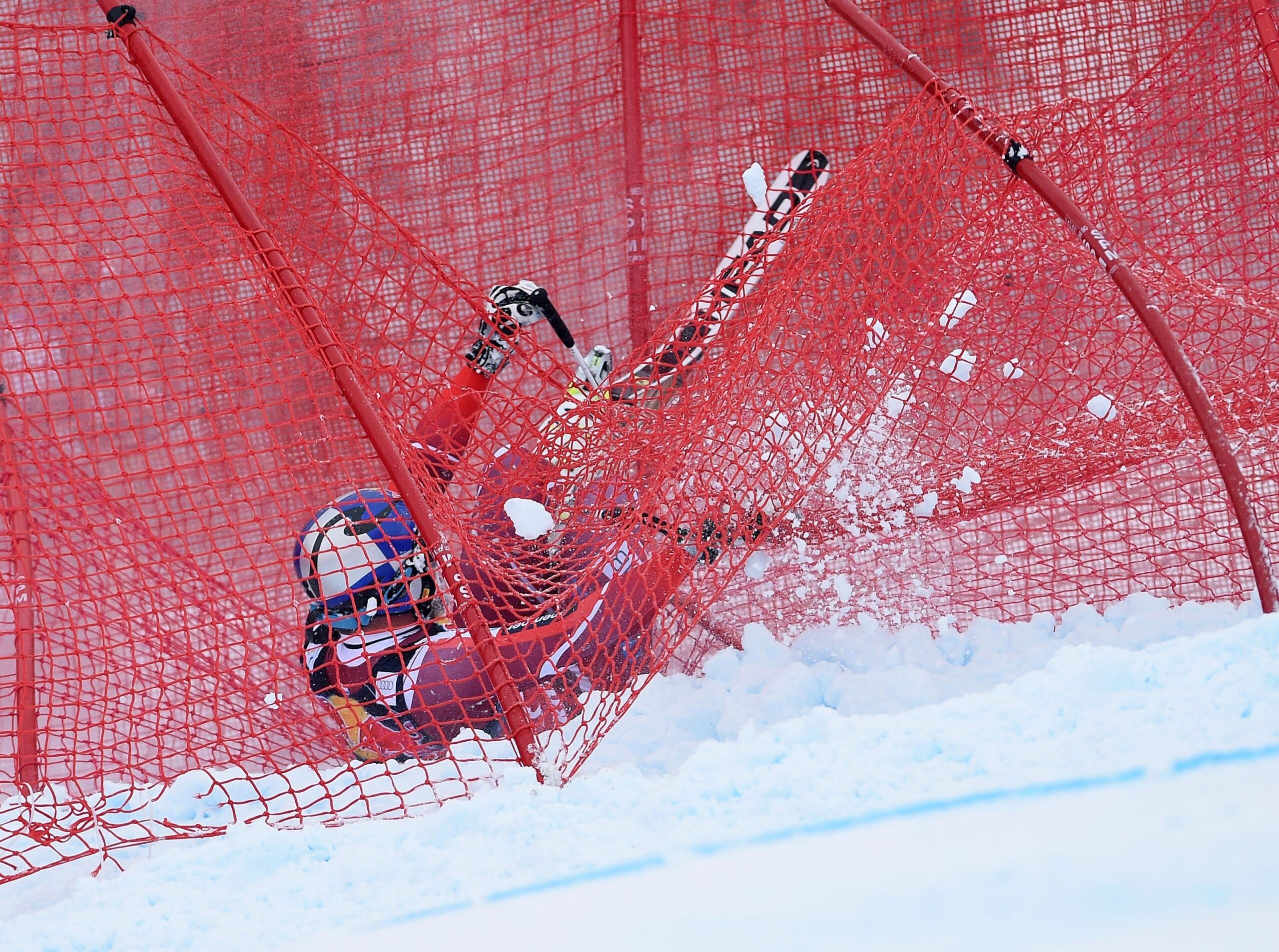
Midway through the descent, a minor edge catch destabilized the skis. What followed was a rapid sequence of loss of control, airborne rotation, and heavy impact with the icy surface. The ski racing crash played out in seconds, yet its impact lingered far longer.
Race marshals activated emergency protocols immediately, halting all further runs.
Emergency response and race suspension
Medical teams reached the athlete within moments, following strict international safety procedures. Protective netting absorbed much of the force, preventing a potentially more serious outcome.
Officials later confirmed that all safety systems functioned as designed. The ski racing crash resulted in a suspension lasting nearly 30 minutes as the course was inspected and conditions reassessed.
Athlete at the center of global attention
The fall involved Lindsey Vonn, a name synonymous with downhill excellence. With multiple Olympic medals and World Cup titles, her presence alone elevates any race she enters.
Moments like this reinforce the reality that experience does not eliminate risk. The ski racing crash underscored that even the sport’s most accomplished competitors remain vulnerable at extreme speeds.
Voices from the finish area
Concern spread quickly among fellow athletes gathered near the start gate. Several racers chose not to warm up during the delay, instead watching updates from officials.
One team coach said,
“Downhill skiing leaves no room for hesitation. When something goes wrong, it happens at full speed.”
Another competitor added,
“Everyone out here knows the risks, but seeing a fall like that still hits hard.”
A race official later noted,
“The priority was ensuring the athlete was stable before anything else continued.”
Course design and safety standards questioned
While organizers emphasized that the Cortina course meets all international regulations, the ski racing crash reopened debate around course difficulty.
Analysts pointed to the compression where the fall occurred, describing it as a section that combines speed, terrain change, and limited recovery time. Critics argue that modern downhill courses increasingly favor spectacle over safety.
Officials countered that downhill skiing, by nature, carries inherent danger and that risk cannot be entirely eliminated.

Impact on competition and standings
With a leading contender eliminated, the competitive balance shifted dramatically. Lesser known athletes seized the opportunity to post standout runs, altering the podium landscape.
The ski racing crash changed more than just one race outcome. Coaches acknowledged that season strategies could now shift, with points gained or lost in Cortina influencing qualification paths later in 2026.
Medical update and recovery considerations
Later updates confirmed that the athlete avoided life threatening injuries, though further evaluations were scheduled. Team representatives stressed caution, emphasizing that recovery involves both physical healing and mental readiness.
Confidence rebuilding after a ski racing crash is often as challenging as regaining physical strength, particularly in downhill events where trust in equipment and terrain is essential.
Fan reaction and global coverage
Across Europe and North America, fans reacted with a mixture of relief and concern. Social platforms filled with messages praising resilience and courage.
Broadcast footage replayed the ski racing crash repeatedly, prompting renewed discussion around how Alpine skiing balances danger and elite performance.
Major crashes that shaped downhill skiing
Throughout Alpine skiing history, serious falls have acted as pivotal moments rather than endpoints. From the early World Cup era to modern Olympic competition, crashes have often led to equipment innovation and improved safety standards.
The ski racing crash in Cortina echoes past incidents that forced the sport to evolve, including changes in helmet design, netting systems, and course inspection protocols. History shows that while danger remains, lessons learned from such moments drive progress.
Psychological toll on elite racers
Downhill skiing demands absolute commitment. Athletes must suppress instinctive fear to remain competitive.
After a ski racing crash, even seasoned competitors face internal battles, questioning lines, speed, and decision making. Sports psychologists note that returning to full confidence can take weeks or months.
Cortina’s significance in the 2026 season
Cortina d’Ampezzo holds symbolic importance as Italy prepares for future international competitions. Incidents here resonate beyond a single event.
The ski racing crash will likely influence how teams approach remaining downhill races, particularly on similarly fast and technical courses.
Governing bodies and next steps
International ski authorities confirmed that the incident will be reviewed as part of routine post race analysis. While no immediate rule changes are expected, discussions around athlete safety are ongoing.
The ski racing crash adds momentum to those conversations, especially as speeds continue to increase with advances in equipment technology.
Beyond medals and results
As the snow settled and racing resumed, the atmosphere remained subdued. Applause greeted finishers, but the earlier tension lingered.
The ski racing crash reminded everyone present that Alpine skiing is not just about podiums, but about courage, preparation, and survival at the limits of human control.
When resilience defines sport
Long after results fade, certain moments endure. The pause in competition, the collective concern, and the respect shown across teams revealed the deeper values of sport.
The ski racing crash in Cortina will be remembered not solely as an accident, but as a moment that unified athletes, officials, and fans in shared understanding of risk and resilience.