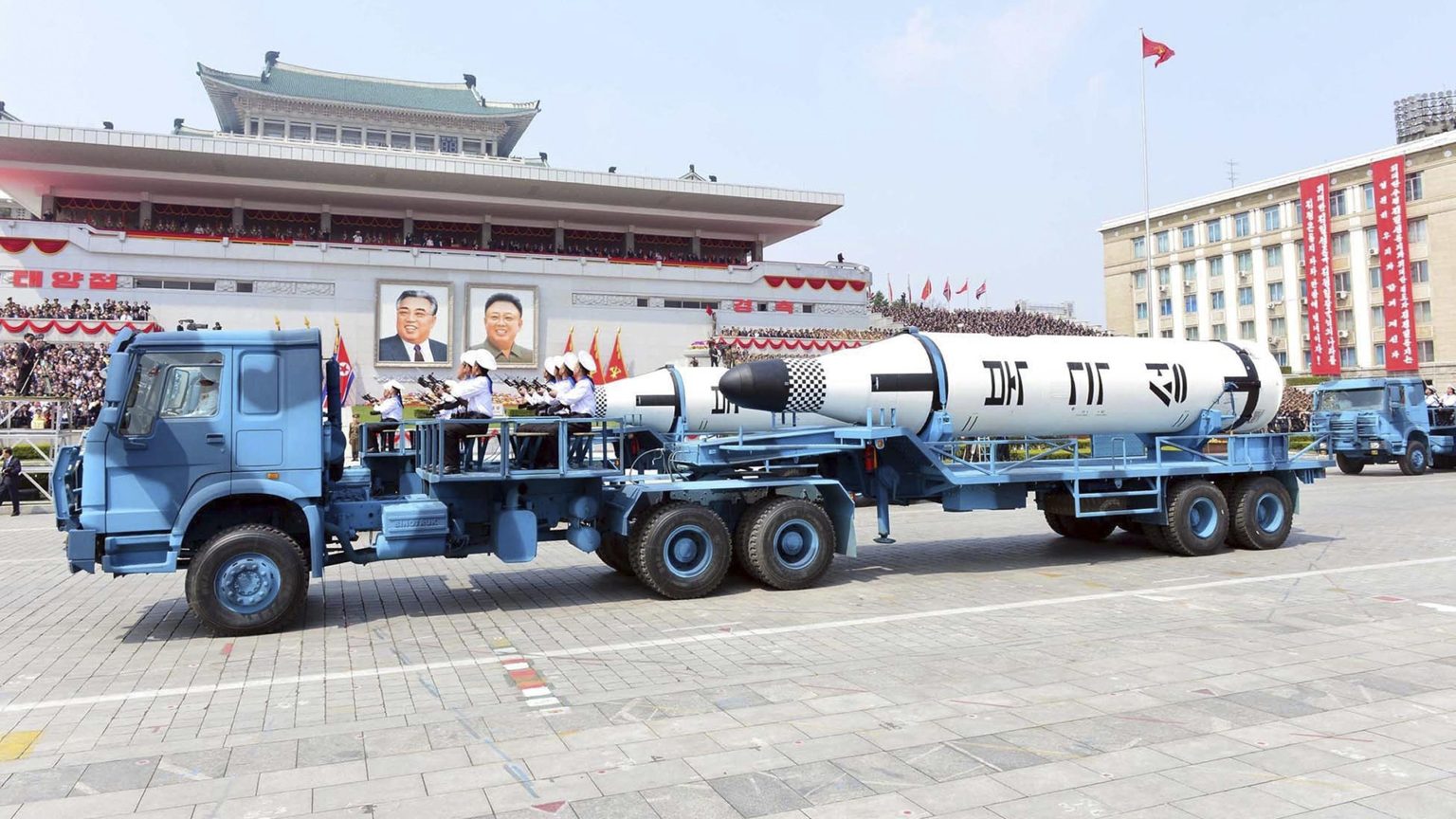
SEOUL, South Korea, 12 October, (Brussels Morning Newspaper) – North Korea missiles launched towards the East Sea on Monday have heightened security concerns across Northeast Asia, prompting South Korea and Japan to strengthen military monitoring amid renewed tensions on the Korean Peninsula.
South Korea’s Joint Chiefs of Staff confirmed that several ballistic missiles were launched from the Pyongyang area at approximately 9:20 am local time. At least one missile travelled more than 900 kilometres before falling into the sea.
The launches followed South Korea’s recent test of a domestically developed hypersonic weapon and worsening diplomatic relations between the neighbouring countries.
North Korea’s Ballistic Missile Launches Trigger Security Alert
South Korean military officials reported detecting several ballistic missiles of different types travelling eastwards from the North Korean capital.
Joint Chiefs of Staff spokesperson Jang Do-young confirmed that military authorities were examining the weapons’ flight characteristics, including their range and technical capabilities.
The precise number and classification of the missiles had not been established.
Japan’s Deputy Defence Minister Takashi Koyari separately reported that Japanese authorities detected at least two missiles launched approximately 17 minutes apart.
Both were assessed to have landed outside Japan’s exclusive economic zone.
Japanese officials indicated that one projectile followed an irregular trajectory, raising questions about whether it involved advanced hypersonic technology.
South Korea Condemns Missile Launches as UN Violations
South Korea’s presidential National Security Office convened an emergency security meeting following the launches.
Officials condemned the missile activity as a violation of United Nations Security Council resolutions and urged Pyongyang to stop further tests.
The South Korean military strengthened surveillance and continued exchanging intelligence with the United States and Japan.
The three countries maintain security cooperation intended to detect missile threats and coordinate defensive responses.
South Korean officials said their forces remained prepared for additional launches, although no further tests had been confirmed.
Hypersonic Weapons Tests Deepen Korean Peninsula Tensions
The latest launches followed South Korea’s successful test of a domestically developed hypersonic glide vehicle on 8 October.
President Lee Jae Myung observed the test, which South Korean authorities described as an important development in strengthening the country’s conventional military capabilities.
North Korea had previously launched an intermediate-range missile on 3 October, describing it as part of its hypersonic strategic weapons programme.
Hypersonic systems present challenges for missile defence because certain designs can manoeuvre during flight rather than following predictable ballistic trajectories.
Tensions have also intensified following landmine explosions in the Demilitarised Zone that injured three South Korean soldiers in September.
A joint investigation involving South Korea and the United Nations Command attributed the devices to North Korean forces.
Pyongyang rejected the findings and denied responsibility.
Why North Korea’s Missile Tests Matter Internationally
The latest North Korea missiles demonstrate the continuing difficulties facing international efforts to contain weapons proliferation and restore diplomatic engagement.
North Korea remains subject to United Nations sanctions restricting its nuclear and ballistic missile programmes.
For South Korea and Japan, repeated missile launches create additional pressure to strengthen surveillance, military readiness and defensive capabilities.
The developments also concern international governments seeking stability in Northeast Asia, an economically important region with extensive global trade connections.
What Happens Next for Regional Security?
South Korean and American intelligence agencies are continuing their assessment of the missiles’ range, speed and technical specifications.
Japan is expected to maintain close monitoring while coordinating with regional security partners.
No confirmed schedule for further North Korean missile launches has been announced.
Diplomatic negotiations between Washington and Pyongyang remain stalled, with substantial disagreements over nuclear weapons and sanctions.
The latest launches leave regional governments balancing military preparedness with efforts to prevent further escalation on the Korean Peninsula.