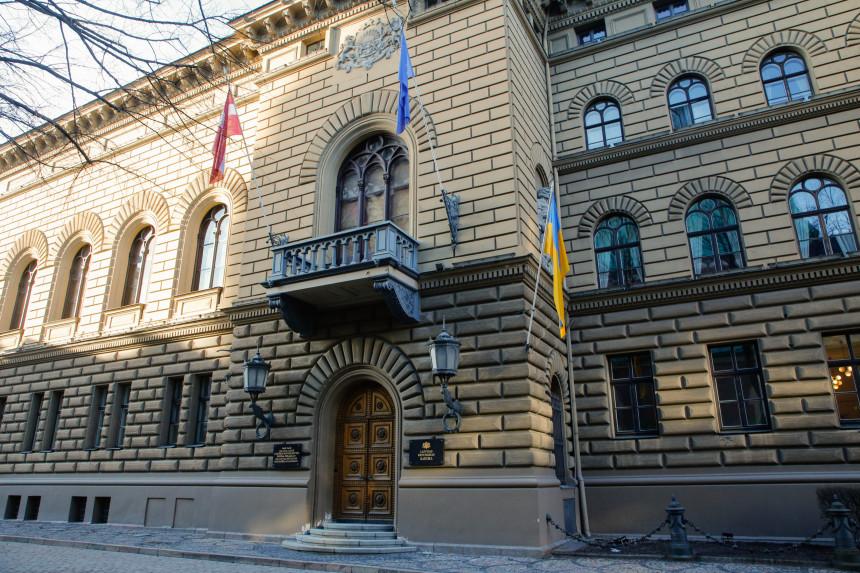
Riga, Latvia, 3 October, (Brussels Morning Newspaper) – Latvia is voting in a closely watched parliamentary election today, with national security, Russia’s war against Ukraine, NATO defence and the cost of living dominating a contest with implications beyond the Baltic state. The Latvia election will determine all 100 seats in the Saeima for the next four years.
Latvia votes as security concerns dominate campaign
Polling stations opened at 8am local time on Saturday and are scheduled to close at 8pm, according to Latvia’s Central Election Commission. Preliminary results are expected on 4 October.
A total of 14 party lists are competing in the election, with 1,428 candidates seeking seats. Latvia is divided into five electoral districts: Riga, Vidzeme, Latgale, Kurzeme and Zemgale.
Prime Minister Andris Kulbergs’ centrist United List entered the final days of the campaign leading opinion polling, but Latvia’s fragmented political landscape means coalition negotiations are likely to be important once the results are known. Reuters reported before polling day that seven of the 14 parties were polling strongly enough to potentially clear the 5% parliamentary threshold.
Russia and Ukraine shape Latvia’s political debate
Security has taken an unusually prominent role in the campaign.
Latvia borders both Russia and Belarus and is a member of NATO and the European Union. Russia’s continuing war against Ukraine, alongside recent concerns about drones and other airspace incidents on NATO’s eastern flank, has intensified debate over defence policy.
Kulbergs has supported continued assistance for Ukraine and increased defence investment, including stronger anti-drone capabilities. Other political groups have questioned the scale of support for Kyiv and argued that greater attention should be directed towards domestic living costs.
The Latvia election therefore presents voters with competing approaches not only to domestic economic policy but also to Latvia’s response to one of Europe’s most serious security challenges.
NATO allies reinforce Latvian airspace
Security precautions surrounding the vote have included additional allied military support.
Latvia’s Ministry of Defence announced that four German Air Force Eurofighters would deploy to Lielvārde Military Base around the election period. Italian and Turkish air forces are also providing additional support for Latvian airspace protection.
Defence Minister Raivis Melnis said recent drone-related incidents on NATO’s eastern flank demonstrated the need for the alliance to be capable of responding rapidly to potential threats.
Latvian security service warns over disinformation
Latvia’s State Security Service, known as the VDD, has introduced enhanced measures designed to protect the election.
The agency said Russia could potentially intensify disinformation campaigns aimed at political forces and candidates who strongly oppose Russian aggression and support Ukraine. However, the warning describes a potential threat and should not be interpreted as evidence that Russia has successfully altered today’s vote.
The VDD is working with police and other authorities to identify and prevent unlawful attempts by foreign or Latvian nationals to influence the election process or results.
Why Latvia’s election matters to Brussels and NATO
For Brussels, the result matters because Latvia occupies a strategically important position on the EU and NATO’s eastern frontier.
The next government will confront decisions over defence expenditure, assistance for Ukraine, relations with European allies and economic pressures facing Latvian households.
The country’s sizeable Russian-speaking population also makes relations with Moscow, language policy and national identity particularly sensitive political questions. Reuters reported that attitudes towards Russia and Ukraine have contributed to divisions within this community during the campaign.
What happens after voting ends?
Polls are due to close at 8pm local time, after which preliminary results will begin to establish the composition of the next Saeima. The Central Election Commission expects preliminary election results to be known on 4 October.
Attention will then shift towards coalition negotiations if no political force controls a parliamentary majority.
The new Saeima is scheduled to hold its first sitting on 3 November, when the mandate of the outgoing parliament ends.
Whatever coalition eventually emerges, the Latvia election will help determine how one of Europe’s frontline NATO members approaches defence, Ukraine and relations with Russia during another critical period for European security.