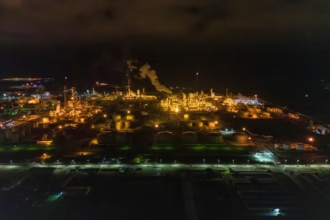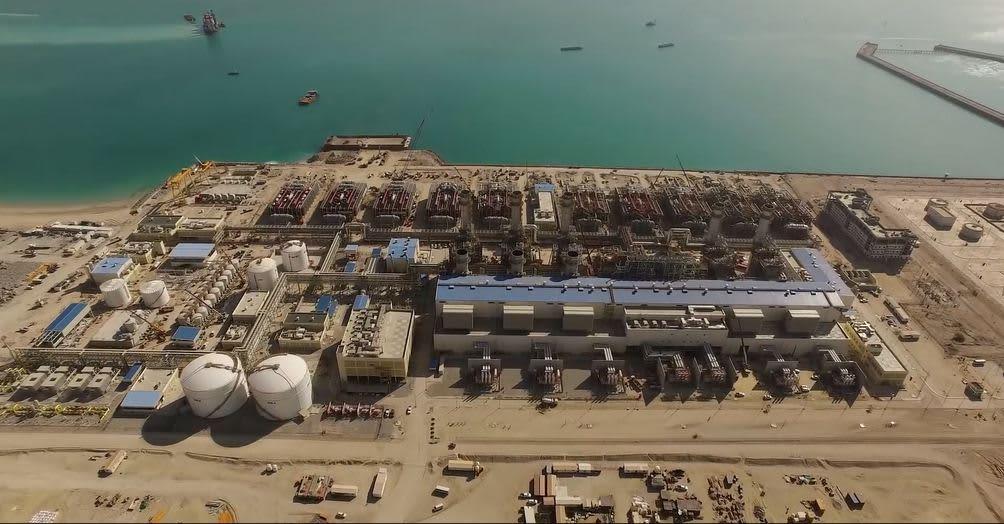
By Tuesday night, after four consecutive nights of strikes, Iranian missiles and drones continue to target power and desalination infrastructure along Kuwait’s southern coast. The primary target remains the Shuaiba complex, a dense stretch of turbines and water treatment units south of Kuwait City where crews have fought fires across multiple sectors as generating units went dark. Kuwait draws nine in ten liters of its drinking water directly from the Persian Gulf, All Categoriesmeaning a sustained campaign against Shuaiba targets the foundation of civilian survival in the state.
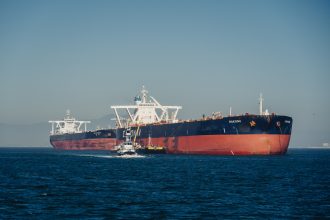
Markets evaluate the conflict primarily through oil metrics. Brent crude traded near $90 a barrel as idle tankers anchored off the coast and headlines concerning the Strait of Hormuz drove price adjustments. Oil represents a visible and anticipated vulnerability. Water security poses a far more severe systemic risk to the Gulf monarchies, yet Iranian forces have hit these coastal facilities over four straight nights.
This infrastructure lies beyond the protective scope of naval and air defense platforms. Warships escort tankers and missile batteries intercept incoming drones, but defense systems cannot relocate fixed industrial sites. Desalination plants operate as large, exposed facilities along the shoreline, situated within range of Iranian ballistic and cruise missile launch sites. Analysis from CSIS identifies these plants as open industrial targets located within 350 kilometers of Iran. A small group of high-capacity facilities supplies the majority of potable water along the coastline, creating a concentrated set of high-value targets.
Disrupting these plants eliminates basic urban continuity within days. Kuwait possesses no natural aquifers, rivers, or predictable rainfall patterns capable of substituting for industrial production. Qatar and Bahrain face similar levels of total dependence. The urban centers of the Gulf rely on coastal plants operating without interruption. Disruption on this scale leaves urban centers uninhabitable.
Targeting water infrastructure builds on previous precedents in the regional conflict. An Iranian strike killed an Indian worker at a Kuwaiti power and water facility in March, following an earlier strike on a Bahraini desalination plant. The operational pattern shifted this week through sustained, multi-night targeting of civilian facilities following American strikes against infrastructure inside Iran.
This sequence forms the central dynamic of the escalation. American forces initiated strikes on bridges, ports, and energy installations in Iran, following public warnings that Iranian power infrastructure would face destruction unless Tehran altered its posture in Hormuz. Striking Iran’s electrical grid disables the pumps and filtration membranes required for domestic water processing. Iranian leadership outlined its response: strikes on Iranian power grids would be met with attacks on Gulf desalination capacity. The four-day strike sequence against Kuwait demonstrates the execution of that policy.
Official statements from Tehran avoid explicit acknowledgment of targeting water infrastructure. Spokespersons for the Islamic Revolutionary Guard Corps (IRGC) listed military targets, including HIMARS launchers and American troop deployments positioned approximately one kilometer from the Shuaiba plant. Physical destruction of water processing units remains identical regardless of stated targeting intent. When munitions strike adjacent to primary desalination units, operational capacity drops regardless of military rationale.
This operational reality complicates Washington’s strategic calculations. Standard doctrine advocates maintaining escalation pressure without conceding targeting restrictions. However, Iranian strikes continue regardless, while threats against Iran’s grid directly incentivize counter-strikes on unprotectable Gulf water infrastructure. Public warnings aimed at Iranian infrastructure trigger retaliation against civilian utilities in Gulf states hosting American installations.
The 1973 oil embargo demonstrated the economic impact of supply disruption. Water infrastructure represents an even more sensitive vulnerability, lacking strategic reserves to cushion supply shocks. Historical norms largely protected water and power generation facilities from systematic targeting due to their direct connection to civilian survival. That operational boundary is dissolving along the Kuwaiti coast. Similar dynamics exist elsewhere: India placed the Indus Waters Treaty in abeyance, while Egyptian Foreign Minister Badr Abdelatty identified Nile water flow as an existential issue amid ongoing disputes over the Grand Ethiopian Renaissance Dam. Coastal desalination facilities expose the same structural vulnerability in arid environments.
Washington faces a choice regarding its targeting framework. It can continue threatening Iran’s energy grid and accept reciprocal destruction of Gulf desalination capacity, or it can attempt to exclude utility infrastructure from the target set. Diplomatic initiatives emerging in Islamabad reflect growing regional urgency to halt strikes on vital utilities. Crossing this threshold demonstrates to host monarchies that security guarantees have exposed their core water supplies to kinetic risk, establishing a precedent that will shape regional alignment well beyond the current conflict.