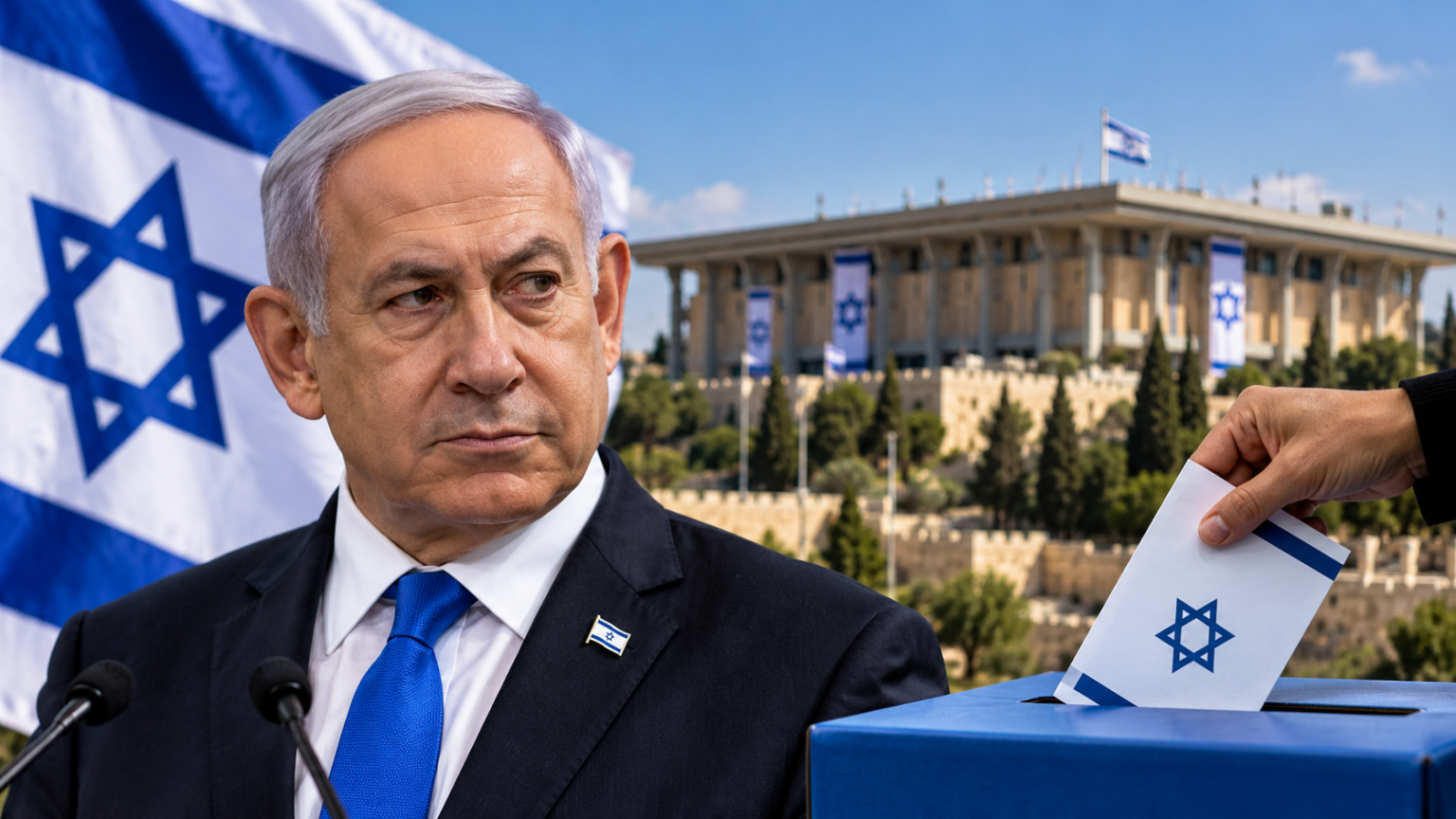
Jerusalem, 25 October, (Brussels Morning Newspaper) – Israel is preparing for a closely contested parliamentary election on 27 October, with Prime Minister Benjamin Netanyahu facing a significant challenge to his leadership amid regional security concerns, political divisions and uncertainty over the formation of the next government.
The Israeli election will determine the composition of the 120-member Knesset and could reshape the country’s political leadership, security priorities and diplomatic relations with international partners, including the European Union.
Research published by the European Parliament on 15 October indicates that neither Netanyahu’s governing bloc nor the opposition is assured of the 61 parliamentary seats required to form a government.
Netanyahu Faces Major Challenge From Opposition Parties
Netanyahu’s Likud party is seeking to retain power alongside its nationalist and religious coalition partners.
The opposition includes former military chief Gadi Eisenkot’s Yashar party and an alliance involving former prime minister Naftali Bennett and opposition politician Yair Lapid.
The campaign has focused on national security, political accountability and the government’s handling of the conflicts that followed the Hamas-led attacks of 7 October 2023.
Recent polling has highlighted the difficulty both political blocs could face in securing a governing majority. Even parties winning substantial parliamentary representation may need complicated coalition negotiations.
Israel Confirms Voting Arrangements Ahead of Poll
Israel’s Central Elections Committee has confirmed that voting will take place on Tuesday, 27 October.
According to its official timetable, candidate lists were scheduled for publication on 18 October, followed by polling station announcements on 20 October.
The committee’s preparations include distributing election materials and finalising administrative arrangements for voting.
Official election results are scheduled for publication on 4 November, although preliminary results may emerge earlier.
Security and Military Recruitment Shape Political Debate
National security remains a central issue in the campaign, particularly following conflicts involving Gaza, Lebanon and Iran.
Another contentious issue concerns military service exemptions for ultra-Orthodox Jewish men.
The European Parliament’s research service identified military recruitment, Israel’s security strategy and accountability for the October 2023 attacks as major subjects influencing political debate.
Netanyahu also continues to face a domestic corruption trial and an International Criminal Court arrest warrant issued in 2024. He denies wrongdoing.
Why the Vote Matters for Brussels and the European Union
The outcome carries significance beyond Israel’s borders, particularly for European governments monitoring developments in the Middle East.
For Brussels, Israel’s future leadership will be relevant to diplomatic discussions concerning Gaza, regional stability, humanitarian access and international law.
Changes in Israel’s governing coalition could affect the direction of these discussions, although no particular policy shift can be assumed before a new administration is formed.
The election also comes as European institutions continue assessing political and security developments across the region.
What Happens After the Israeli Election?
Under Israel’s parliamentary system, voters select party lists rather than directly electing the prime minister.
Following the vote, the Israeli president consults parliamentary factions before assigning a Knesset member responsibility for forming a government.
The European Parliament’s research service explains that the coalition formation process requires an agreement capable of obtaining parliamentary approval.
With official results expected on 4 November, attention will turn to negotiations over the next governing coalition.
Whether Netanyahu remains prime minister or a different parliamentary alliance forms the next government will depend on the election results and subsequent political agreements.