
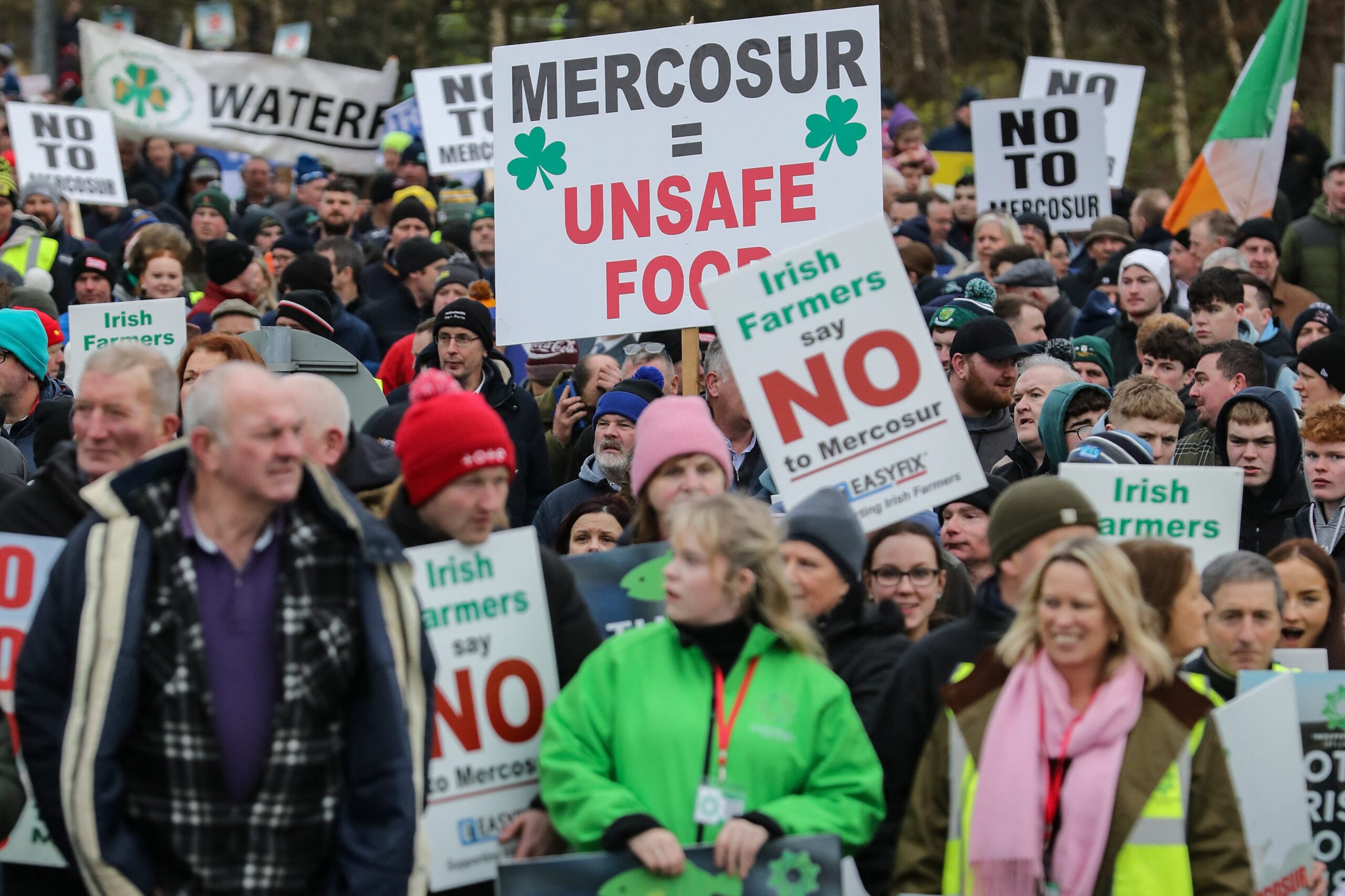
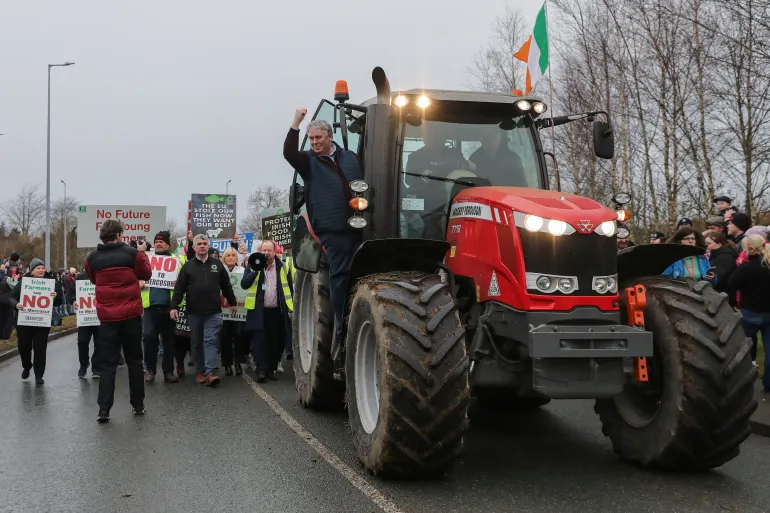
Dublin, January 2026 — Brussels Morning Newspaper — Thousands of Irish farmers mobilised across Ireland this month, transforming city streets and rural hubs into centres of protest as pressure mounted on EU trade policy, placing agriculture, sustainability, and rural livelihoods at the forefront of European political debate at the start of 2026.
The demonstrations, sparked by opposition to the proposed EU-Mercosur trade agreement, reflect widening concern among farmers that decisions shaped in Brussels increasingly overlook the realities faced by local producers. As tractors rolled into Dublin and banners filled public squares, the protests signalled more than sectoral dissatisfaction — they marked a broader challenge to how trade priorities are set within the European Union.
A Surge of Protest Across Ireland
From Dublin to Cork and across rural counties, farmers gathered in large numbers, drawing public attention to what they see as an imbalance between global trade ambitions and domestic protection. Organisers said the turnout represented one of the largest agricultural mobilisations in Ireland in recent years.
The protests unfolded peacefully but forcefully, with farming unions warning that EU trade policy risks undermining long-established agricultural standards and economic stability. Demonstrators argued that while trade expansion may benefit certain sectors, farming often bears the cost.
Understanding the Mercosur Agreement
The Mercosur agreement seeks to deepen trade ties between the European Union and South American nations including Brazil and Argentina, reducing tariffs and increasing market access for goods ranging from beef to manufactured products.
Supporters of the agreement describe it as a landmark trade deal that strengthens Europe’s global economic position. Critics, however, argue that the agreement exposes farmers to competition from producers operating under different regulatory frameworks, raising concerns about fairness and sustainability.
Why Irish Farmers Are Especially Concerned
Ireland’s agricultural sector is uniquely exposed to shifts in trade. Beef and dairy exports are central to the national economy, and farming remains a cornerstone of rural life.
Farmers say changes to EU trade policy can quickly translate into price volatility, income uncertainty, and long-term viability challenges for family-run farms. Many argue that Irish producers already comply with some of the world’s strictest environmental and welfare standards, leaving them vulnerable to cheaper imports.
Economic Pressures on Rural Communities
Beyond farm incomes, protesters highlighted the broader economic ripple effects. Reduced profitability in agriculture can weaken rural economies, affecting employment, local businesses, and public services.
Economists note that while agriculture represents a modest share of GDP, its social and political weight is significant. As debate over EU trade policy intensifies, rural voters are becoming an increasingly influential voice.
Environmental Standards and Fair Competition
Environmental protection featured prominently in protest messaging. Farmers argued that trade agreements must uphold equivalent standards on emissions, land use, and animal welfare.
Critics warn that EU trade policy risks contradicting Europe’s climate commitments if imports are sourced from regions linked to deforestation or weaker environmental oversight. Environmental groups echoed these concerns, aligning with farming unions in calling for stronger safeguards.
Political Reaction in Dublin
Irish political leaders have responded cautiously. Government officials acknowledged farmers’ concerns while emphasising Ireland’s role within EU decision-making structures.
Opposition parties have been more vocal, arguing that the scale of protests reflects a growing disconnect between Brussels-driven EU trade policy and domestic priorities. Several lawmakers called for a reassessment of Ireland’s position on the Mercosur deal.
Brussels Defends Its Trade Strategy
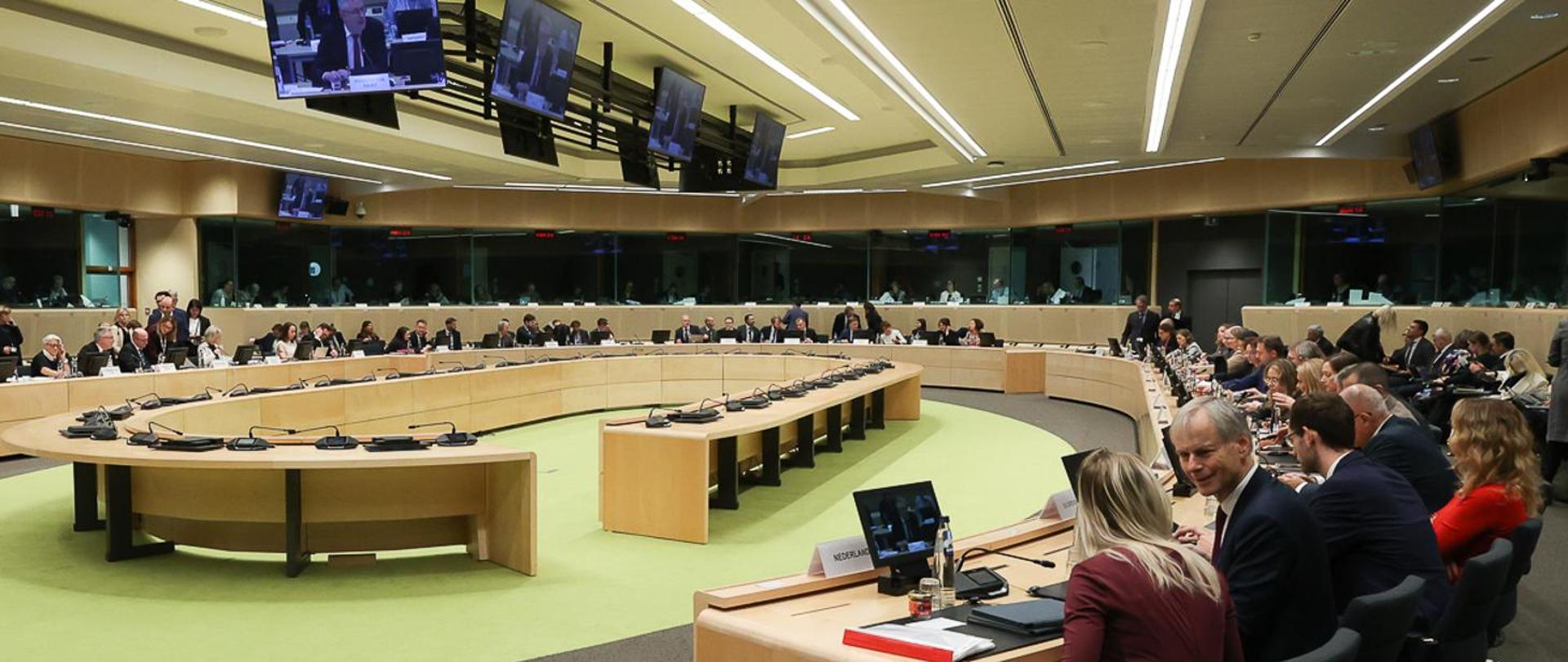
EU officials maintain that trade agreements include protections for sensitive sectors and sustainability commitments. They argue that diversification strengthens Europe’s economic resilience and geopolitical standing.
Still, officials concede that public trust in EU trade policy has weakened in parts of rural Europe, prompting discussions on how to better communicate safeguards and enforcement mechanisms.
A Wider European Pattern
Ireland is not alone. Similar demonstrations have occurred in France, Belgium, and parts of Eastern Europe, suggesting a shared anxiety among farmers across the bloc.
Analysts say resistance to current EU trade policy could influence future negotiations, forcing Brussels to balance competitiveness with social cohesion more carefully.
Agriculture’s Strategic Role in Europe
Food security, land stewardship, and rural stability remain politically sensitive issues. While global trade offers economic opportunities, agriculture occupies a symbolic role tied to national identity and sustainability.
Debates around EU trade policy increasingly reflect this tension, as farmers seek assurances that trade liberalisation will not erode long-term resilience.
Voices From the Protests
One senior farming representative said,
“Trade must protect those who produce Europe’s food, not sacrifice them in the pursuit of volume.”
The statement captured a sentiment echoed across protest sites, underscoring the emotional and economic stakes involved.
The Challenge of Ratification
The Mercosur agreement still faces ratification hurdles across EU member states. National parliaments and regional authorities retain influence, meaning sustained opposition could delay or reshape the deal.
Observers note that resistance linked to EU trade policy may grow as elections approach in several countries, increasing political sensitivity around trade decisions.
Global Trade Versus Local Reality
Globally, the EU positions itself as a champion of rules-based trade. Reconciling that role with domestic pressures has become increasingly complex.
The Irish protests highlight how EU trade policy now sits at the intersection of global ambition and local accountability.
What 2026 Could Bring
As 2026 unfolds, agricultural policy is expected to feature prominently in EU debates. Pressure from farmers may prompt reviews of safeguard mechanisms and enforcement practices.
The future direction of EU trade policy may depend on whether Brussels can rebuild trust with rural communities while maintaining its global trade agenda.
Long-Term Implications for Europe
Trade agreements shape economic relationships for decades. Ensuring public confidence is essential to long-term stability and cohesion within the EU.
Failure to address concerns tied to EU trade policy risks deepening divisions between urban and rural Europe.
A Defining Moment for European Trade
The Irish farm protests have elevated trade policy from a technical issue to a public debate. As Europe navigates economic uncertainty, climate goals, and geopolitical competition, the balance between openness and protection has never been more delicate.
The growing scrutiny of EU trade policy represents a pivotal moment — one that may redefine how Europe aligns global engagement with local sustainability.
When Farmers Shape the Future of Trade
The outcome of this debate will resonate far beyond agriculture, influencing Europe’s economic direction, political cohesion, and global credibility in the years ahead.