Brussels, Belgium, 26 November – Brussels Morning Newspaper – European Union leaders are facing difficult negotiations in Brussels over a proposed €1.58 trillion budget for 2028–2034, with disagreements over agricultural funding, defence investment, regional development and the financial contributions expected from member states threatening to complicate an agreement on Europe’s long-term spending priorities.
- Member States Divided Over Spending Priorities
- Agriculture, Defence and Competitiveness at the Centre of the Dispute
- European Parliament Wants a More Ambitious Budget
- New EU Revenue Sources Could Change How the Budget Is Financed
- Ukraine Financing Complicates the Brussels Discussions
- Why the EU Budget Matters for Belgium
- December Summit Could Be Decisive
The proposed financial framework, presented by European Council President António Costa, is intended to establish the EU’s spending priorities for seven years from January 2028. The negotiations involve all 27 member states and the European Parliament, with governments under pressure to balance traditional EU funding programmes against growing demands for security, economic competitiveness and technological investment.
The proposed €1.582 trillion package is substantially below the European Commission’s original proposal of approximately €1.98 trillion. It has therefore reopened disagreements over how much the bloc should spend, how the money should be distributed and whether additional revenue sources should be introduced.
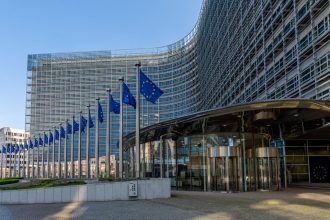
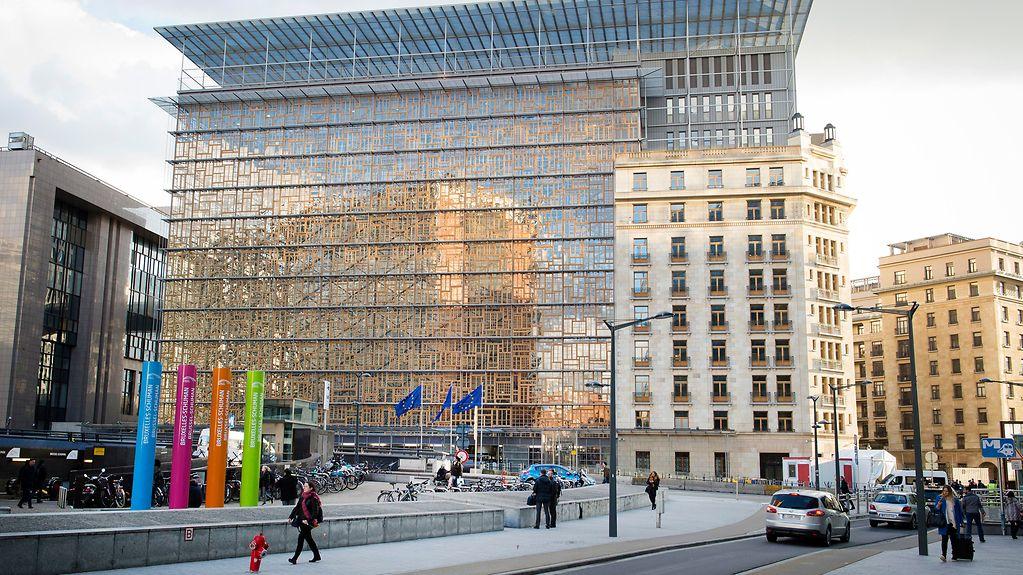
The discussions are particularly important for Brussels, which hosts the principal EU institutions and has become the centre of negotiations that could shape European economic and political priorities well into the next decade.
Member States Divided Over Spending Priorities
The biggest obstacle is the disagreement between countries that want to limit the EU’s overall spending and those seeking to protect funding for agriculture and regional development.
The divisions became more visible before the Brussels summit. On 23 November, leaders from Poland, the Czech Republic, Hungary and Slovakia, alongside Austria, rejected Costa’s proposal following a meeting in Bratislava.
The countries argued that the proposed financial structure did not adequately protect cohesion funding and agricultural support. They also raised concerns about the distribution of resources between national governments and European-level priorities.
Germany, meanwhile, has expressed reservations about the overall size of the proposed budget. France and representatives of the European Parliament have also criticised aspects of the compromise.
These disagreements illustrate the difficulty of finding a settlement acceptable to countries with different economic circumstances and political priorities. Wealthier net contributors generally want tighter spending controls, while several countries in Central and Eastern Europe want stronger guarantees for regional investment and agricultural support.
Agriculture, Defence and Competitiveness at the Centre of the Dispute
The next EU budget must respond to a different security and economic environment from the one in which the current financial framework was negotiated.
Agriculture and cohesion policy remain important because they support farmers, rural communities, infrastructure and economic development in less prosperous regions.
However, Russia’s full-scale invasion of Ukraine, rising security concerns and competition from the United States and China have increased pressure on European governments to invest more in defence, advanced technology and industrial capacity.
Costa’s proposal seeks to balance these competing demands. Around €740 billion is earmarked for agriculture and cohesion priorities, according to Reuters.
The debate is therefore not simply about reducing or increasing expenditure. It concerns whether the EU can preserve its established programmes while financing new strategic priorities without placing an excessive burden on national budgets.
European Parliament Wants a More Ambitious Budget
The European Parliament is another important participant in the negotiations and has called for a larger financial framework.
In April 2026, Parliament adopted a negotiating position supporting a budget equivalent to 1.27% of EU gross national income, with repayment costs associated with the NextGenerationEU recovery fund treated separately.
Its position amounts to approximately €1.789 trillion in 2025 prices, excluding those debt repayments.
MEPs argue that the EU needs sufficient resources to support agriculture, regional development, social programmes, defence and economic competitiveness.
Parliament has also emphasised the importance of democratic oversight, transparency and protecting the EU’s financial interests.
The difference between Parliament’s preferred spending level and Costa’s latest proposal represents a significant challenge for the next stage of negotiations. Any final Multiannual Financial Framework will require the European Parliament’s consent after agreement among member states.
New EU Revenue Sources Could Change How the Budget Is Financed
Another contentious issue concerns how the European Union will finance its long-term spending commitments.
Costa’s proposal includes five potential new sources of EU revenue:
-
A contribution linked to digital services.
-
Revenue from non-recycled electronic waste.
-
A contribution related to tobacco products.
-
Revenue associated with the Carbon Border Adjustment Mechanism.
-
A greater contribution from the Emissions Trading System.
The proposed revenue package could generate approximately €60 billion annually, according to the European Council.
The digital contribution would target qualifying large companies operating in the EU’s digital economy. Other proposed measures are intended to diversify the bloc’s revenue sources and reduce pressure on national contributions.
However, the proposals still require political agreement and further legislative work. They should not be confused with taxes that have already been approved or implemented.
The debate highlights a broader question about the future financing of European integration: whether the EU should continue relying primarily on national contributions or develop a stronger system of independent revenue sources.
Ukraine Financing Complicates the Brussels Discussions
Ukraine’s financial requirements have added another major issue to the negotiations.
At the November summit, EU leaders are also discussing a proposed €45 billion in additional financial assistance for Ukraine in 2027.
The European Commission presented the proposal on 18 November, building on the existing €90 billion Ukraine Support Loan for 2026 and 2027.
Reuters has also reported that the proposed 2028–2034 financial framework includes up to €100 billion for Ukraine. Some diplomats believe this would not be sufficient to meet the country’s longer-term financial requirements.
The proposed 2027 loan has exposed further disagreements. Slovakia, the Czech Republic, Hungary and Bulgaria oppose sharing its financial burden, while Germany and other governments favour broader participation.
The discussions demonstrate how the EU’s long-term financial planning is increasingly connected to its security commitments and support for Ukraine.
Why the EU Budget Matters for Belgium
For Belgium, the negotiations have particular importance because Brussels is the centre of EU decision-making.
The final budget will influence European funding programmes, research investment, infrastructure development, industrial policy and agricultural support.
Belgian companies and research institutions may benefit from European programmes supporting technological innovation, clean industry and competitiveness. Regional authorities also have an interest in the future allocation of cohesion funding.
Beyond Belgium, the agreement will affect all 27 EU member states, determining the financial resources available for common European priorities between 2028 and 2034.
It will also influence Europe’s ability to respond to economic competition, geopolitical instability, energy challenges and the changing requirements of its defence sector.
December Summit Could Be Decisive
European leaders are using the 26–27 November meeting to narrow their differences rather than finalise the entire budget immediately.
European Council President António Costa has urged national leaders to approach the negotiations constructively and reach a timely agreement.
Speaking ahead of the summit on 26 November, Costa stressed the need for compromise and unanimity. He identified three central questions: the overall size of the budget, the distribution of funding and agreement on new EU revenue sources.
The leaders are working towards a possible political agreement at the European Council meeting scheduled for 17–18 December 2026.
Even if national leaders reach a compromise, the legislative process will continue. The Council must unanimously adopt the Multiannual Financial Framework regulation, with the consent of the European Parliament.
For now, the €1.582 trillion proposal remains a negotiating position rather than an approved budget.
The outcome will determine how the European Union balances its traditional commitments with the growing demands of defence, economic security and international competitiveness. For Brussels, the negotiations are a major test of whether 27 governments can agree on a common financial direction for Europe over the next seven years.