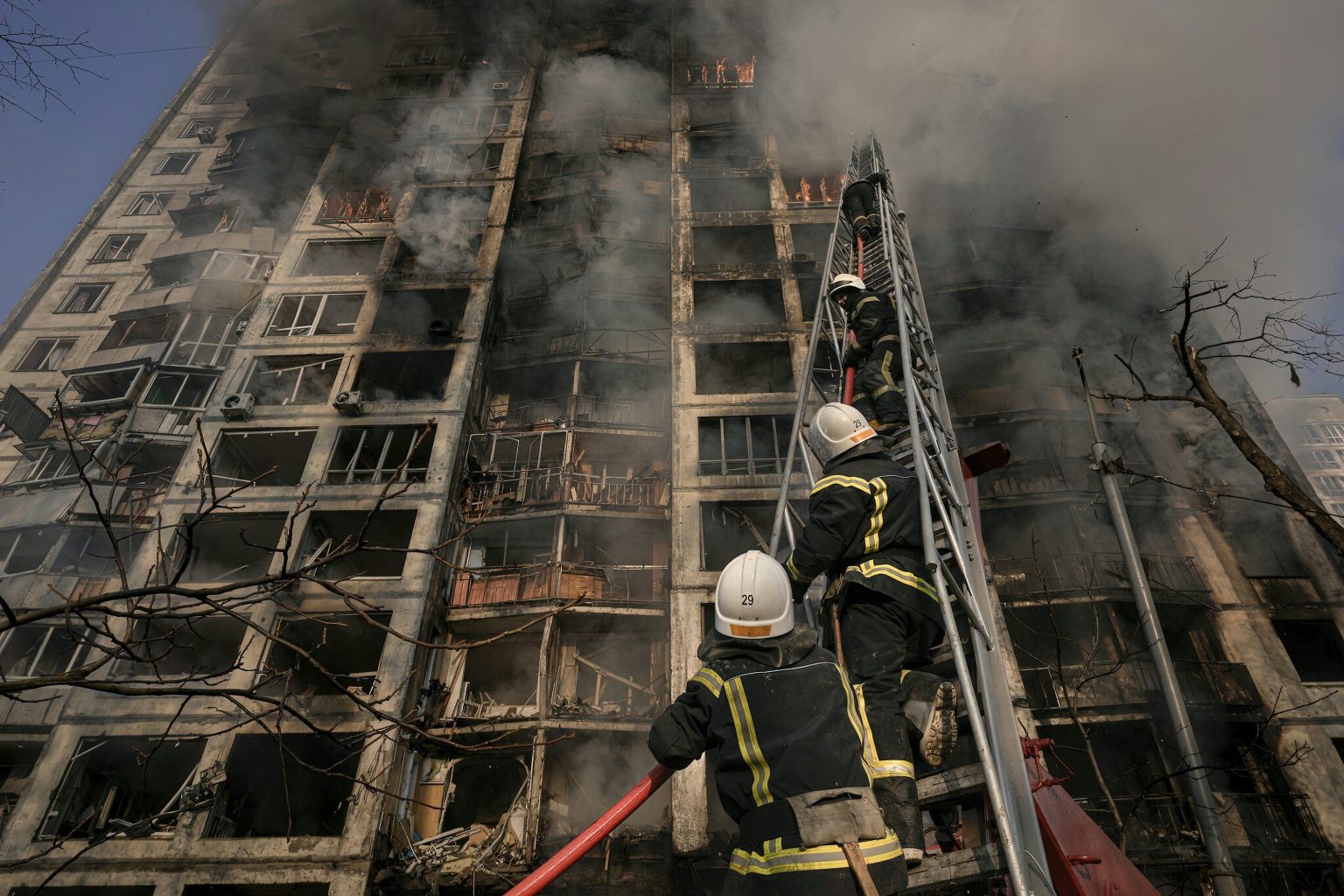
Kyiv, Ukraine, 26 November – Brussels Morning Newspaper – Russian forces struck Ukraine’s capital, Kyiv, with ballistic missiles overnight on 25–26 November, injuring seven people and damaging a shopping centre and other buildings, according to Ukrainian authorities. Two of the injured were reported to be in serious condition, as emergency services responded to fires and destruction across the city’s eastern districts.
- Shopping Centre and Buildings Hit on Kyiv’s Left Bank
- Ukraine Reports 113 Russian Drones in Overnight Assault
- Russia Claims It Targeted Ukrainian Drone Facilities
- Kharkiv Also Reports Russian Attack
- Why the Kyiv Attack Matters for Belgium and European Security
- US Approves Additional F-16 Support for Ukraine
- What Happens Next?
The overnight assault also involved 113 Russian attack drones, including 76 jet-powered variants, according to Ukraine’s Air Force. The attack adds to the pressure on Ukraine’s air defence systems and highlights the continuing threat to civilians as Russia intensifies its aerial campaign against Ukrainian cities.
Kyiv Mayor Vitali Klitschko confirmed the casualties and damage, reporting that missiles struck several buildings on the eastern side of the Dnipro River. One of the affected structures sustained particularly serious damage, while a large fire sent thick smoke into the sky above the capital.
Shopping Centre and Buildings Hit on Kyiv’s Left Bank
The explosions were reported late on Wednesday, 25 November, with air raid warnings prompting residents to seek shelter. The attack continued into the early hours of Thursday.
According to Klitschko, the missiles hit a shopping centre and two other buildings on Kyiv’s Left Bank, the area situated east of the Dnipro River.
The Kyiv City Military Administration subsequently confirmed that seven people had been injured. Two victims were reported to be in serious condition.
Initial information identified damage to non-residential buildings in the Desnianskyi district. Emergency services responded to fires and assessed the affected locations.
The full extent of the structural damage and the financial cost of the attack had not been established in the initial reports.
Ukraine Reports 113 Russian Drones in Overnight Assault
The missile attack formed part of a broader Russian aerial operation against Ukraine.
Ukraine’s Air Force reported that Russian forces launched 113 Shahed-type attack drones alongside ballistic missiles. Of the drones, 76 were identified as jet-powered variants.
Preliminary figures released by the Ukrainian military indicated that air defence units had intercepted or suppressed 87 drones by 08:00 local time on Thursday.
The remaining aerial threats and reported impacts demonstrated the scale of the overnight operation. The interception figure relates to drones and should not be interpreted as confirmation that all ballistic missiles targeting Kyiv were intercepted.
The combination of ballistic missiles and large numbers of drones creates a complex challenge for Ukrainian air defence forces. Different speeds, flight paths and attack patterns require simultaneous responses from military units protecting major cities and strategic infrastructure.
Russia Claims It Targeted Ukrainian Drone Facilities
Russia’s Defence Ministry confirmed that its forces had struck two locations in Kyiv, describing them as facilities connected to Ukrainian drone production and storage.
Moscow identified one site as the Khimvolokno company, which it said manufactured components for drone warheads.
The second location was reportedly operated by Oakline and used for assembling and storing drones associated with Ukrainian manufacturer Fire Point.
These explanations represent Russia’s account of the intended targets. Reuters reported that it could not independently verify the claims, while Ukraine’s military had not immediately commented on Moscow’s description.
The distinction is important because the confirmed damage included a shopping centre and other buildings. The available reporting does not independently establish the precise intended target of each missile or whether all the affected structures were connected to military activities.
Kharkiv Also Reports Russian Attack
Kyiv was not the only Ukrainian city affected by the overnight assault.
Kharkiv Mayor Ihor Terekhov reported that a Russian strike had wounded three people in Ukraine’s second-largest city. He also said that people were believed to be trapped beneath rubble following the attack.
The incident added to concerns about the geographical scale of Russia’s aerial operations, with several Ukrainian regions facing threats from missiles and drones.
Separate reporting on the wider attacks indicated that Russian strikes caused casualties and damage in other parts of Ukraine during the same period. The precise figures varied as regional authorities continued updating their assessments.
Why the Kyiv Attack Matters for Belgium and European Security
The latest attack has wider significance beyond Ukraine’s borders.
For Belgium and other European Union member states, the continued bombardment of Ukrainian cities reinforces concerns about European security, military preparedness and the protection of civilian populations.
Belgium is both an EU and NATO member and participates in the broader European response to Russia’s invasion of Ukraine. The continuing conflict remains central to discussions about military assistance, air defence capabilities and Europe’s long-term security arrangements.
The latest assault also highlights the growing importance of integrated air defence systems. Ukraine must respond to ballistic missiles, cruise missiles and increasingly sophisticated drones while protecting population centres and critical infrastructure.
For European governments, the conflict demonstrates the importance of maintaining effective military capabilities and coordination among NATO allies. It also underlines the humanitarian consequences of a war that continues to affect millions of Ukrainians.
The attack comes as Ukraine faces the additional challenges associated with the winter season. Damage to essential infrastructure during colder months can increase pressure on electricity, heating and emergency services. However, the available reports do not establish that the latest Kyiv strikes directly disrupted the city’s energy supply.
US Approves Additional F-16 Support for Ukraine
The attack also comes amid continuing international military assistance to Kyiv.
The US State Department announced approval of a $621.9 million package for F-16 aircraft maintenance and equipment for Ukraine. The funding is expected to come through contributions from European countries, according to reporting by Reuters and RTÉ.
F-16 aircraft form part of Ukraine’s wider air defence capabilities. Their maintenance and operational availability are important as the country faces repeated Russian aerial attacks.
The additional support reflects the continuing involvement of Western partners in strengthening Ukraine’s ability to defend its territory.
What Happens Next?
Ukrainian authorities are continuing to assess the damage caused by the overnight attack, while emergency services respond to the consequences of the strikes.
The reported death and injury figures may change as officials provide further updates. As of the latest reports on 26 November, seven people had been injured in Kyiv, including two in serious condition.
Ukraine’s military is expected to maintain air surveillance and defensive operations as the threat of further Russian missile and drone attacks continues.
Moscow has described the operation as targeting facilities associated with Ukrainian drone production. However, the precise targeting of individual missiles and the full extent of the damage remain matters requiring independent verification.
For residents of Kyiv, the latest bombardment is another reminder of the continuing danger posed by Russia’s aerial campaign. For Belgium and the wider European Union, it reinforces the urgency of the security and humanitarian questions surrounding the war in Ukraine.