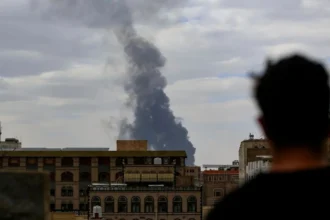
Aleppo, Syria, January 14, 2026 — Brussels Morning Newspaper details a serious security incident after an unmanned aerial vehicle struck a governorate administration building in the centre of Aleppo. The Drone attack Aleppo unfolded during working hours in a busy administrative district, instantly drawing emergency crews and security forces to the scene and reviving concerns over urban safety in northern Syria.
A loud explosion echoed across surrounding neighborhood, briefly interrupting daily routines. Smoke rose from part of the building as police secured nearby streets and emergency sirens filled the air.
Location, Timing, and Immediate Urban Impact
The strike occurred in one of Aleppo’s most active civic zones, surrounded by public offices, residential blocks, and commercial premises. Officials said the drone approached at low altitude, leaving little time for reaction before impact. Traffic congestion and pedestrian movement amplified the sense of alarm.
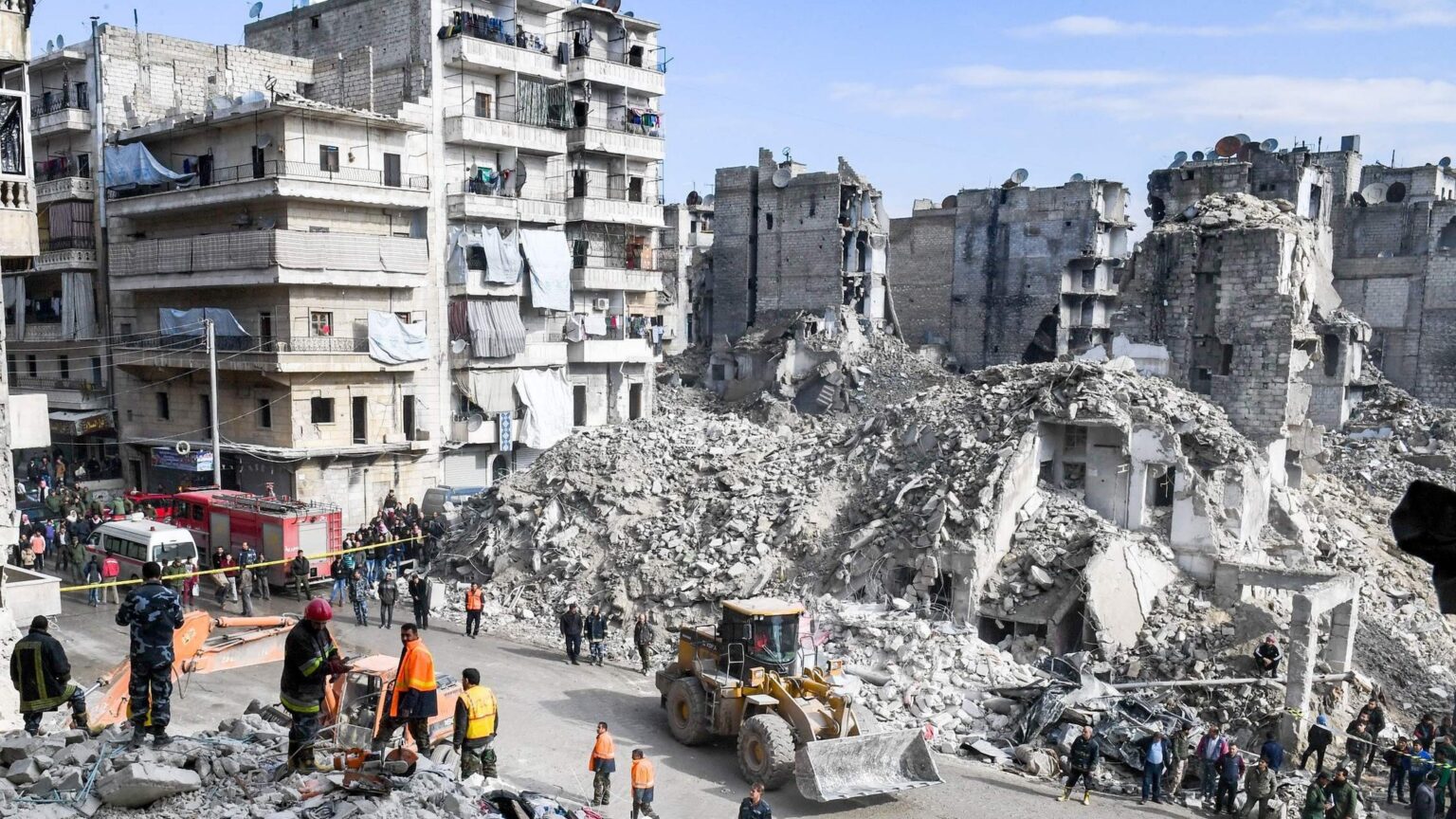
Witnesses described shattered windows, halted traffic, and people fleeing the area. The Drone attack Aleppo forced authorities to close surrounding roads to ensure safe access for emergency res-ponders.
Emergency Response and Medical Operations
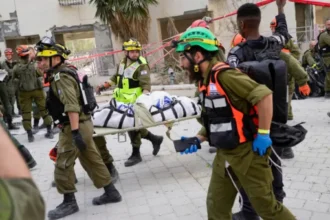
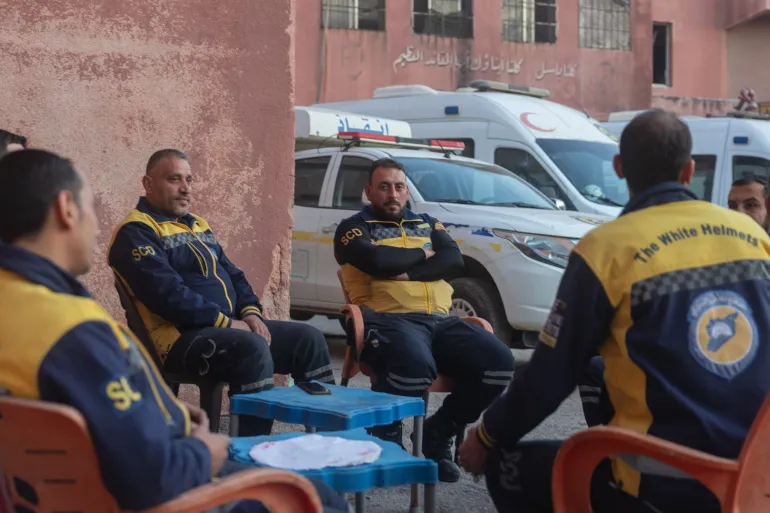
Civil defence units, ambulances, and fire crews arrived within minutes. Medical sources confirmed that several individuals were treated for minor injuries, largely from flying debris and shock. The Drone attack Aleppo tested emergency readiness in a dense urban environment, with responders praised for coordinated action.
Firefighters extinguished small fires sparked by debris, while engineers assessed the building’s structural integrity before allowing limited access.

Security Measures Enforced Across Central Districts
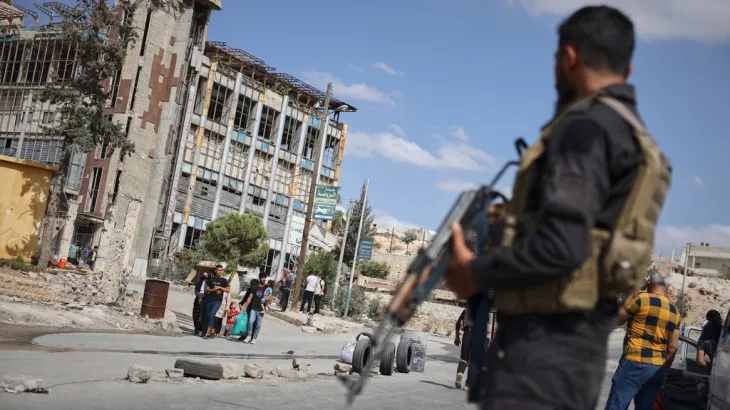
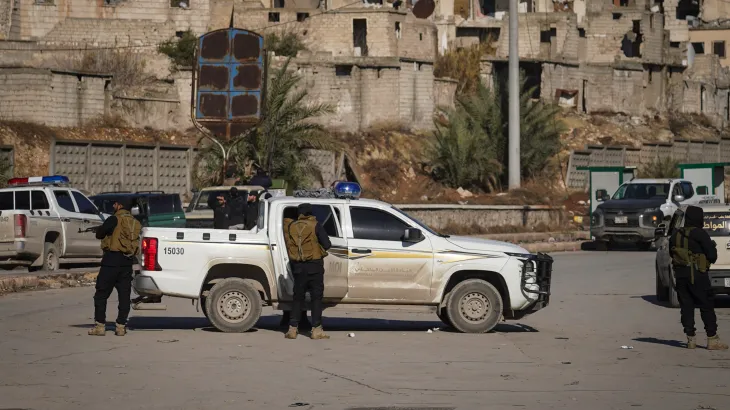
Authorities imposed temporary security restrictions around government facilities and transport hubs. Additional patrols were deployed, and checkpoints were reinforced at key intersections. The Drone attack Aleppo prompted precautionary steps aimed at preventing any follow-up incidents and restoring public confidence.
Residents were urged to avoid the affected area until inspections were completed and access restrictions lifted.
Investigation Into the Aerial Device
Specialist teams collected fragments from the site to identify the drone’s model and payload. Analysts are examining propulsion components to determine launch methods and possible origins. The Drone attack Aleppo has renewed debate over the difficulty of detecting low-flying unmanned systems in crowded cities.
Authorities said verified findings would be shared once technical assessments conclude.
Disruption to Civilian Life and Local Commerce
Daily life in the city centre was briefly disrupted. Shops closed temporarily, offices evacuated staff, and public transport routes were adjusted. For many residents, the Drone attack Aleppo revived memories of past instability, even as the city continues its gradual recovery.
Parents collected children early from nearby schools, while community leaders encouraged calm and cooperation with authorities.
Symbolic Importance of the Targeted Site
Governorate buildings represent local governance and access to public services. Analysts note that striking such locations carries psychological significance beyond physical damage. The Drone attack Aleppo targeted a site associated with civic authority, underscoring how modern security threats often seek symbolic impact.
Officials confirmed that administrative functions would continue, with contingency plans activated if required.
Drones and the Evolution of Urban Security
Unmanned aerial vehicles have become a defining feature of modern conflict due to their affordability and adaptability. The Drone attack Aleppo highlights how these systems can reach central urban locations with limited warning, challenging traditional security frameworks.
Experts warn that cities emerging from conflict face particular vulnerabilities if counter-drone measures do not evolve alongside reconstruction.
Official Reaction
One senior local official said,
“Safeguarding civilian institutions while preserving normal daily life requires constant vigilance and evolving security measures.”
The statement reflected broader concerns about maintaining safety without undermining public confidence.
Authorities reiterated that civilian protection and continuity of services remain priorities.
Regional and International Attention
The incident drew attention from regional observers monitoring developments in northern Syria. The Drone attack Aleppo fits a broader pattern in which unmanned systems are increasingly used to signal reach rather than cause mass casualties.
Humanitarian organisations renewed calls for the protection of civilian infrastructure and restraint in populated areas.
Gradual Restoration of Normal Activity
As inspections concluded, restrictions were eased and traffic resumed. Government offices reopened after safety checks, and businesses returned to regular hours. The Drone attack Aleppo did not halt reconstruction or civic operations, though it reinforced caution among residents.
Public transport services resumed later the same day.
Urban Security Planning and Preparedness
Security analysts say counter-drone systems will become increasingly important for cities worldwide. Radar coverage, electronic countermeasures, and intelligence coordination are among the tools under discussion following the Drone attack Aleppo.
Long-term planning, experts argue, must balance open public spaces with effective protection.
Recovery, Resilience, and Public Confidence
Aleppo’s recovery has included rebuilding infrastructure, reviving commerce, and restoring social life. Incidents such as this underline unresolved challenges but also demonstrate improved emergency readiness. The Drone attack Aleppo tested resilience in a city shaped by years of hardship.
Residents expressed determination to continue rebuilding despite renewed uncertainty.
Broader Implications for Urban Centres
Urban areas across the region are watching developments closely. The Drone attack Aleppo underscores how evolving tactics can affect cities even during periods of relative calm. Policymakers face pressure to strengthen safeguards without slowing reconstruction.
Regional cooperation, analysts say, will be essential to address shared aerial threats.
Civic Life Continues Under Heightened Awareness
Despite the shock, community institutions remained operational. Schools reopened after brief precautionary closures, and municipal services continued. The Drone attack Aleppo illustrated the delicate balance between vigilance and normalcy in recovering cities.
Local voices called for sustained investment in safety and public infrastructure.
Lessons for Future Urban Protection
Preparedness, coordination, and communication remain essential in managing emerging threats. The Drone attack Aleppo offers lessons on response speed, public messaging, and the need for adaptable security frameworks capable of addressing unmanned technologies.
Experts emphasise that prevention is as important as response.
Security Challenges in a Rebuilding City
The aerial strike on a governorate building stands as one of the most notable security incidents in Aleppo in early 2026. While damage and injuries were limited, the Drone attack Aleppo highlights ongoing risks facing cities rebuilding after conflict. As investigations continue, authorities remain focused on protecting civilians while supporting Aleppo’s path toward stability.
Aleppo’s Search for Stability in an Age of Emerging Threats
Aleppo’s future depends on its ability to confront new security risks without losing momentum in reconstruction and social recovery. As threats evolve, the city’s challenge lies in combining modern security planning with economic revival and public trust. Maintaining this balance will shape whether Aleppo’s next chapter is defined by disruption—or by resilience and renewal.