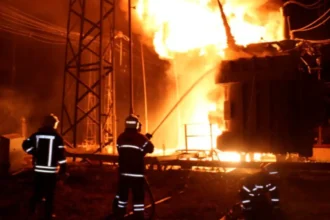

Europe (Brussels Morning Newspaper) – Dozens are feared missing after a boat carrying more than 200 migrants bound for Europe capsized off the Gambian coast, triggering rescue efforts.
In a televised broadcast, Gambian President Adama Barrow reported that seven bodies had been found and 102 people had been rescued from the ship that capsized in the North Bank.
Days after the disaster near the village of Jinack, volunteers, emergency services, and local fishermen have joined forces to hunt for victims.
Desperate for better prospects, thousands of Africans frequently put their lives in danger while traveling by boat along the Atlantic coast.
One of the deadliest migration routes in the world, it connects the coast of West Africa through Senegal, Mauritania, and the Gambia.
Due to the significant risk of boats capsizing, many migrants trying to enter Spain via the Canary Islands never make it. A boat from the Gambia capsized near the coast of Mauritania in August 2025, leaving over 150 passengers dead or missing. Over a dozen migrants were killed in a similar occurrence in July 2024, and 150 more were reported missing.
What caused the most recent catastrophe was unclear. According to the Ministry of Defense of the Gambia, the boat was discovered “grounded on a sandbank.”
“The national emergency response plan has been activated and the government has deployed adequate resources to intensify efforts and provide assistance to the survivors,”
Barrow said.
According to the Gambian leader, some of the 102 survivors were receiving critical medical attention.
Barrow promised a thorough inquiry while speaking with families, describing the incident as a “painful reminder of the dangerous and life-threatening nature of irregular migration.”
“The government will strengthen efforts to prevent irregular migration and remains determined to create safer and more dignified opportunities for young people to fulfil their dreams,”
he added.
What medical care has been provided to the rescued migrants?
Saved settlers from the Gambian boat capsizing have entered immediate on- point medical triage and stabilization by exigency services, with numerous transferred for sanitarium care.
Thirty- nine survivors passed sanitarium admission for injuries, dehumidification, hypothermia, and trauma sustained during the capsizing, while 57 others entered field treatment at a nonmilitary base including crack care, hydration, and introductory stabilization. Gambian health brigades prioritized critical cases amid ongoing quests.
President Barrow’s response includes expanded medical coffers under the National Emergency Plan, with transnational aid groups like IFRC covering for cerebral support and contagious complaint webbing. No specific MSF or WHO involvement has been reported yet in this incident.