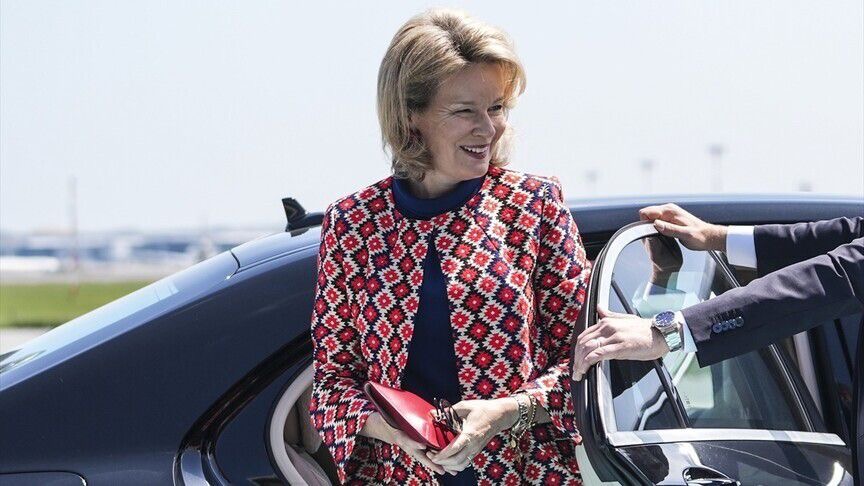
The recent rapprochement between Belgium and Türkiye may appear at first to be another routine diplomatic engagement shaped by trade agreements and investment talks. Yet Belgium’s economic mission to Türkiye, led by Queen Mathilde, carried a broader significance.
It took place on 10-14 May in İstanbul and Ankara.
At a time when global politics is increasingly shaped by distrust and strategic fragmentation, the visit demonstrated a more constructive and realistic model of European engagement grounded in dialogue, pragmatism and mutual interest.
The scale of the mission itself reflected this ambition.
More than 400 representatives from Belgian federal and regional authorities, businesses, universities and chambers of commerce travelled to Türkiye. This was not simply a symbolic diplomatic gesture. It showed Belgium’s capacity to combine diplomacy, business and innovation around a shared strategic vision.
The visit also revealed Belgium’s willingness to approach Türkiye with confidence rather than hesitation. A joint statement emphasized the momentum in bilateral relations and the shared interest in international peace between the two NATO allies.
The statement said, “In addition to strengthening economic cooperation, the mission constituted an important step in building more structured and closer political relations.”
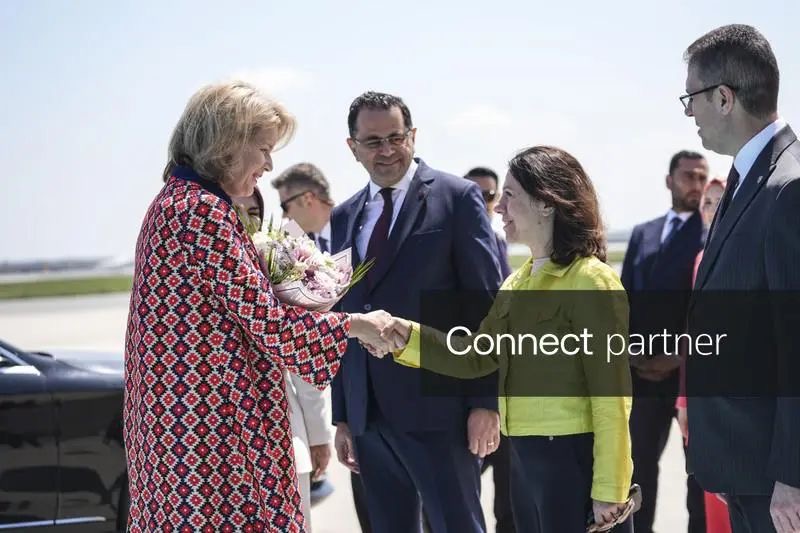
Echoing that spirit, the gathering was a reflection of renewed confidence between the two countries. Belgium did not simply send a delegation; it sent a signal. At a time when many European debates remain trapped in political caution and repetitive tensions, Belgium chose a more forward-looking approach focused on cooperation, pragmatism and long-term interests.
The sectors prioritized during the visit reflected this realism. Discussions focused on energy, logistics, aerospace, defense, digital transformation and Industry 4.0. These are not symbolic areas of cooperation but sectors central to the future geopolitical and economic landscape. Belgium’s diplomacy was therefore not nostalgic or ideological; it was based on strategic calculation.
For years, Türkiye-Europe relations have often been reduced to political disagreements, overshadowing broader opportunities for cooperation. Belgium demonstrated that meaningful partnerships do not require perfect political alignment. Instead, they require sustained dialogue and recognition of shared interests.
This approach highlights one of Belgium’s traditional diplomatic strengths. Belgium may not be Europe’s loudest political actor, but it has long played an important role as a consensus-builder capable of managing complexity and keeping channels of communication open. In today’s increasingly fragmented international environment, this quality has become particularly valuable.
Europe currently faces economic volatility, energy insecurity, migration pressures and renewed geopolitical competition. At the same time, supply chains are being redesigned, technological competition is accelerating and strategic geography is once again shaping global politics. In this context, Belgium’s engagement with Türkiye reflects an understanding of where Europe’s strategic interests are evolving.
And Türkiye itself has become increasingly difficult to ignore.
The delegation’s visit to one of Türkiye’s leading drone manufacturers further illustrated Belgium’s interest in Türkiye’s rapidly developing defense industry. Türkiye is no longer merely importing defense technologies but producing and exporting them. Drones, naval systems and advanced defense platforms have become part of a broader industrial ecosystem shaping Ankara’s international role.
Belgium’s engagement with this transformation reveals a modern understanding of security. Today, defense cooperation extends beyond military alliances and includes technology, innovation, logistics and industrial partnerships.
The visit also highlighted the need to modernize Türkiye-EU relations. Discussions focused on defense cooperation, digital transformation and economic connectivity.
These discussions reflect a wider reality: many of the frameworks governing Türkiye-EU relations belong to another era. They were designed for a different Europe, a different Türkiye and a different global economy. Belgium’s mission implicitly acknowledged that outdated structures cannot fully address today’s strategic realities.
Economic ties between the two countries already demonstrate the importance of cooperation. Bilateral trade reached a reported $9.2 billion in 2025, and both sides aim to increase it to $15 billion in the near future. Yet Belgium’s interest extends beyond trade figures. As the home of major EU and NATO institutions, Belgium understands that trade, logistics, technology and defense cooperation are all part of a broader geopolitical equation.
Today, Türkiye functions simultaneously as a manufacturing hub, energy corridor and emerging defense exporter connecting Europe to Central Asia, the Middle East and Africa. Belgium’s achievement was to recognize these realities without unnecessary political drama. It approached the country as a complex but strategically important partner.
Ultimately, Belgium’s outreach offers a broader lesson for Europe. Türkiye-EU relations require neither unrealistic optimism nor constant pessimism, but a more mature realism grounded in economic interdependence and geopolitical necessity.
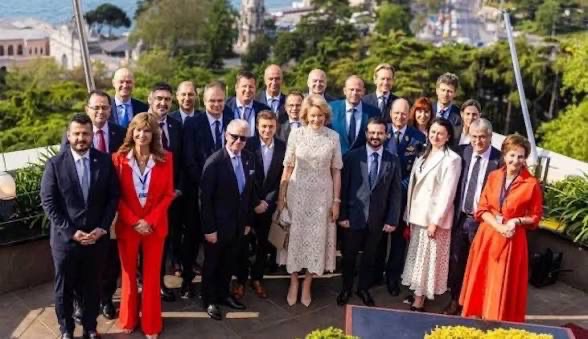
Belgium’s engagement with Türkiye suggests that Europe can still pursue constructive diplomacy based on pragmatism, strategic thinking and dialogue. In an increasingly polarized international environment, that may prove to be one of the most valuable forms of European leadership.