

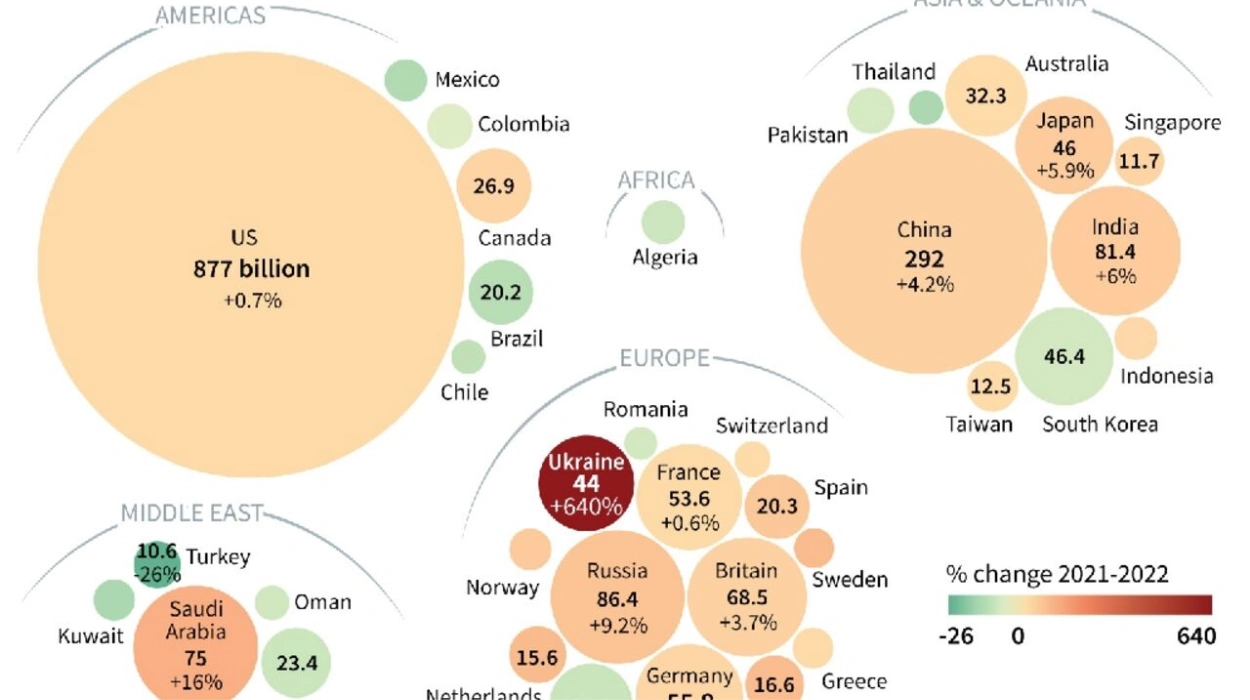
In the fiscal year 2017, the US was to decline about 589 billion dollars in its military expenditure. This was a modest rise compared to the 2012 figure of 585 billion dollars but this figure was short of the peak in 2010 when the figure was nearly 700 billion dollars. Of this budget alone 2X
- It has allotted an approximate amount of 7billion on the war against the Islamic State (IS).
- Additional funding was used to advance the military’s advanced technologies like the drones to gather intelligence, strategic Air Force bombers, and the new nuclear missile subs.
America has the largest military budget spending as compared to any other nation. To put it in perspective, France, Germany, Italy, and the UK combined annual expenditure are about $180 billion; China: about $ 215 billion, Russia: about 85 billion, Saudi Arabia: about 80 billion a year.
US Military Spending in Europe: The Quadrupling Plan
Another essential part of the US defense policy is its military force in Europe which comprises approximately 65,000 soldiers that are currently deployed on the European continent. The US has further announced plans to spend four times on its military presence in Europe, up to 3.4 billion dollars in 2017 against 789 million dollars in 2016 .
This huge increase in expenditure is to prevent Russian aggression and commit to NATO in the eastern side. The additional money would assist in the following ways.
- The strategy of amassing tanks and artillery in countries like the Baltic states, Poland, Bulgaria and Romania in the Eastern Europe,
- The additional deployment of more troops in European bases.
- Maintaining and upgrading to support new command and control facilities, as part of NATO high-readiness rapid deployment forces.
Strategic Importance of the Increased Spending
In a book called The Evolving Security Environment in Europe in 2014, Philip Breedlove, commander of US forces in Europe at the time, wrote of a revanchist Russia that posed as big a threat to US and European security as any other issues like the migrant crisis or the Islamic State. The increment of the budget is an extension of the long-term operations due to the changing security landscape.
States such as Poland are in the lobby to have permanent US bases with thousands of men stationed in the states as it once was with the former West Germany during the cold war. This is a suggestion that has widely been discussed prior to NATO summits and planning consultations.
Russia’s Response and Geopolitical Tensions
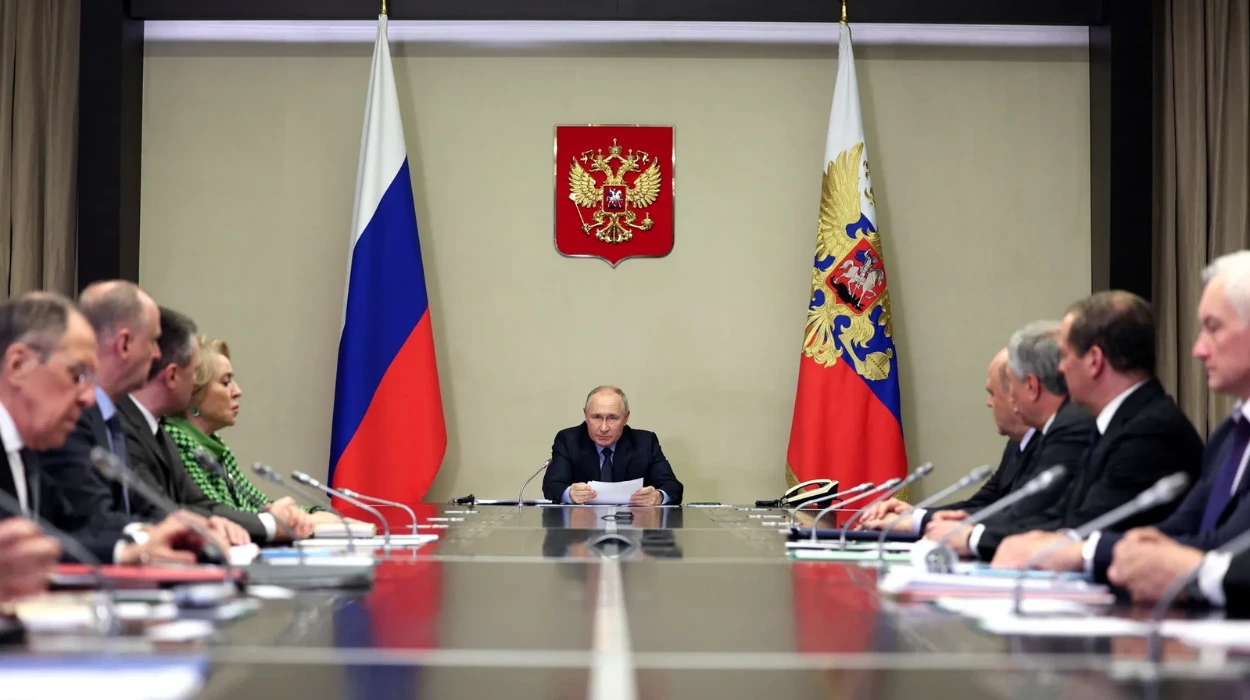
Russia considers any growth of the American or NATO influence around its borders to be provocative and a breach of the NATO-Russia Founding Act of 1997. Moscow asserts that this was violated because NATO expanded eastwards and involved itself in more military activities.
Such situations cause constant tensions as when Turkey shot down a Russian jet that allegedly infiltrated its airspace and when Russia conducted bombing campaigns in Syria that led to diplomatic talks with NATO and the US in order to avoid any clash.
The US is cautious that Russia might be keen to preserve conflicts such as the one in Eastern Ukraine in order to obtain leniency on economic sanctions- especially in the context of declining oil prices- but it believes that this is only a short-term strategy since they will take longer term interests into consideration.
Magnitsky Sanctions: A Related Dimension of US Defense and Policy
On another front in the US security policy, the US has levied Magnitsky sanctions on Russian authorities who collaborated in human rights violations and corruption in what has turned out to be a protracted process of imposing pressures on the Kremlin. By early 2016, the list of sanctioned individuals had been substantially expanded, in response to such cases as the murder of Russian anti-corruption activist Sergei Magnitsky.
Such sanctions are indicative of the overall geo political competition that accompanies the military and defensive proceedings in Europe.
| Aspect | Details |
| Overall US Defense Budget 2017 | Approximately $589 billion |
| Spending on Combating IS | $7 billion |
| Military Spending in Europe | Increased from $789 million (2016) to $3.4 billion (2017) |
| Troop Presence in Europe | Approximately 65,000 troops |
| Key Strategic Investments | Tanks, artillery, drones, bombers, nuclear subs |
| Major NATO Allies Spending | France, Germany, Italy, UK combined: ~$180 billion |
| Russia’s Defense Budget | Approx. $85 billion |
| Geopolitical Issues | NATO expansion, Russian opposition, Magnitsky sanctions |
The magnitude and the strategic importance the United States bestows on military power, particularly in Europe in 2017. This can be manifested through the multifaceted nature of security illustrated by the fourfold increase in expenditure to counter Russia and the development of military technology and strengthening of support through NATO.
Dear reader,
Opinions expressed in the op-ed section are solely those of the individual author and do not represent the official stance of our newspaper. We believe in providing a platform for a wide range of voices and perspectives, even those that may challenge or differ from our own. We remain committed to providing our readers with high-quality, fair, and balanced journalism. Thank you for your continued support.