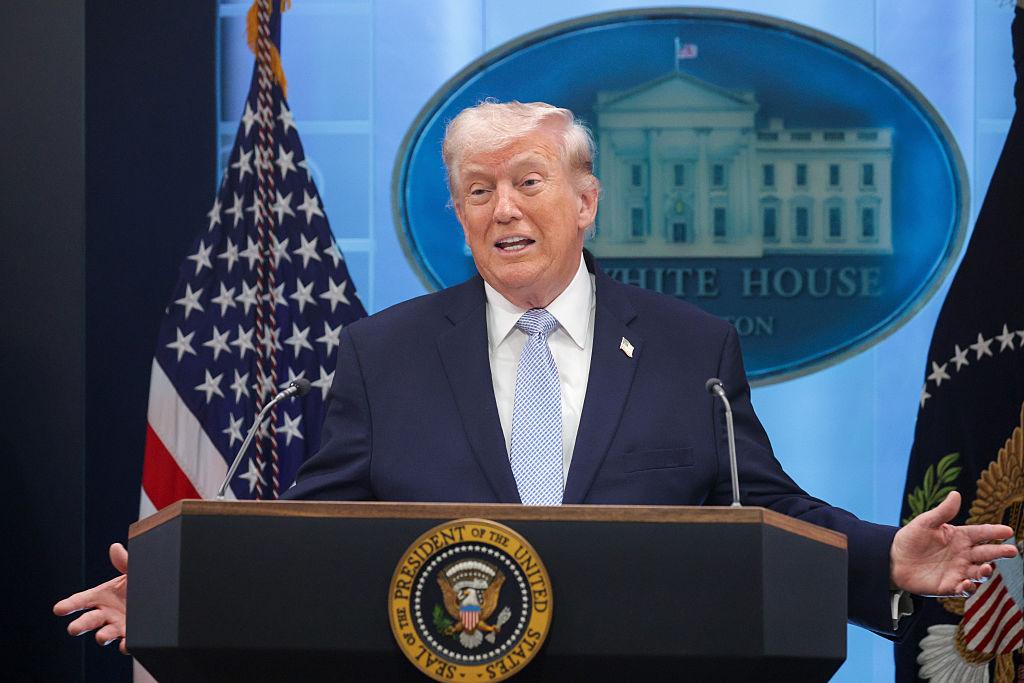
Washington, D.C., United States, 9 November – Brussels Morning Newspaper – Trump Iran Peace Talks have raised fresh hopes for a diplomatic breakthrough after US President Donald Trump suggested that further American military strikes against Iran were unlikely if negotiations continued to make meaningful progress.
The president’s comments come amid continuing tensions between Washington and Tehran over Iran’s nuclear programme, regional security and the consequences of recent military confrontations.
Trump indicated that diplomacy could prevent another round of attacks, although he stressed that the United States would maintain military options if negotiations failed.
His remarks have drawn attention from international leaders and energy markets, where concerns about a wider Middle East conflict remain significant.
Trump Signals Possible Shift Towards Diplomacy
Trump’s latest comments suggest that the White House is willing to give negotiations an opportunity before considering additional military action.
The US president has repeatedly argued that Iran must accept an agreement addressing Washington’s security concerns. However, his recent statements indicate that further strikes may not be necessary if both sides move towards a settlement.
The possibility of renewed military action has remained a major concern throughout the conflict, particularly as tensions have affected regional stability and international trade.
Trump’s position combines diplomatic engagement with continued military pressure, a strategy intended to encourage Tehran to negotiate while preserving Washington’s ability to respond if talks collapse.
For now, the administration appears focused on determining whether negotiations can produce a meaningful agreement.
Iran Nuclear Programme Remains a Major Obstacle
Iran’s nuclear activities continue to represent one of the most difficult issues in discussions between the two countries.
Washington has long demanded stronger restrictions on Tehran’s nuclear programme, arguing that safeguards are necessary to prevent the development of nuclear weapons.
Iran maintains that its nuclear activities are intended for peaceful purposes and has repeatedly called for the removal of economic sanctions.
The disagreement has complicated previous diplomatic efforts, with both governments expressing concerns about trust, verification and the implementation of any future agreement.
A successful settlement would likely require compromises involving nuclear inspections, sanctions relief and security guarantees.
Without progress on these issues, diplomatic discussions could struggle to deliver a lasting reduction in tensions.
Middle East Security Concerns Continue
The possibility of further US military strikes has created uncertainty across the Middle East, where governments remain concerned about the consequences of another confrontation.
Regional countries have called for restraint, recognising that renewed hostilities could affect energy infrastructure, commercial shipping and civilian populations.
The Strait of Hormuz remains particularly sensitive because of its importance to global oil transportation.
Any disruption to shipping through the waterway could create additional pressure on international energy markets and increase costs for businesses and consumers.
Diplomatic progress between Washington and Tehran could therefore have consequences extending far beyond the two countries.
A reduction in military tensions would also provide regional governments with greater opportunities to pursue security cooperation and economic stability.
Global Oil Markets Watch US-Iran Negotiations
International energy markets are closely monitoring developments in the Trump Iran Peace Talks.
The Middle East plays a central role in global oil production and transportation, meaning that military confrontations involving Iran can quickly influence market expectations.
Investors are particularly concerned about possible disruptions to oil supplies, shipping routes and energy infrastructure.
Positive developments in negotiations could help ease fears of supply interruptions, while renewed military threats could increase uncertainty.
However, oil prices are influenced by several factors, including global demand, production decisions and economic conditions.
For European economies, a more stable Middle East could reduce some of the risks associated with energy costs and international trade.
Political Pressure Builds on Washington
Trump’s approach to Iran also carries significant political implications within the United States.
Military operations abroad can generate debate over national security priorities, government spending and the risks faced by American personnel.
Supporters of a negotiated settlement argue that diplomacy could reduce the likelihood of further casualties and prevent a prolonged confrontation.
Others believe Washington must maintain strong pressure to ensure that any agreement includes meaningful security commitments.
The administration faces the challenge of balancing these competing priorities while demonstrating that its diplomatic strategy can produce results.
A successful agreement could strengthen confidence in Washington’s ability to resolve international disputes through negotiations.
What Happens Next for US-Iran Peace Talks?
The next stage of negotiations will be critical in determining whether Trump’s comments translate into concrete diplomatic progress.
Both governments must address unresolved disagreements over nuclear restrictions, economic sanctions and regional security.
International mediators could play an important role in helping the two sides establish acceptable terms.
Nevertheless, major obstacles remain, and neither government has guaranteed that negotiations will succeed.
Trump’s suggestion that further strikes are unlikely if talks progress represents an encouraging diplomatic signal, but it does not amount to a permanent commitment to avoid military action.
For now, the future of US-Iran relations depends on whether Washington and Tehran can turn cautious optimism into a workable agreement.
The outcome of the Trump Iran Peace Talks could shape Middle East security, global energy markets and international diplomacy in the months ahead.