
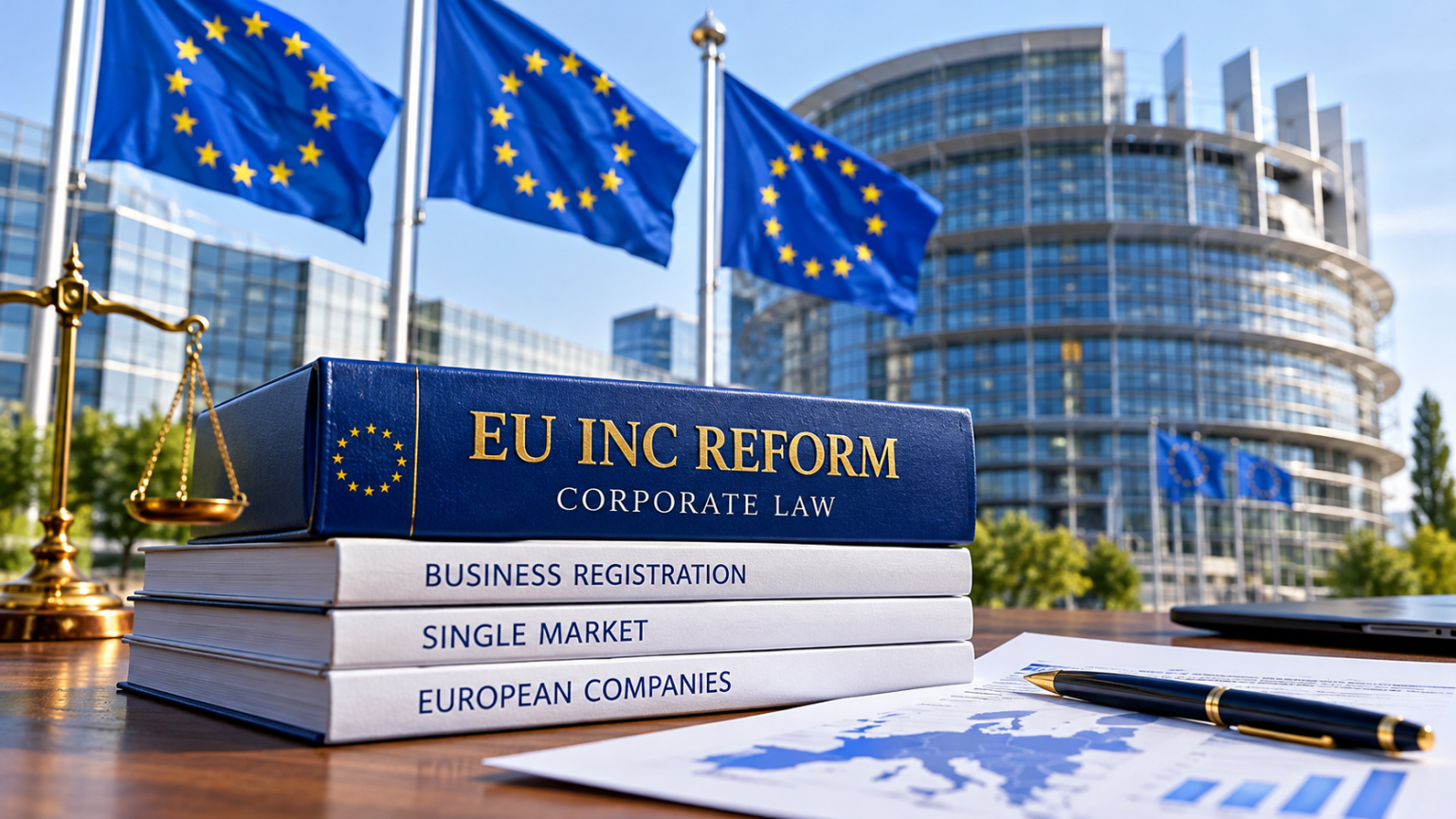
Brussels, 25 October, (Brussels Morning Newspaper) – The European Union’s proposed EU Inc reform aims to transform how businesses establish and operate companies across the bloc, introducing a common corporate framework designed to reduce bureaucracy, simplify cross-border expansion and improve access to investment. The initiative, introduced by the European Commission in March 2026, forms part of Brussels’ broader efforts to strengthen Europe’s competitiveness and support entrepreneurs.
- EU Commission Outlines Major Changes to Company Registration
- European Parliament Examines New Corporate Framework
- European Commission Explains Its Business Strategy
- Why Brussels Is Prioritising Corporate Law Modernisation
- How New EU Company Rules Could Affect Businesses
- What Happens Next for European Corporate Law?
The proposal would create an optional European company structure alongside existing national corporate laws. It is particularly relevant to start-ups, small businesses and growing enterprises seeking to operate in multiple EU member states without navigating entirely different incorporation systems.
EU Commission Outlines Major Changes to Company Registration
The European Commission’s proposal, published on 18 March 2026, would allow businesses to register a company digitally within 48 hours for a maximum cost of €100, without minimum share capital requirements.
The proposed framework would also introduce simplified share transfers, digital corporate governance procedures and financing arrangements intended to make European businesses more attractive to investors.
Companies could choose the member state in which they incorporate while benefiting from a common legal structure recognised across the EU.
European Parliament Examines New Corporate Framework
The European Parliament’s Committee on Legal Affairs is examining the proposed regulation under legislative procedure 2026/0074(COD).
German MEP René Repasi, from the Socialists and Democrats group, is serving as rapporteur.
Parliamentary records show that amendments and a draft report have been prepared for committee consideration. However, the legislative file remains at the committee stage, meaning the proposed rules are not yet law.
European Commission Explains Its Business Strategy
The European Commission argues that Europe’s fragmented corporate legal landscape creates unnecessary difficulties for entrepreneurs.
In its March announcement, the Commission highlighted that businesses currently navigate 27 national legal systems and more than 60 company legal forms.
The institution considers harmonised company procedures an important part of improving the single market and encouraging innovative businesses to establish and expand their operations within Europe.
Why Brussels Is Prioritising Corporate Law Modernisation
The initiative follows wider European discussions about competitiveness, investment and barriers to cross-border economic activity.
Former Italian prime minister Enrico Letta’s 2024 report on the single market identified the need for a more unified business framework.
The Commission subsequently included the proposed corporate structure in its competitiveness agenda, describing it as part of a broader 28th regime intended to simplify business activity across Europe.
How New EU Company Rules Could Affect Businesses
The proposed changes could particularly benefit start-ups and small enterprises seeking investment or international expansion.
Simpler registration procedures may reduce administrative costs, while standardised corporate structures could make financing and employee share ownership arrangements easier to manage.
The Commission estimates that its proposed framework could reduce administrative burdens by between €328 million and €440 million over ten years.
However, the legislation would not replace national employment and social protections. Existing safeguards in the relevant member state would continue to apply.
What Happens Next for European Corporate Law?
The European Parliament and Council must complete their legislative consideration before the framework can become law.
The Commission’s single-market roadmap identifies the end of 2026 as the target for reaching agreement.
That timetable remains an objective rather than confirmation that legislation will be adopted by that date.
Further parliamentary scrutiny and negotiations will determine the final provisions, including company registration procedures, corporate governance requirements and safeguards against misuse.