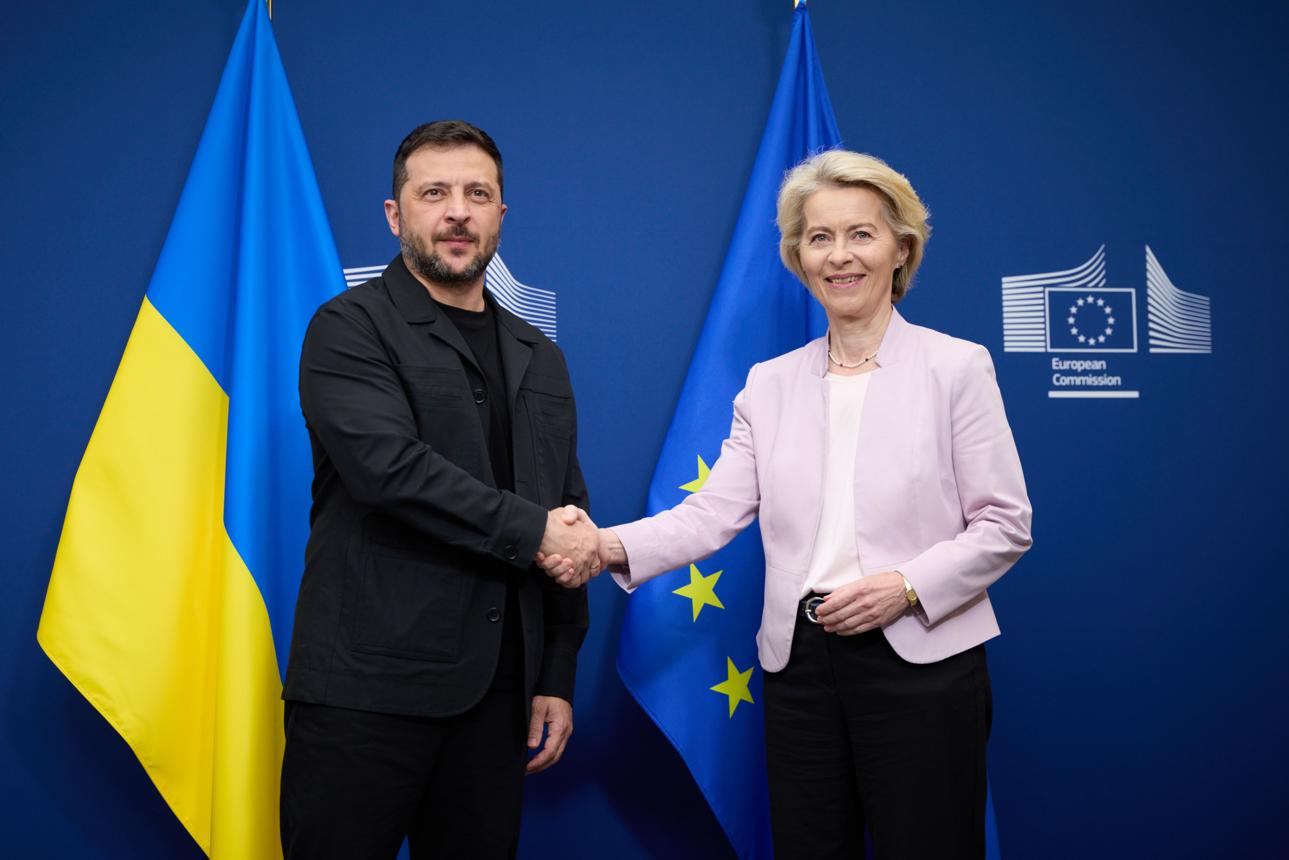
Brussels, 18 October, (Brussels Morning Newspaper) – Ukrainian President Volodymyr Zelenskyy has requested an additional €70 billion in European financial and military assistance for 2027, placing the Zelenskyy EU funding request at the centre of discussions following the European Council summit in Brussels on 15–16 October.
- Zelenskyy Warns EU Leaders of Rising Military Costs
- EU Leaders Reopen Debate Over Additional Financial Support
- Zelenskyy Urges Europe to Strengthen Defence Assistance
- Existing European Assistance Supports Ukraine’s Economy
- Why the Funding Debate Matters for European Security
- What Happens Next After the Brussels Summit?
The appeal comes amid continuing Russian attacks, increasing military expenditure and uncertainty surrounding future American assistance. European leaders reaffirmed their commitment to supporting Ukraine but did not approve the additional funding package.
Zelenskyy Warns EU Leaders of Rising Military Costs
Addressing European leaders on 16 October, Zelenskyy estimated that Ukraine’s war-related expenditure would reach €155 billion in 2027.
He said the country needed at least €70 billion in additional assistance to maintain its defence capabilities, purchase weapons and strengthen national resilience.
The Ukrainian president highlighted the importance of expanding domestic drone production, arguing that Ukrainian manufacturers could significantly increase output if sufficient financing became available.
Ukraine also faces growing pressure to protect energy infrastructure and maintain essential services as Russian attacks continue.
EU Leaders Reopen Debate Over Additional Financial Support
The Zelenskyy EU funding request comes despite an existing €90 billion European Union loan programme intended to support Ukraine during 2026 and 2027.
The arrangement was agreed in December 2025 to address Kyiv’s financial and military requirements.
However, Ukraine’s latest assessment indicates that the previously planned assistance will not cover all its anticipated needs.
Following the Brussels summit, European leaders asked the European Commission to examine additional financing options.
Potential approaches include further European borrowing, contributions from international partners and discussions surrounding immobilised Russian sovereign assets.
European Commission President Ursula von der Leyen acknowledged Ukraine’s additional requirements while indicating that international partners should share responsibility for further assistance.
Zelenskyy Urges Europe to Strengthen Defence Assistance
During his address to European leaders, Zelenskyy emphasised the scale of Ukraine’s financial challenges.
He stated:
“The war will cost €155 billion next year. And we need at least €70 billion more from you – for defence, for weapons, and for our resilience.”
Zelenskyy described the requested amount as realistic and urged European governments to identify the necessary resources.
European Council President António Costa and Commission President von der Leyen reiterated their commitment to supporting Ukraine.
However, the discussions concluded without a final agreement on the proposed additional financing.
Existing European Assistance Supports Ukraine’s Economy
Since Russia launched its full-scale invasion in February 2022, European financial and military assistance has played a central role in sustaining Ukraine’s defence and public finances.
The EU has supported Kyiv through budgetary assistance, loans, military programmes and economic recovery initiatives.
The €90 billion loan programme remains an important component of European assistance for 2026 and 2027.
Nevertheless, continuing military operations and damage to critical infrastructure have increased Ukraine’s financial requirements.
The latest appeal highlights the challenge of maintaining predictable funding during a prolonged conflict.
Why the Funding Debate Matters for European Security
The Zelenskyy EU funding request has significant implications for Ukraine’s military capabilities and European security planning.
For Kyiv, additional financing would support weapons procurement, drone production, infrastructure protection and essential government operations.
For EU member states, further commitments would require decisions about borrowing, budget guarantees and financial contributions.
The discussions also coincide with wider disagreements over the European Union’s long-term budget and competing economic priorities.
What Happens Next After the Brussels Summit?
European institutions are expected to continue assessing Ukraine’s financial requirements and potential mechanisms for additional support.
The European Commission has been asked to examine options for addressing the projected shortfall, with international contributions remaining part of the discussion.
Any new financing arrangement would require the appropriate political and legal approvals.
For now, the additional €70 billion remains a request rather than an approved commitment, leaving European governments to determine how Ukraine’s projected 2027 funding gap could be addressed.