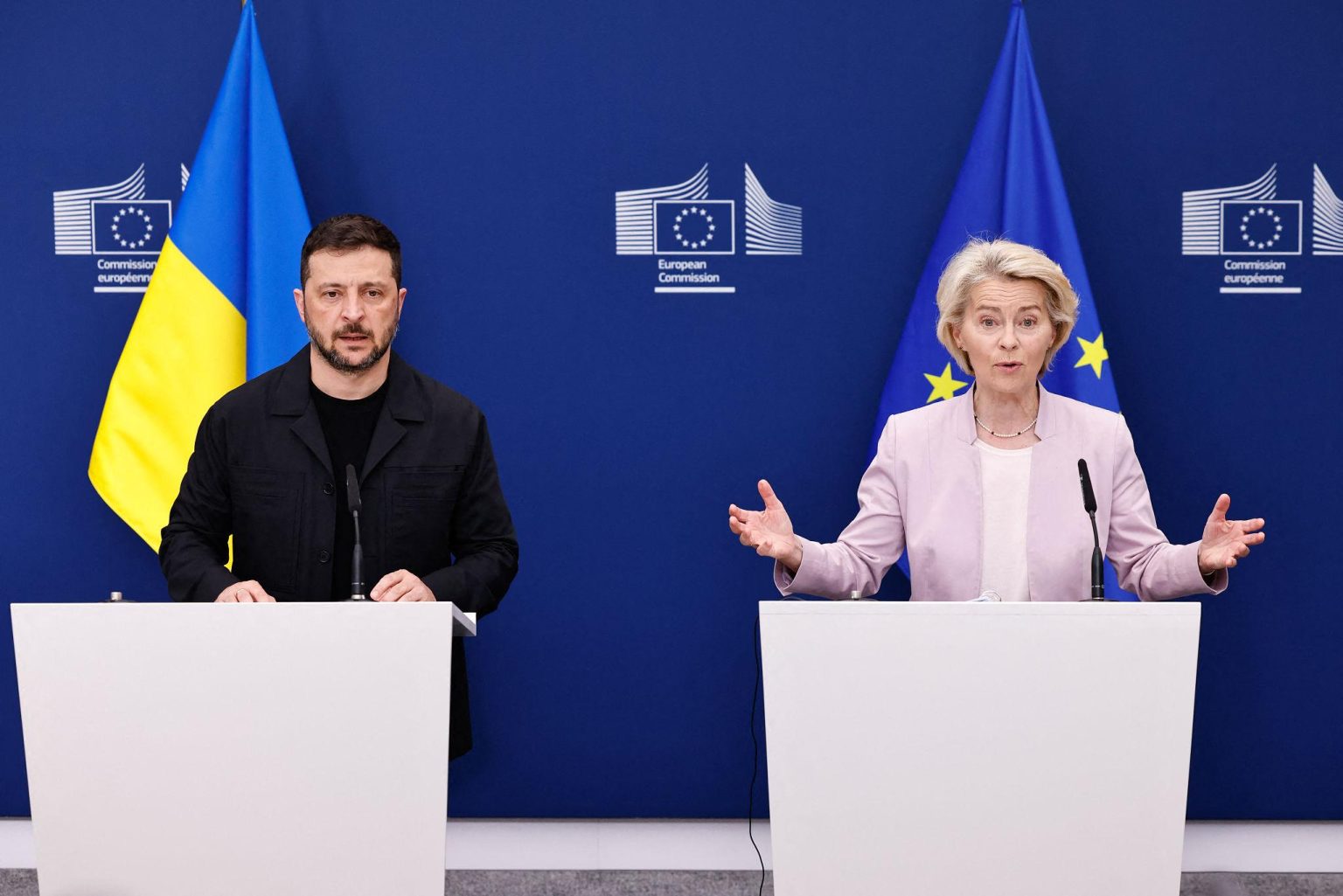
Brussels, 17 October, (Brussels Morning Newspaper) – Ukrainian President Volodymyr Zelensky has appealed to European Union leaders for an additional €70 billion in financial assistance for 2027, warning that Ukraine’s growing military expenditure threatens its ability to sustain the war against Russia. The Zelensky EU funding appeal comes as European governments consider how to maintain long-term support for Kyiv amid increasing financial demands.
The Ukrainian president outlined the country’s projected requirements during discussions with European leaders in Brussels, highlighting the urgent need for weapons, air defence systems and predictable financial assistance.
Zelensky Warns of €155 Billion in War Costs
Zelensky told European leaders that Ukraine’s war-related expenditure could reach €155 billion in 2027, reflecting the substantial financial burden created by Russia’s continuing invasion.
He stressed that additional assistance would help Ukraine maintain military operations, expand domestic weapons manufacturing and strengthen protection against Russian attacks.
Ukraine has increasingly relied on domestically manufactured drones and other military technologies. However, expanding production requires significant investment in manufacturing facilities, equipment and supply chains.
The president also emphasised the importance of strengthening air defence capabilities to protect civilian infrastructure and energy facilities.
European Union Faces Pressure to Increase Ukraine Assistance
The European Union has already established major financial assistance programmes to support Ukraine’s government and military requirements.
A €90 billion loan programme covering 2026 and 2027 was agreed in December 2025, providing a framework for continued European assistance.
However, Ukraine’s projected financial requirements indicate that existing commitments may not fully cover its future needs.
European Commission President Ursula von der Leyen has acknowledged a substantial financing shortfall for 2027, placing additional pressure on European institutions to consider new funding arrangements.
The discussions have included possible borrowing mechanisms and financial arrangements involving frozen Russian assets.
Zelensky Calls for Stronger European Financial Commitment
Addressing European leaders, Zelensky emphasised the importance of maintaining predictable assistance as Ukraine continues defending itself against Russian military operations.
He said:
“The war will cost €155 billion next year. And we need at least €70 billion more from you – for defence, for weapons and for our resilience.”
His remarks underlined Kyiv’s concerns that uncertainty over future financing could affect military procurement and longer-term defence planning.
The Zelensky EU funding request also reflects Ukraine’s increasing reliance on European financial and military assistance.
Ukraine’s Financial Challenges Continue After Years of War
Russia’s full-scale invasion in February 2022 has severely disrupted Ukraine’s economy, damaged critical infrastructure and increased government spending.
The country continues to depend on international assistance to maintain essential public services while directing substantial domestic resources towards defence.
European support has helped finance government operations, reconstruction requirements and military equipment.
However, continued attacks against energy infrastructure and industrial facilities have created additional financial pressures.
Why Additional EU Funding Matters
Additional European assistance could help Ukraine maintain its defence capabilities, expand domestic military production and protect essential infrastructure.
For EU governments, the proposed support raises questions about financing, budgetary priorities and the future structure of European security assistance.
The discussions also highlight the importance of coordination between European institutions, member states and international financial partners.
What Happens Next for Ukraine’s Funding Request?
European Council President António Costa has indicated that EU leaders have asked the European Commission to prepare proposals addressing Ukraine’s additional financial requirements.
The Commission is expected to examine potential financing arrangements before European governments consider further decisions.
No new €70 billion assistance package has been formally approved.
For Ukraine, securing predictable financial support remains a central priority as the government prepares for another year of substantial military expenditure and economic uncertainty.