Brussels, 27 September, (Brussels Morning Newspaper) – Around 200 people dressed in black and carrying empty plates demonstrated in central Brussels on Saturday, highlighting rising demand for food assistance and pressure on organisations supporting vulnerable households across Belgium. The food insecurity protest took place a day before Sunday’s renewed attention on the scale of food poverty in the country.
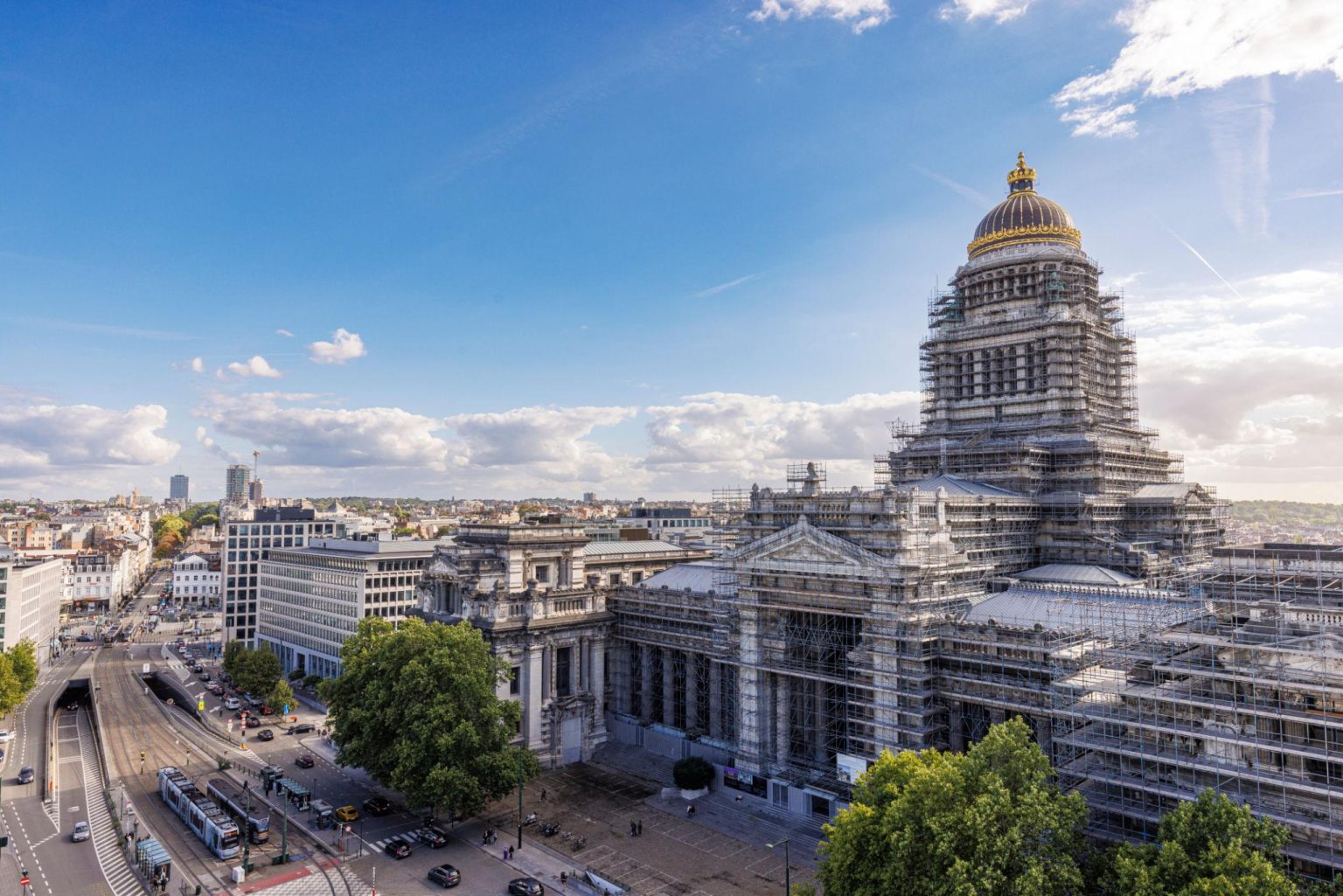
The demonstration, called the “Line of Empty Plates”, was organised by the Fédération des Restos du Cœur de Belgique and the Food Aid Coordination body of the Fédération des Services Sociaux (FdSS). Participants gathered at Place de l’Albertine before moving towards the Palace of Justice and forming a line along Rue de la Régence towards Place Poelaert.
Around 200 people join Brussels food aid demonstration
The protest was held on 26 September, marking 41 years since French comedian Coluche made the 1985 appeal that led to the creation of Restos du Cœur.
Organisers say more than half a million people in Belgium rely on food assistance. Belgium’s 21 Restos du Cœur centres distributed 1,569,180 meals and food parcels during 2025, representing an increase of 134% compared with six years earlier.
The organisations also say the federal budget allocated to purchasing essential goods dropped from €27 million in 2025 to €15 million in 2026.
Food aid organisations warn resources are stretched
Brigitte Grisar of the Food Aid Coordination body at FdSS said organisations were struggling to keep pace with demand.
“The situation is unsustainable. One in two organisations says it is overwhelmed.”
Grisar said shortages were making it increasingly difficult for organisations to provide enough food to everyone seeking assistance. She stressed that the problem extends across Belgium, including Flanders, Wallonia and the Brussels region.
Patrick Dejace, director of the Fédération des Restos du Cœur de Belgique, described how the pressure was affecting people seeking help.
“People are queuing for longer and longer for ever smaller food parcels and meals.”
Dejace said organisations would continue providing assistance while demand remained, despite the reduction in available resources.
Empty plates highlight Belgium’s food poverty problem
The empty plates were chosen to symbolise meals that people cannot afford. FdSS said before the event that access to sufficient and dignified food should be considered a fundamental right.
The food insecurity protest followed an open letter backed by organisations, volunteers, social-sector workers and members of the public. As of 24 September, FdSS listed 294 signatories, including 61 organisations.
Organisers argue that food assistance has increasingly become a recurring necessity rather than temporary emergency support for some households.
Funding cuts increase pressure on food charities
The reduction in available funding means charities face pressure on food stocks while having to finance additional purchases themselves, according to the organisers. Restos du Cœur and FdSS say food-aid organisations cannot indefinitely absorb rising poverty while their own resources decline.
The organisations are calling for stronger public support for food assistance and policies addressing the financial pressures pushing households towards emergency aid.
Organisers call for stronger right-to-food policies
Following Saturday’s demonstration, Restos du Cœur and FdSS are continuing their campaign for adequate food to be treated as a fundamental right.
The organisations are urging public authorities to provide frontline services with sufficient resources while addressing the wider causes of food poverty. No new government funding decision was announced in connection with Saturday’s demonstration.