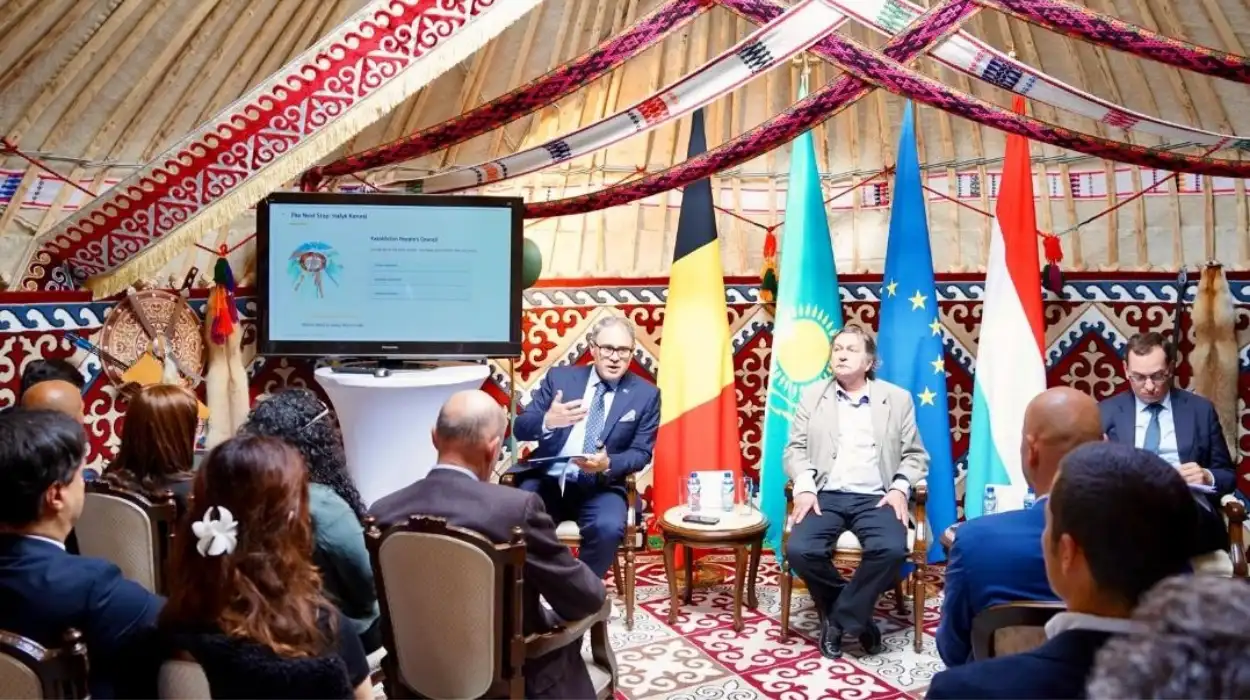
Brussels (Brussels Morning Newspaper) September 13, 2026 – The Kazakh Embassy in Belgium hosted a session of the Shanyraq Dialogues platform under the theme Kazakhstan’s New Political Era: Constitutional Reforms in Action, focusing on early outcomes of constitutional changes, renewal of political institutions, and prospects for further development. Kazakh Ambassador Roman Vassilenko outlined the results of the reforms, stressing Kazakhstan’s transition into a new stage of strengthening institutions, advancing dialogue, and improving governance while introducing the upcoming creation of the Khalyq Kenesi (People’s Council) for public participation. Key discussion areas encompassed economic and technological modernisation, including artificial intelligence, alongside expanding transport, trade, and logistics cooperation between Central Asia and the European Union.
- Kazakh Embassy Hosts Shanyraq Dialogues Session in Brussels
- Institutional Reforms and the Role of the Khalyq Kenesi
- Unicameral Qurultay and Political Modernisation Benchmarks
- Economic Transformation, Digitalisation, and Artificial Intelligence Initiatives
- Regional Connectivity, Transport Logistics, and EU Relations
Kazakh Embassy Hosts Shanyraq Dialogues Session in Brussels
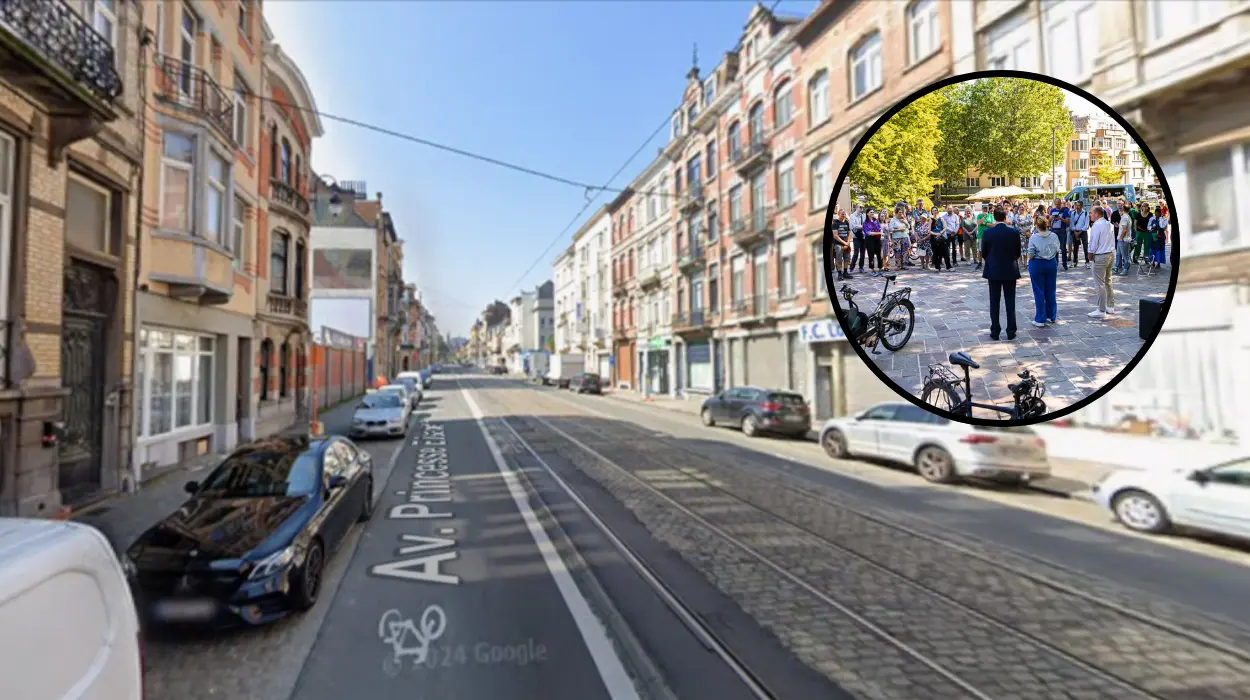
The Kazakh Embassy in Belgium convened a formal session of the established Shanyraq Dialogues platform in Brussels, bringing together diplomats, policy experts, media representatives, and European officials. The meeting, organised under the central theme Kazakhstan’s New Political Era: Constitutional Reforms in Action, served as an international forum to discuss the implementation and initial results of recent constitutional modifications within the Central Asian nation. The primary focus centered on evaluating the renewal of national political institutions, assessing structural shifts in state governance, and exploring prospects for further institutional development.
The event provided an avenue for dialogue between Kazakh representatives and European partners regarding the progress achieved under the country’s ongoing modernization agenda. Throughout the session, participants examined how constitutional adjustments are reshaping the relationship between state authorities and civil society, while also addressing broader implications for regional stability, rule of law, and bilateral relations with the European Union and Belgium.
Institutional Reforms and the Role of the Khalyq Kenesi
Addressing the assembly, Ambassador of Kazakhstan to the Kingdom of Belgium Roman Vassilenko detailed the practical outcomes of the reform initiatives implemented across the country. Ambassador Vassilenko stated that Kazakhstan has formally entered a distinct phase of development focused on bolstering democratic institutions, promoting public dialogue, and refining overall governance structures. The Ambassador emphasised that the constitutional modifications aim to establish a more balanced distribution of state authority, enhance legislative oversight, and ensure greater administrative transparency.
A central element of the address was the announcement regarding the upcoming creation of the Khalyq Kenesi, or People’s Council. Ambassador Vassilenko highlighted this body as a structural platform designed to facilitate direct and broad public participation in shaping the national agenda. The Khalyq Kenesi is structured to serve as a consultative assembly that integrates diverse socio-political perspectives into the decision-making process, ensuring that civil society plays a systematic role in evaluating legislative priorities and national policies.
Unicameral Qurultay and Political Modernisation Benchmarks
During the proceedings, European media and policy analysts provided assessments of the structural changes occurring within Kazakhstan’s political architecture. Georgi Gotev, representing the publication EUalive, characterized Kazakhstan’s initial Qurultay elections as a significant milestone in the country’s legislative evolution. Gotev noted that the transition toward the unicameral Qurultay structure represents a tangible shift in legislative mechanics. He further commended the “Shanyraq Dialogues” format, describing it as an effective mechanism for open discourse that constructively complements formal diplomatic and political relations between the European Union and Kazakhstan.
Alberto Turkstra, representing Diplomatic World, identified the ongoing constitutional and institutional reforms as a crucial turning point for the nation. Turkstra emphasized that while the legal framework for modernization is established, primary significance rests upon how these new institutions operate in practice and the specific political culture they foster over time. Participants noted that the unicameral Qurultay serves as a core component of this broader political modernization effort, designed to increase parliamentary accountability, streamline the legislative process, and foster direct citizen engagement with elected representatives.
Economic Transformation, Digitalisation, and Artificial Intelligence Initiatives
In addition to structural governance discussions, the conference detailed Kazakhstan’s parallel priorities regarding economic, technological, and infrastructural modernization. Representatives outlined state strategies aimed at diversifying the national economy away from traditional resource extraction toward high-value technological sectors. Key areas highlighted included comprehensive digitalisation programs, the integration of artificial intelligence across public and private sectors, infrastructure modernization, and long-term investments in human capital development.
Delegates drew specific attention to the upcoming AI & Digital Bridge 2026 international forum, scheduled to take place from October 1–3 in Astana. The forum was presented as a pivotal platform for regional and global technological collaboration, intended to attract international tech investments, showcase innovation ecosystems, and foster partnerships in digital governance, data infrastructure, and AI applications. Participants reviewed how these technological initiatives intersect with constitutional governance goals, particularly in improving public service delivery and government transparency.
Regional Connectivity, Transport Logistics, and EU Relations
The agenda extended to strategic economic partnerships, focusing on Kazakhstan’s strategic position as a transport and logistics hub connecting Central Asia and Europe. Discussions addressed efforts to expand trade, investment, and technological exchange between Kazakhstan, Belgium, and the broader European Union. Delegates evaluated the development of international trade corridors, emphasizing the importance of uninterrupted cargo transport, logistics infrastructure upgrades, and customs streamlining to support supply chain resilience between Asia and Europe.
In addition to economic topics, Kazakhstan reaffirmed its fundamental foreign policy principles, stressing its commitment to national sovereignty, constructive international dialogue, peaceful dispute settlement, and strict adherence to international law. Attendees noted that Kazakhstan’s balanced diplomatic strategy positions it as a reliable partner for Western nations in security, energy, and commercial domains. The contributions and potential of the younger generation were also recognized as vital driving forces for sustaining long-term institutional stability, driving technological innovation, and carrying forward future socio-economic development.