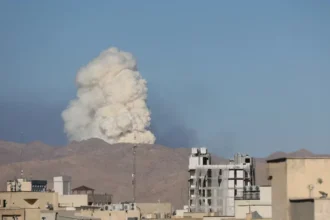

The Zaporizhia conflict continues to draw international attention as fighting intensifies in eastern Ukraine following claims that Russian forces have captured a village in the region. This development highlights how localized territorial shifts can influence wider military strategies, civilian safety, and diplomatic calculations. While the frontlines across Ukraine remain fluid, events unfolding in Zaporizhia underscore the enduring volatility of this part of the war.
As the situation evolves, the Zaporizhia conflict has become a focal point for analysts tracking gradual advances rather than dramatic breakthroughs. Understanding what is happening on the ground requires examining geography, military objectives, humanitarian consequences, and broader regional implications.

Geographic Importance of the Region
The eastern portion of the Zaporizhia region sits at a strategic crossroads linking southern and eastern theaters of the war. Flat terrain, agricultural land, and transport corridors shape both offensive and defensive operations. In the context of the Zaporizhia conflict, villages often serve as control points for roads, observation positions, and logistical movement.
Because settlements are spread across open countryside, even a single village can influence nearby operations. Control over these areas allows forces to monitor enemy movements and adjust artillery or drone activity accordingly. Geography therefore plays a decisive role in how the Zaporizhia conflict unfolds day by day.
Military Dynamics Behind the Latest Claims
At its core, the Zaporizhia conflict reflects a war of attrition. Rather than rapid advances, both sides rely on sustained pressure through artillery, drones, and limited infantry maneuvers. When claims emerge about a village changing hands, they often follow weeks of shelling and probing attacks.
Military analysts note that the Zaporizhia conflict increasingly resembles a contest of endurance. Each side seeks to wear down the other’s resources while avoiding large-scale losses. Small gains accumulate slowly, shaping the frontline over time rather than through decisive single battles.
Strategic Objectives Driving the Fighting
One reason the Zaporizhia conflict matters so much is its strategic value. The region connects supply routes and influences access between southern occupied areas and eastern positions. Control here can improve logistical efficiency and limit an opponent’s maneuverability.
Beyond immediate military goals, the Zaporizhia conflict also affects long-term positioning. Holding territory in this region may strengthen leverage in future negotiations or defensive planning. For both sides, even modest advances are viewed through a strategic lens.

Ukrainian Defensive Strategy
Ukrainian forces have approached the Zaporizhia conflict with an emphasis on layered defense. Rather than holding every position at all costs, commanders prioritize preserving trained personnel and maintaining flexibility. This often means withdrawing from exposed villages to stronger defensive lines when pressure becomes overwhelming.
Such tactics allow Ukrainian forces to slow advances, inflict losses, and prepare for counteractions when conditions permit. Within the Zaporizhia conflict, this defensive posture reflects lessons learned earlier in the war about sustainability and resilience.
Russian Tactical Approach
From the Russian perspective, the Zaporizhia conflict involves applying steady pressure to expand controlled areas incrementally. Tactics often include prolonged artillery fire, drone reconnaissance, and limited ground assaults aimed at weakening defenses before advancing.
By focusing on small objectives, Russian forces attempt to minimize risk while gradually reshaping the battlefield. This approach aligns with the broader pattern seen across eastern Ukraine, where momentum is built through accumulation rather than sudden breakthroughs.
Civilian Impact and Human Cost
The human dimension of the Zaporizhia conflict is most visible in villages close to the frontlines. Civilians face constant uncertainty as shelling damages homes, disrupts utilities, and limits access to healthcare. Many residents are elderly or lack the means to relocate easily.
Daily life in these areas is shaped by survival rather than normal routines. Even when fighting pauses, the psychological toll remains. The Zaporizhia conflict thus affects not only military outcomes but also the long-term wellbeing of communities caught between opposing forces.

Humanitarian Challenges
Humanitarian organizations working near the Zaporizhia conflict encounter significant obstacles. Active combat restricts movement, damaged infrastructure complicates deliveries, and shifting control makes coordination difficult. Aid efforts must adapt constantly to changing security conditions.
Despite these challenges, assistance remains critical. Food, medical supplies, and evacuation support are lifelines for civilians who remain near contested areas. The ongoing Zaporizhia conflict underscores the need for sustained humanitarian access even amid fighting.
Information and Competing Narratives
Another defining feature of the Zaporizhia conflict is the battle over information. Claims of territorial capture are often disputed, delayed, or framed differently by each side. Independent verification can be slow due to restricted access and ongoing hostilities.
As a result, understanding developments in the Zaporizhia conflict requires patience and caution. Observers often rely on satellite imagery, delayed confirmations, and patterns over time rather than immediate announcements.
International Attention and Response
The Zaporizhia conflict remains closely watched by international governments and organizations. While a single village capture may not prompt immediate policy changes, cumulative developments influence decisions related to military aid, sanctions, and diplomatic engagement.
Concerns extend beyond the battlefield. Stability around critical infrastructure, civilian protection, and the risk of escalation all factor into how the Zaporizhia conflict is viewed globally.
Economic and Regional Implications
Beyond military considerations, the Zaporizhia conflict disrupts regional economic activity. Agriculture, a key sector in the area, is affected by damaged fields, unexploded ordnance, and labor shortages. Transport disruptions also impact trade and supply chains.
These economic effects compound the long-term challenges of recovery. Even after fighting subsides, areas affected by the Zaporizhia conflict will require extensive reconstruction and investment to rebuild livelihoods.
Possible Future Scenarios
Looking ahead, analysts outline several possible trajectories for the Zaporizhia conflict. These range from continued incremental advances to prolonged stalemate punctuated by localized offensives. Counteractions, consolidation of positions, and renewed diplomatic efforts all remain possible.
What seems clear is that the Zaporizhia conflict is unlikely to be resolved quickly. Its outcome will depend on resources, strategy, and broader geopolitical dynamics.
The Zaporizhia conflict illustrates the grinding nature of the war in eastern Ukraine. Claims of village captures reflect incremental shifts that carry strategic, humanitarian, and psychological weight far beyond their size. As fighting continues, developments in this region will remain a key indicator of broader trends in the conflict.
Understanding the Zaporizhia conflict means recognizing both its immediate impacts and its long-term implications. For civilians, soldiers, and policymakers alike, this region remains central to the unfolding story of the war.