Brussels, 21 September, (Brussels Morning Newspaper) – Children born in Europe today could experience almost twice as much extreme fire weather during their lifetimes as people born in 1950, according to new research from Vrije Universiteit Brussel (VUB). The findings indicate that wildfire exposure will increase most sharply around the Mediterranean if current climate policies continue.
Children born in 2025 face 84% higher exposure
The peer-reviewed study, published in Environmental Research Letters, projects that a European child born in 2025 will experience more than three additional years of extreme fire weather compared with someone born in 1950 under a current-policy warming pathway.
Researchers calculated that this represents an 84% increase in lifetime exposure. About 86% of the increase is attributed to climate change, with the remainder linked to longer life expectancy.
The researchers examined climate-model simulations and demographic data across warming scenarios. Their analysis defines extreme fire weather using the Fire Weather Index and conditions exceeding the 95th percentile of the 1985–2014 reference period.
Mediterranean regions face the largest increases
Southern Europe is projected to experience the greatest change. In Mediterranean regions, people born in 2025 could face up to 2.5 times the lifetime exposure experienced by the 1950 generation, amounting to more than five additional years under a scenario reaching about 2.6°C of warming by 2100.
Portugal illustrates the scale of the projected change. Extreme fire-weather days there could increase from an average of 14 annually during 1950–1970 to 32 a year by 2100 under current policies. A Portuguese child born in 2025 could spend approximately 6.5 years under extreme fire-weather conditions over their lifetime.
VUB researchers highlight risks for younger generations
Lead author Rosa Pietroiusti, a PhD researcher at VUB’s Department of Water and Climate, said:
“A child born in Europe now will spend years more of their life under extreme fire weather conditions, and across the Mediterranean that burden is especially heavy.”
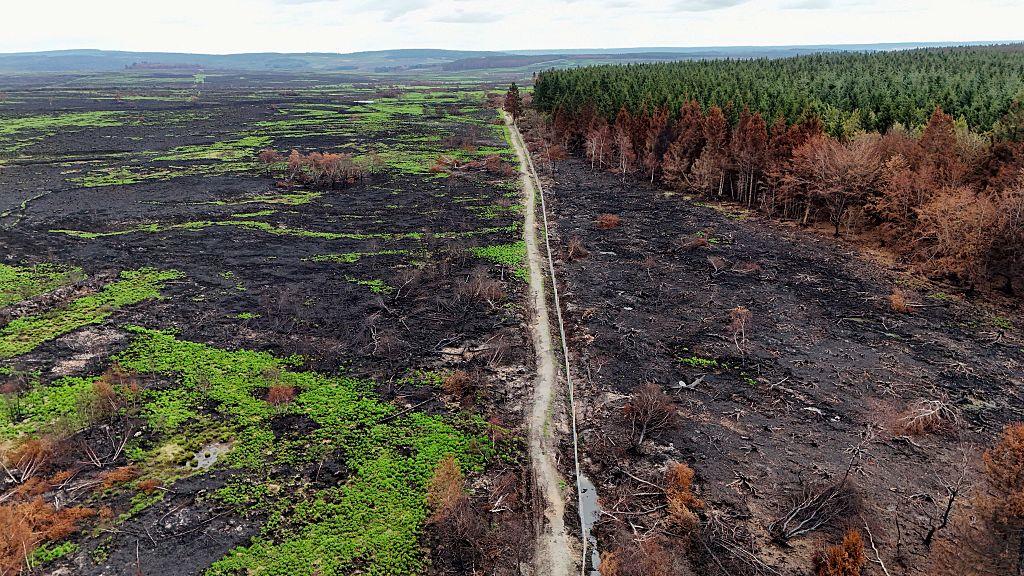
The research follows Europe’s record-breaking 2025 wildfire season. VUB says fires burned more than one million hectares across Europe that year, with Spain and Portugal particularly affected.
Lower warming would reduce lifetime fire exposure
The researchers found that future wildfire exposure could be reduced substantially through stronger emissions cuts. Limiting warming towards 1.5°C would cut lifetime extreme fire-weather exposure for children born in 2025 by an average of about 1.3 years across Europe compared with the current-policy pathway. The reduction exceeds two years in some southern European regions.
Senior author Professor Wim Thiery said:
“Every fraction of a degree of warming we avoid translates directly into less fire weather over a child’s lifetime.”
Researchers call for emissions cuts and fire preparedness
The study concludes that reducing greenhouse gas emissions can materially change the fire conditions experienced by younger generations.
Researchers also point to fire prevention, preparedness and more resilient landscapes as necessary measures alongside emissions reductions. The findings suggest that Europe’s response will increasingly involve both climate policy and adaptation as dangerous fire-weather conditions extend into regions and seasons historically less exposed to severe wildfire risk.