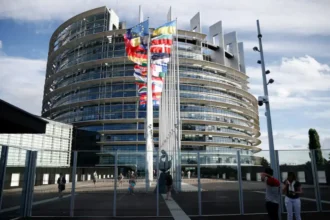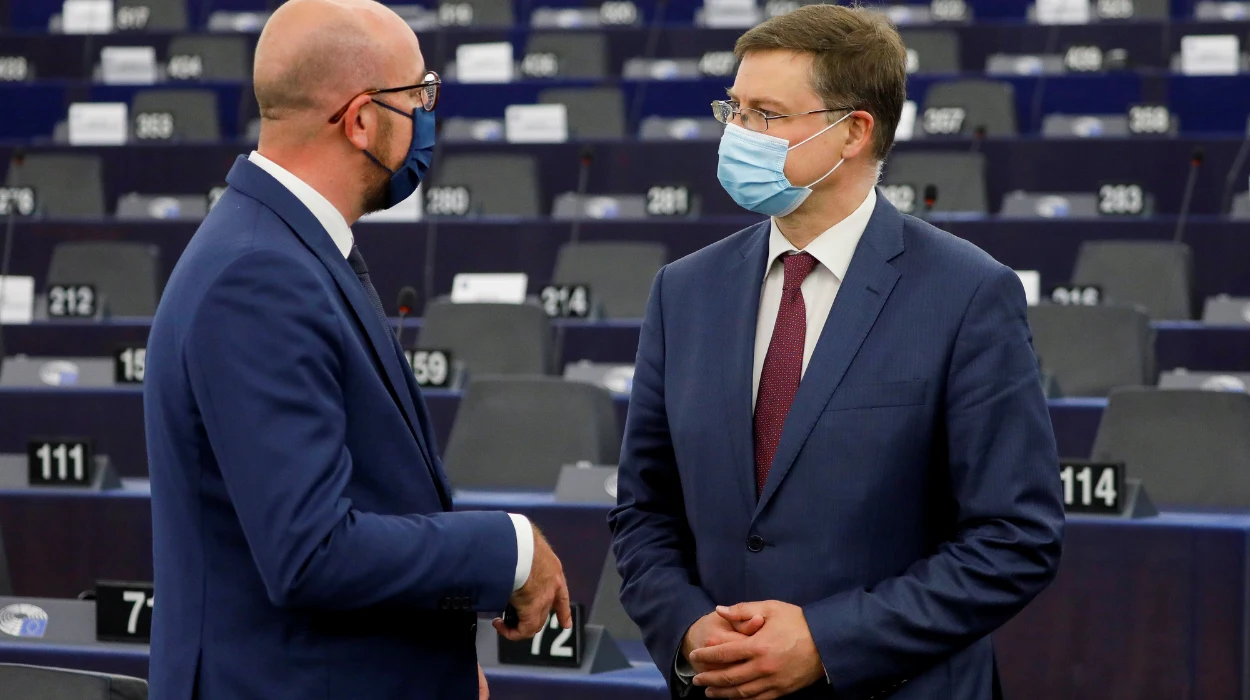
Brussels (Brussels Morning Newspaper) September 29, 2026 – The European Commission for Democracy through Law, commonly known as the Venice Commission, has formally presented its updated Rule of Law Checklist to the European Parliament. The revised assessment tool addresses emerging contemporary challenges, including democratic backsliding, the expanding influence of private actors, and the rapid acceleration of digital technologies across member states. Designed as an objective benchmark, the framework aims to assist international organizations, national governments, and civil society actors in evaluating institutional standards and legal protections.
The presentation took place during a meeting involving parliamentary members and institutional representatives, marking a significant milestone in pan-European legal cooperation. Nearly a decade after the initial publication of the 2016 checklist, the Venice Commission undertook a comprehensive revision to maintain its relevance in a shifting political and technological landscape. The update preserves the core structural pillars of the original framework while expanding specific benchmarks to counter modern threats to constitutional governance.
Background and Context of the Rule of Law Checklist
Originally established as a vital advisory body of the Council of Europe, the Venice Commission relies on comparative constitutional law expertise to guide member states toward democratic stability. The Rule of Law Checklist functions as a practical instrument rather than a theoretical text, offering concrete questions and benchmarks to assess the practical implementation of legal standards.
Over the years, the checklist has been widely utilized by the European Court of Human Rights, the Court of Justice of the European Union, and various national courts. The decision to update the instrument gained momentum following the Reykjavik Declaration adopted during the 4th Summit of Heads of State and Government of the Council of Europe in May 2023, which emphasized the need for strengthened institutional tools to protect democratic systems.
Core Structural Elements and Foundational Benchmarks
The updated checklist preserves five foundational benchmarks established in the original 2016 version: legality, legal certainty, the prevention of abuse of power, equality before the law and non-discrimination, and access to justice. While these conceptual pillars remain intact, each section has been clarified and expanded to reflect contemporary legal realities.
Under the principle of legality, the revised checklist introduces enhanced safeguards concerning executive law-making, the proper application of urgent legislative procedures, and the demand for transparent, inclusive parliamentary processes. It also addresses legal certainty by highlighting risks associated with retrospective legislation, particularly laws tailored to influence pending judicial cases, commonly referred to as lex singularis. Furthermore, the framework emphasizes the necessity of consolidated public access to legislative texts and case law.
Addressing Digital Technologies and Artificial Intelligence
A major addition to the updated checklist involves the integration of standards governing digital technologies and artificial intelligence. As public and private entities increasingly deploy automated systems, the checklist establishes clear requirements for transparency, human oversight, and effective remedies.
The framework stipulates that public authorities must officially disclose the introduction of artificial intelligence systems and guarantee operational reliability, cybersecurity, and interpretability. In the judicial sector, the checklist asserts that while artificial intelligence may provide administrative support, final decision-making authority must remain exclusively within the competence of human judges. Additionally, the document expands on the prevention of algorithmic discrimination, automated profiling, and data-driven biases that threaten equality and non-discrimination standards.
Regulation of Private Actors and Civic Space
The updated document also tackles the growing influence of private actors who wield powers comparable to state authorities without explicitly exercising delegated public functions. This corporate dimension reflects modern digital constitutionalism, where private platforms and entities govern spaces that functionally operate as public forums.
For the first time, the checklist incorporates a dedicated standalone benchmark focused on protecting the legal framework for civic space. This inclusion responds to mounting pressures on civil society organizations, independent media, human rights defenders, and public participation. Essential guarantees within this benchmark include freedom of expression, assembly, association, media pluralism, whistleblower protection, and safeguards against Strategic Lawsuits Against Public Participation, known as SLAPPs.
Institutional Oversight and Democratic Checks and Balances
The revised checklist places renewed emphasis on institutional checks and balances, judicial independence, and constitutional review mechanisms. The separation of powers is underscored as an indispensable guarantee for the proper functioning of constitutional democracy.
Significantly, the document explicitly recognizes National Human Rights Institutions as integral components of national rule of law systems. It highlights their independent oversight role, the necessity of involving them in legislative consultations concerning human rights, and their suitability for monitoring emergency measures. The checklist also outlines guidelines for states undergoing democratic backsliding, addressing the specific challenges associated with rule of law restoration and legal reconstruction.
Following its presentation to the European Parliament, the updated checklist underwent subsequent formal endorsements, including approval by the Committee of Ministers and the Parliamentary Assembly of the Council of Europe. Legal scholars and institutional monitors continue to utilize the framework as an authoritative reference point for evaluating legislative stability and democratic resilience across Europe.