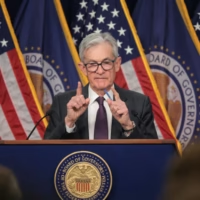
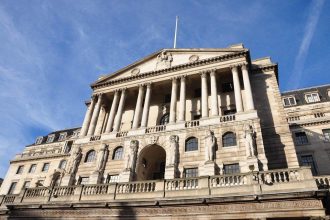
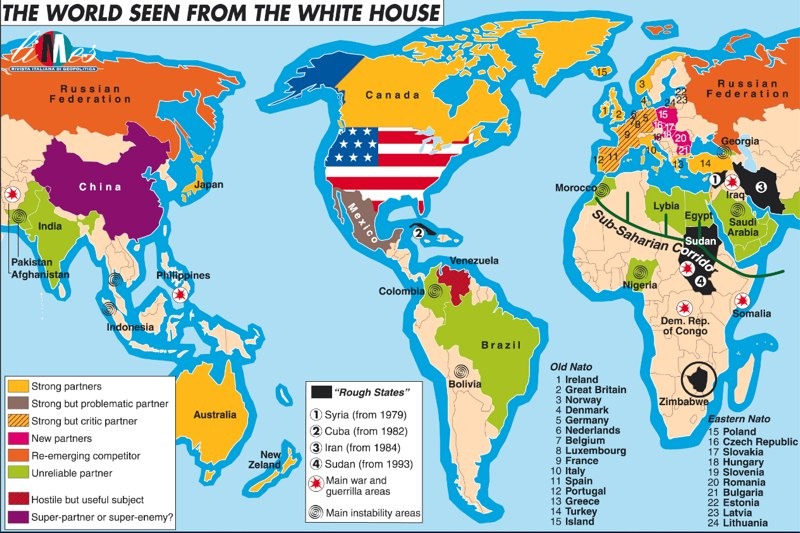
Washington, United States, January 2026 — Brussels Morning Newspaper states that US global influence is undergoing a profound transformation as Washington adopts a more direct, assertive, and power centered approach to international leadership. The shift, unfolding at the start of 2026, is reverberating across diplomatic corridors, financial markets, and security alliances, compelling both long-standing allies and strategic rivals to reassess assumptions that have shaped the world order for decades.
From high level policy meetings in Washington to cautious responses in foreign capitals, analysts describe a moment in which authority is being exercised with greater visibility, speed, and consequence, redefining how power is projected on the global stage.
Washington Signals a New Strategic Direction
Early policy signals from the US capital point to a clear re-calibration in how leadership is exercised abroad. Officials now emphasize decisiveness and leverage, arguing that ambiguity has weakened deterrence in recent years.
This reorientation places US global influence at the center of international debate, redefining expectations about Washington’s willingness to act unilaterally when core interests are at stake. Supporters argue that clarity strengthens stability, while critics warn that abrupt decisions may strain diplomatic relationships.
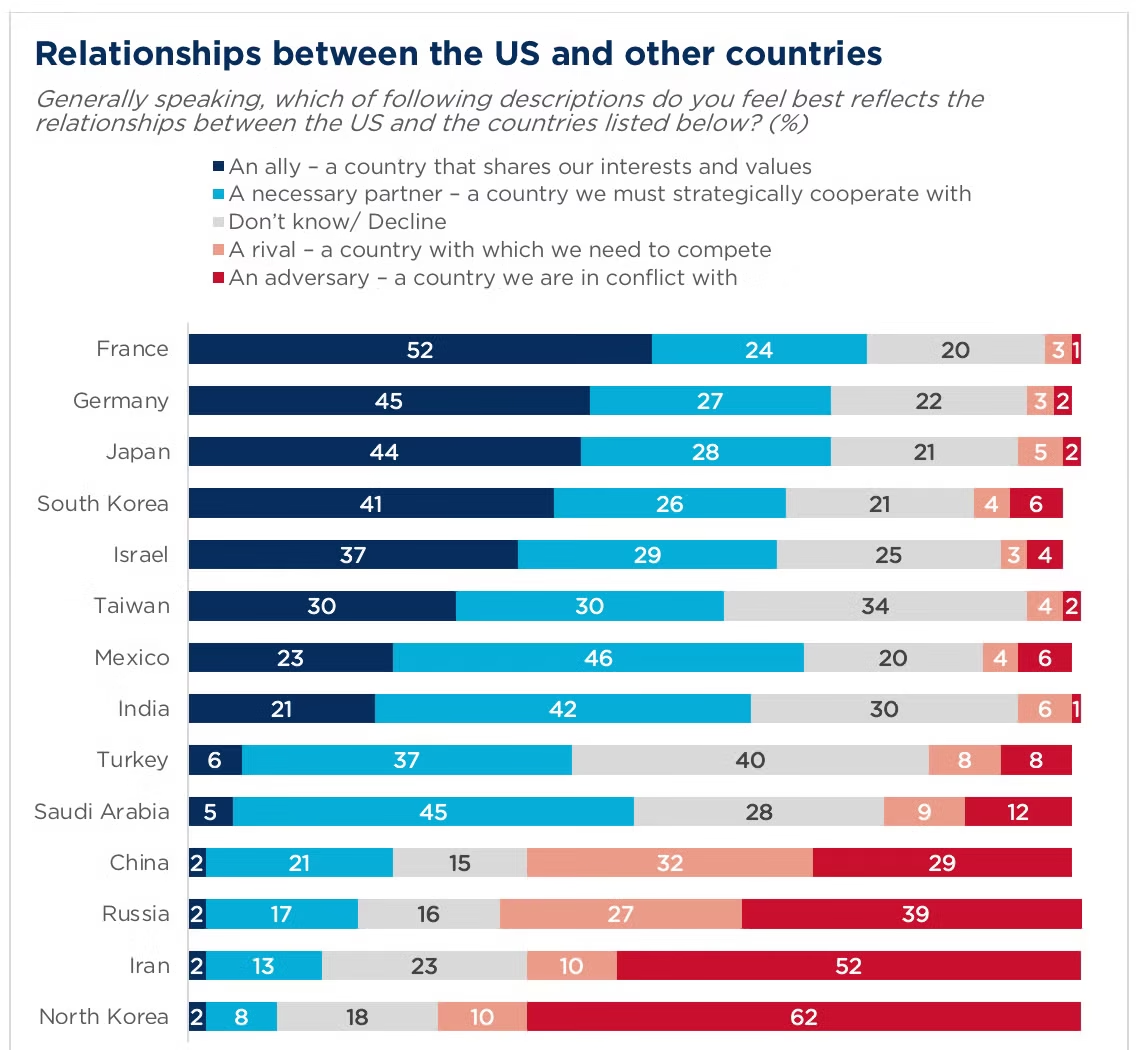
From Rules Based Order to Power Forward Politics
For much of the post Cold War era, global stability relied on multilateral institutions and negotiated norms. That framework sought to limit conflict through shared rules and collective enforcement.
Today, analysts note that US global influence is increasingly exercised through direct policy action rather than institutional mediation. The emphasis has shifted toward outcomes over process, accelerating decision making while reducing reliance on prolonged consensus building.
Allies Reevaluate Long Standing Partnerships
Traditional allies across Europe and Asia are responding with careful re-calibration. Governments accustomed to extended consultation now face policy decisions that emerge rapidly and carry immediate consequences.
The re-calibration of US global influence has prompted allies to strengthen regional cooperation, diversify strategic partnerships, and invest more heavily in self reliance, even as they seek to preserve core security ties with Washington.
Rivals Adjust Strategic Calculations
Strategic competitors are also reassessing their positions. In Beijing and Moscow, policymakers interpret Washington’s posture as a signal that red lines will be enforced more decisively.
From this perspective, US global influence now operates with sharper definition. While clearer boundaries reduce ambiguity, they also raise the stakes of miscalculation, narrowing diplomatic maneuvering space.
Leadership Style Shapes Policy Execution
The current shift reflects a leadership philosophy that prioritizes leverage, timing, and visible strength. At the center of this approach is Donald Trump, whose political influence continues to shape the tone and direction of American foreign policy.
Supporters argue that this reinforces US global influence by restoring deterrence and credibility. Critics counter that it risks eroding trust built through decades of alliance management and institutional engagement.
Markets React to Assertive Policy Signals
Financial markets have responded quickly to Washington’s evolving posture. Currency fluctuations, equity volatility, and commodity price movements reflect investor attempts to price in geopolitical risk.
Economists note that changes in US global influence often translate into immediate economic consequences, affecting capital flows, trade expectations, and long term investment strategies worldwide.
Institutions Face Pressure to Adapt
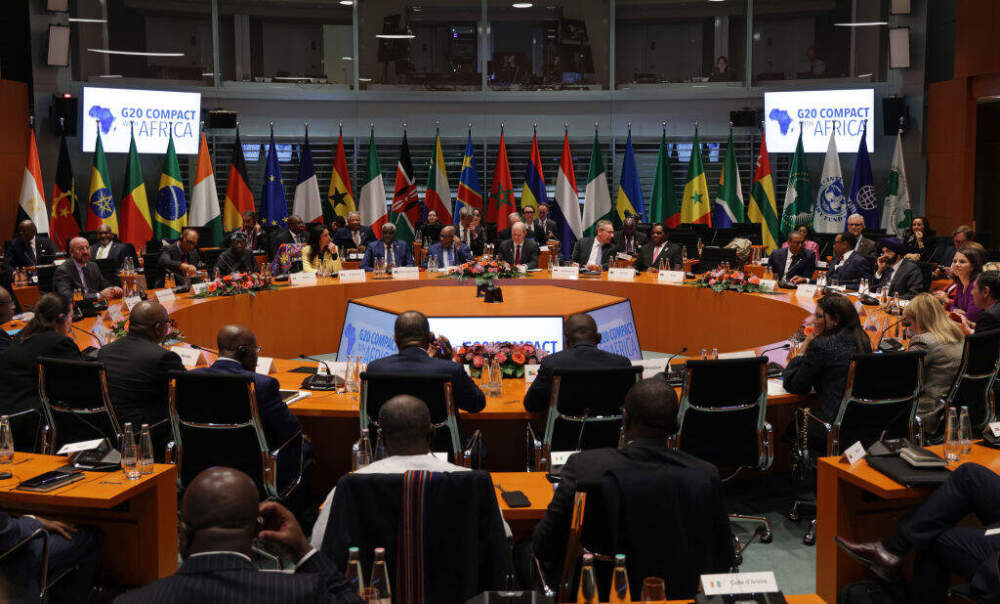
Multilateral institutions designed around consensus now face growing pressure. Trade bodies, security forums, and diplomatic platforms struggle to maintain relevance when unilateral action becomes more common.
The changing expression of US global influence challenges these institutions to redefine their purpose in a system less dependent on collective agreement and more shaped by power dynamics.
One Line That Captures the Global Mood
A senior European diplomat, speaking privately after a transatlantic meeting, summarized the adjustment underway by saying,
“The era of implied leadership is over; power is now exercised openly.”
The remark reflects a widespread perception that US global influence is being asserted with unprecedented visibility.
Domestic Politics Drive External Behavior
Domestic political dynamics in the United States play a critical role in shaping foreign policy. Calls for assertiveness resonate with voters who favor visible strength and rapid decision making.
These pressures amplify shifts in US global influence, ensuring that internal political priorities increasingly shape external actions with global repercussions.
Security Planning Evolves Across Regions
From Eastern Europe to the Indo Pacific, defense planners are revising strategies. Increased military spending, expanded exercises, and new bilateral arrangements reflect efforts to adapt to Washington’s posture.
Within this environment, US global influence remains central to deterrence calculations, even as partners hedge against unpredictability by strengthening regional frameworks.
Economic Power Becomes a Central Tool
Economic measures such as sanctions, tariffs, and investment restrictions are playing a more prominent role in policy execution. Washington’s readiness to deploy them underscores their strategic value.
This reliance highlights how US global influence extends beyond military strength into financial systems that underpin global commerce and development.
Narrative Control and Perception Management
Beyond tangible measures, messaging has become a critical component of leadership. Public statements, symbolic actions, and diplomatic framing shape how policy decisions are interpreted worldwide.
This emphasis reinforces US global influence, demonstrating how perception can magnify the impact of action across borders.
Risks of Escalation and Overreach
While assertive action can deter adversaries, it also increases the risk of escalation. Faster decision making leaves limited space for de escalation, raising the potential for unintended conflict.
Analysts caution that sustaining US global influence through constant pressure requires careful calibration to avoid strategic overreach and long term instability.
A Global System in Active Transition
As governments adjust, the international system appears increasingly fluid. Middle powers diversify alliances, regional blocs deepen cooperation, and institutions re-calibrate expectations.
This adaptation illustrates how US global influence is accelerating the transition toward a more competitive and multi-polar global order.
Long Term Consequences for World Politics
The current phase may have lasting implications for how power is exercised and contested. Future leaders and institutions will inherit a system shaped by more visible authority and faster decision cycles.
Observers suggest that the evolution of US global influence will influence diplomatic norms, alliance behavior, and crisis management for years to come.
A Distinctive Closing Perspective
What defines this moment is not the absence of diplomacy, but the prominence of power. Authority is exercised openly, signaling priorities without ambiguity.
As 2026 unfolds, the trajectory of American leadership will continue to shape global politics, compelling allies and rivals alike to navigate a world where US global influence is more immediate, more visible, and more consequential than at any point in recent history.