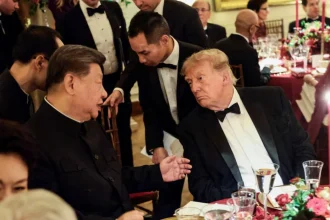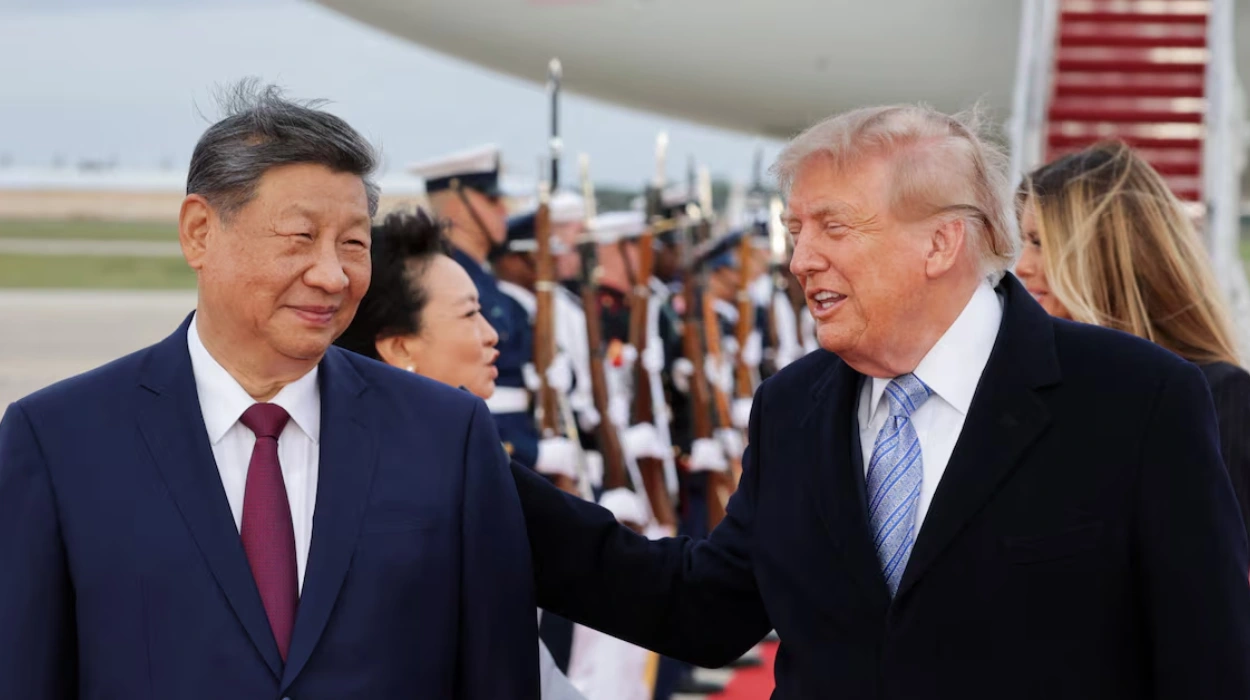
Washington (Brussels Morning Newspaper) September 24, 2026 – U.S. President Donald Trump and Chinese President Xi Jinping met at the White House on Thursday to address bilateral tensions, trade disputes, artificial intelligence governance, and shifting international dynamics. During the high-stakes summit, U.S. Treasury Secretary Scott Bessent announced an extension of the bilateral trade truce, while both leaders emphasized the necessity of maintaining open communication lines and avoiding direct military conflict.
Trade Truce Extension Announced as Officials Navigate Economic Pressures
The bilateral talks commenced following the arrival of Chinese President Xi Jinping in Washington. Shortly after the arrival, U.S. Treasury Secretary Scott Bessent announced that the United States and China had reached an agreement to extend the temporary trade truce initially forged the previous year in South Korea.
The extension provides a stopgap measure for both economic superpowers as they continue negotiations. Peak baseline U.S. tariffs had reached 145 percent during prior trade escalations, matched by reciprocal Chinese levies of 125 percent. Following the South Korea meeting, average U.S. tariff rates decreased to approximately 47 percent, with China charging averages in the mid-30s range. However, regulatory landscape shifts occurred after the U.S. Supreme Court overturned several tariff measures earlier in the year.
While Chinese representatives previously expressed interest in extending the trade framework through January 2029, U.S. officials advocated for shorter intervals. Washington cited concerns regarding implementation timelines for rare earth mineral exports, alongside agricultural and aircraft import commitments from China. Both administrations faced distinct domestic motivations to preserve stability; the U.S. Republican Party confronted upcoming congressional midterms sensitive to economic disruptions, while Beijing sought to stabilize an uneven domestic economic environment alongside strong high-tech manufacturing exports.
Strategic Discussions on Artificial Intelligence and Global Security
Discussions between President Trump and President Xi also incorporated technological frameworks, specifically artificial intelligence safety and governance. Treasury Secretary Scott Bessent noted that both nations displayed openness toward establishing a formal notification mechanism for artificial intelligence incidents carrying national security implications. President Xi underscored that artificial intelligence capabilities must remain under rigorous human control to mitigate systemic risks.
The summit agenda further encompassed broader geopolitical frictions, including maritime security, regional stability, and international conflicts. President Xi reiterated that Beijing and Washington must firmly uphold the principle of avoiding conflict and direct confrontation. He noted that despite structural differences in national conditions, candid and sustained dialogue remains essential for building mutual trust and managing competitive friction within defined boundaries.
Regarding foreign policy matters, divergent perspectives persisted concerning international flashpoints, including ongoing conflicts in the Middle East and diplomatic approaches to Iran. U.S. officials continued urging Beijing to utilize its economic leverage and reliance on Gulf oil supplies to influence Tehran. In response, Chinese leadership expressed concerns regarding military actions and geopolitical strategies that risk destabilising international norms.
Diplomatic Exchanges and Cultural Initiatives During State Visit
The state visit incorporated traditional diplomatic pageantry, including an arrival ceremony at Joint Base Andrews followed by formal events at the White House. During the welcoming proceedings, President Trump characterized his relationship with the Chinese leader as a “truly great friendship,” while President Xi highlighted the historical importance of bilateral rapport.
As part of bilateral goodwill gestures, President Xi confirmed the resumption of giant panda conservation programs. Two giant pandas, named Ping Ping and Fu Shuang, are scheduled to arrive at Zoo Atlanta in the coming days. This follows the return of previous pandas to China as preceding loan agreements lapsed amid prior diplomatic strains. President Xi described the panda loan arrangements as enduring symbols of friendship between the American and Chinese populations.
Economic fair play also featured in the discussions, with President Xi advocating for equitable treatment of Chinese corporate entities operating within the United States market. Simultaneously, he affirmed that China maintains an open economic door welcoming corporate investment and business operations from American enterprises, even as U.S. regulatory bodies maintain rigorous national security scrutiny over foreign investments.