
The siege of Antwerp in 1914, an important early battle of the First World War, arose from a combination of strategic military decisions, geopolitical tensions, and the rapid German invasion of Belgium. This engagement saw German forces besieging the heavily fortified Belgian city of Antwerp, defended by Belgian, British, and French troops.
Strategic Importance of Antwerp
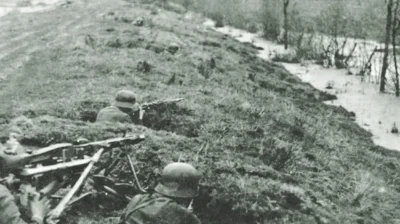
Antwerp was a key strategic fortress city in Belgium, renowned for its comprehensive defensive works known as the National Redoubt. This network consisted of a series of forts surrounding the city, designed to provide a final bastion of resistance should Belgium face invasion. Antwerp’s position on the Scheldt River and its role as a major port made it critical to both Belgian defense and Allied strategies.
Belgian military planners since the 1880s had envisioned holding the frontier forts at Liège and Namur to delay enemy advances, with Antwerp serving as a secure fallback position where the army and government could regroup and resist. The strength and reputation of Antwerp’s forts made the city appear nearly impregnable to contemporary military observers, heightening its importance.
German Invasion of Belgium
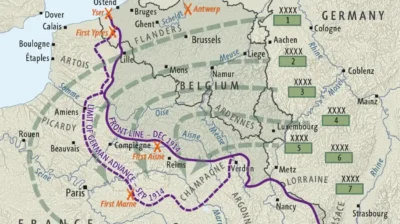
The immediate cause that set the stage for the siege was Germany’s invasion of Belgium beginning on August 4, 1914. Germany aimed to rapidly advance through Belgium to outflank French defenses in accordance with the Schlieffen Plan. Belgium’s refusal to grant Germany free passage forced German forces to attack fortified positions, including the forts of Liège and Namur.
After intense fighting, the fortress of Liège fell mid-August, enabling German forces to push deeper into Belgium. The defending Belgian field army withdrew westward toward Antwerp to avoid encirclement. Capturing Antwerp was essential for Germany to secure its northern flank and prevent Allied forces from using the city as a base for counterattacks.
Belgian Defensive Posture in Antwerp
Upon retreating to Antwerp, the Belgian army took advantage of the city’s extensive fortifications. The garrison consisted of fortress troops stationed in a ring of 21 modern forts approximately 10 to 15 kilometers outside the city, supplemented by smaller fortifications along the Scheldt River. The defenses also included inundations flooded areas meant to hinder enemy movement and water-filled ditches.
The Belgian government and military command saw Antwerp as a stronghold that could hold out against the German advance, buying time for Allied forces to mobilize and potentially open a new front. The government relocated to Antwerp from Brussels to sustain national authority and maintain communication lines with the Allies.
Early Skirmishes and Sorties
In late August and early September 1914, Belgian forces launched several sorties, offensive operations designed to disrupt German preparations and relieve pressure on the city. These sorties extended Belgian presence southward and aimed to disturb German communications and troop movements.
While the initial sorties had some success in pushing back German units and forcing adjustments in their deployments, they did not prevent Germany from consolidating a siege. German forces, under commanders including General Hans von Beseler, methodically prepared to isolate Antwerp by capturing surrounding towns and cutting off supply lines.
Additionally, the German military began installation of heavy siege artillery near Mechelen, south and east of Antwerp, intending to bombard the outer forts with super-heavy guns capable of breaching the defenses that older artillery could not.
German Siege Plan and Initial Assaults
Germany’s strategic plan involved surrounding Antwerp from the south and east, where the fortifications were more vulnerable, and applying concentrated artillery fire to break through the defensive ring. The original German strategy, crafted as part of pre-war planning by Schlieffen and Moltke, anticipated isolating Antwerp to neutralize the threat posed by Belgian forces and British reinforcements operating nearby.
On September 28, 1914, the German bombardment of the Antwerp forts commenced, initiating a sustained artillery offensive. Observation balloons directed precise fire on critical defensive positions such as gun emplacements, magazines storing ammunition, and fort structures like Fort Sint-Katelijne-Waver and Fort Walem.
The severe pounding quickly made several forts untenable, forcing Belgian commanders to begin evacuations of non-combatants and withdraw vulnerable personnel and equipment. Despite these efforts, German forces steadily compressed the defensive perimeter.
Allied Reinforcements and Belgian Withdrawal
Recognizing the severity of the siege, the British dispatched the Royal Naval Division beginning in early October to bolster Antwerp’s defense. However, the German advance, supported by superior artillery, soon penetrated the outer ring of forts and threatened to sever the key corridor connecting Antwerp with the remaining unoccupied Belgian territory to the west along the border with the Netherlands.
Faced with the imminent collapse of the city’s defenses and the risk of encirclement, the Belgian Field Army began a strategic withdrawal on October 9 toward the coast near the Yser River. The government and remaining fortress troops chose to hold out as long as possible to delay German progress.
The garrison at Antwerp formally surrendered on October 10, 1914. Some Belgian and British troops escaped to the Netherlands, where they were interned, while most of the city fell under German control.
Aftermath and Significance
Although Antwerp fell, the city’s week-long resistance and sorties disrupted German plans and diverted forces that might otherwise have reinforced the front lines in France. The prolonged defense contributed to the failure of the German offensive to quickly win the war. The Belgian army’s subsequent stand on the Yser River formed the last major Allied holdout in Belgium and led to the protracted and deadly Battle of the Yser.
The siege of Antwerp also demonstrated the increasing importance of heavy artillery and modern fortress design, as well as the challenges faced by defenders in the face of new military technologies.
The siege of Antwerp began as an extension of Germany’s aggressive strategy to secure its western flank by incapacitating Belgian resistance. Germany’s invasion of Belgium, the retreat of Belgian forces to Antwerp’s formidable fortifications, German bombardment with heavy artillery, and sustained assaults triggered the siege. Belgium’s determined defense, bolstered by British assistance, ultimately succumbed, but the siege significantly influenced the early dynamics of the First World War. It exemplified the strategic interplay of defense, artillery power, and alliance support in early 20th-century warfare, leaving a lasting legacy on military history.
Dear reader,
Opinions expressed in the op-ed section are solely those of the individual author and do not represent the official stance of our newspaper. We believe in providing a platform for a wide range of voices and perspectives, even those that may challenge or differ from our own. We remain committed to providing our readers with high-quality, fair, and balanced journalism. Thank you for your continued support.