

The fall of the Western Roman Empire remains one of the most studied and debated events in world history. Central to this process was the role of the Germanic tribes, whose persistent incursions, battles, and ultimately conquest reshaped the European map. Understanding how the Germanic tribes defeated Rome requires an exploration of both specific battles and the broader socio-political dynamics that eroded Roman power.
- The Setting: Rome and the Germanic Tribes in Antiquity
- The Battle of the Teutoburg Forest: A Decisive Defeat
- The Role of Arminius and Tribal Unity
- Roman Military Tactics vs. Germanic Adaptations
- Economic Instability and Overextension of Roman Resources
- The Impact of the Huns and Other Migratory Pressures
- The Sack of Rome in 410 AD and its Psychological Impact
- The Fall of the Western Roman Empire: Odoacer and the End of Roman Rule
- Legacy of Germanic Influence on Medieval Europe
- Political and Military Strain on the Roman Empire
- The Great Migrations and Barbarian Invasions
- Germanic Strategies and Strengths
- The Legacy of Roman-Germanic Conflict
The Setting: Rome and the Germanic Tribes in Antiquity
During the height of its power, Rome controlled vast territories across Europe, Africa, and Asia. The Roman Empire’s northern border with the Germanic tribes along the Rhine and Danube rivers was a frontier of constant tension. The Germanic peoples were diverse groups including the Cherusci, Suebi, Goths, Vandals, and others often organized into tribes with distinct cultures and leadership structures.
Initially, Rome sought to manage relations through alliances, trade, and limited military campaigns. However, policy shifts under various emperors, population pressures within the tribes, and increasing militarization led to escalating conflicts that challenged Rome’s dominance.
The Battle of the Teutoburg Forest: A Decisive Defeat
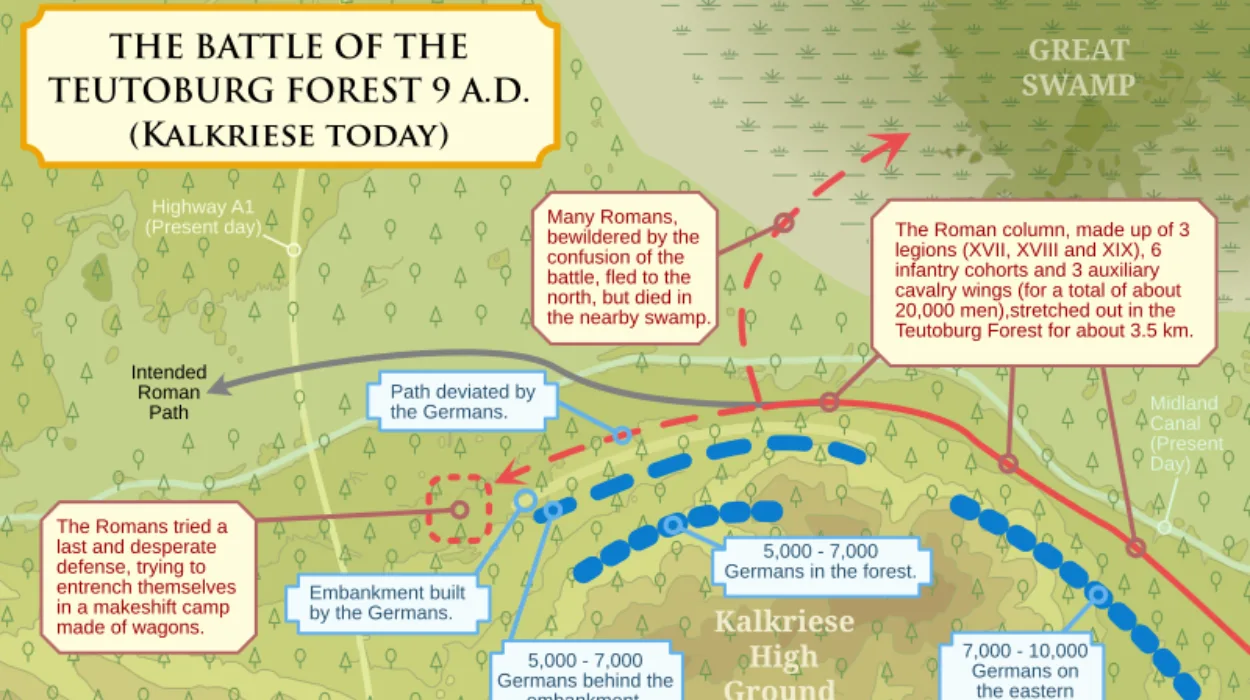
One of the earliest and most consequential defeats suffered by Rome at the hands of Germanic tribes was the Battle of the Teutoburg Forest in 9 AD. Roman general Publius Quinctilius Varus led three legions through the dense woods of Germania, unaware that Arminius, a Germanic chieftain educated in Roman military tactics and citizenship, had orchestrated an ambush.
In this brutal surprise attack, the Germanic alliance decimated the Roman forces, killing an estimated 15,000 to 20,000 soldiers. The defeat shattered Rome’s ambitions for expanding its territory east of the Rhine River and forced a strategic reevaluation, with the Rhine becoming a fixed northern boundary for the empire.
The battle demonstrated the strategic ingenuity of the Germanic tribes and exposed vulnerabilities in Rome’s military adaptability to local geography and guerilla warfare tactics.
Certainly! Here are additional headings with detailed information to enrich the article on how the Germanic tribes defeated Rome:
The Role of Arminius and Tribal Unity
Arminius, a chieftain of the Cherusci tribe who was educated within Roman military traditions, was instrumental in uniting disparate Germanic tribes against Rome. His ability to exploit Roman complacency and orchestrate the coalition for the Battle of the Teutoburg Forest underscored the importance of leadership in tribal resistance.
Through charismatic diplomacy and strategic planning, Arminius forged alliances among historically rival tribes such as the Marsi, Bructeri, and Chatti, highlighting how internal Germanic unity was crucial in challenging Roman supremacy.
Roman Military Tactics vs. Germanic Adaptations
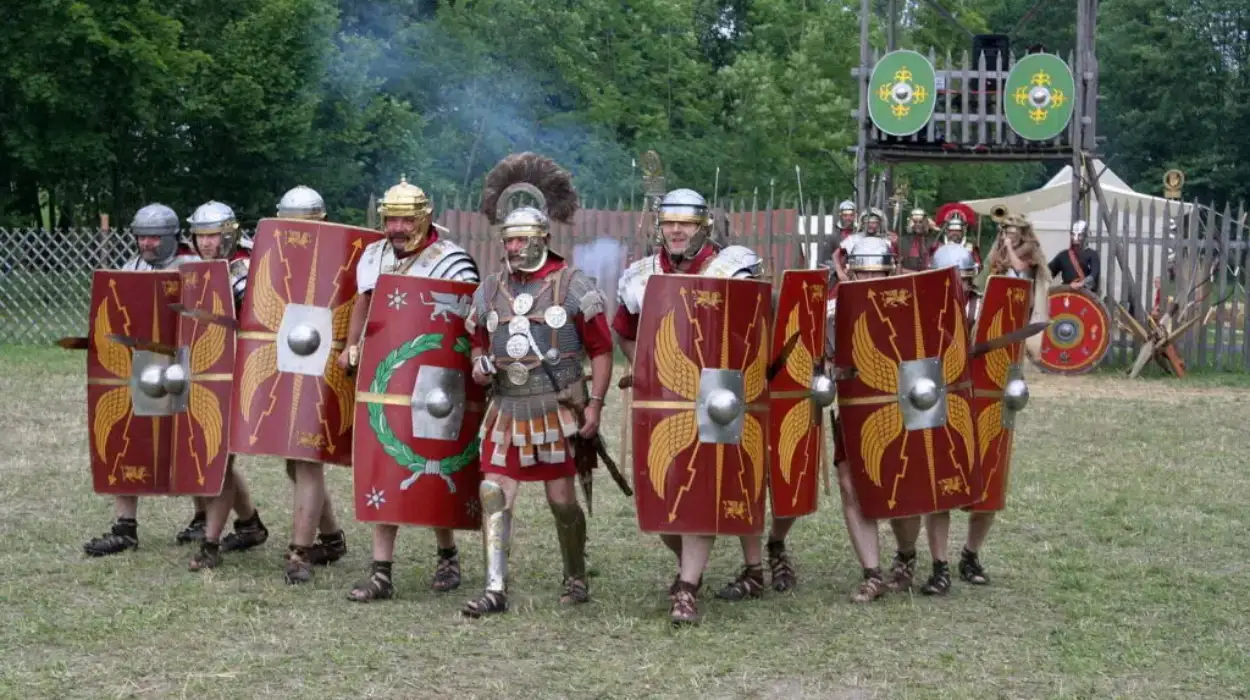
Roman legions were highly disciplined and excelled in open-field engagements with standardized formations and heavy infantry tactics. However, in the dense, unfamiliar terrain of northern Europe, particularly in the Teutoburg Forest, these tactics became liabilities.
Germanic warriors relied on guerrilla warfare, ambushes, and rapid hit-and-run attacks that disrupted Roman supply lines and command structures. The geography and climate of Germania advantageously supported Germanic resistance and limited Roman tactical options.
Economic Instability and Overextension of Roman Resources
The Roman Empire’s vast territorial span strained its military and economic resources. To maintain control over frontiers like Germania, the empire had to commit significant forces, which became increasingly difficult amidst internal political instability and economic fluctuations.
The burden of defending remote provinces with expensive legions, coupled with recurrent civil wars and administrative corruption in Rome, sapped the empire’s ability to mount sustained counteroffensives against Germanic invasions.
The Impact of the Huns and Other Migratory Pressures
The movement of the Huns into Eastern Europe in the 4th century CE displaced many Germanic tribes, pushing them westwards into Roman territories. This large-scale migratory pressure accelerated the destabilization of Rome’s borders as tribes like the Visigoths and Ostrogoths sought refuge and new lands.
This migration contributed to a domino effect of invasions and incursions, overwhelming Roman defenses and contributing significantly to the empire’s decline.
The Sack of Rome in 410 AD and its Psychological Impact
The Visigothic king Alaric’s sack of Rome in 410 AD was not only a military defeat but also a symbolic blow to Roman prestige. It was the first time in over 800 years that Rome had fallen to a foreign enemy and profoundly shook the empire’s morale.
The event reflected the changing power dynamics between Rome and barbarian tribes, emboldening other groups and hastening the disintegration of imperial authority in the West.
The Fall of the Western Roman Empire: Odoacer and the End of Roman Rule
The deposition of Romulus Augustulus by the Germanic chieftain Odoacer in 476 AD is conventionally marked as the fall of the Western Roman Empire. This peaceful transfer of power symbolized the successful culmination of Germanic ascendancy over Roman institutions in the West.
Odoacer’s reign initiated the foundation of early medieval kingdoms that blended Roman governance with Germanic traditions, establishing the political framework of post-Roman Europe.
Legacy of Germanic Influence on Medieval Europe
The Germanic tribes’ defeat of Rome laid the groundwork for the cultural, linguistic, and political landscape of medieval Europe. Germanic law codes, military structures, and customs merged with Roman legal and religious traditions. This fusion influenced the formation of feudal systems, the spread of Christianity, and the rise of new kingdoms such as the Franks under Charlemagne.
The Germanic triumph represents a bridge between antiquity and the Middle Ages.
Political and Military Strain on the Roman Empire
The Roman Empire, particularly in the West, faced mounting political instability and military overextension that weakened its capacity to effectively counter Germanic incursions. Emperors struggled to maintain centralized control amid succession crises, civil wars, and administrative corruption.
The size of the empire demanded vast resources and continuous mobilization of troops to defend lengthy frontiers, stretching military logistics thin. Recruitment challenges, including reliance on mercenaries and auxiliary forces from within rival groups, diluted the discipline and cohesion traditionally characteristic of Roman legions.
Such internal weaknesses were exploited by Germanic groups who, capitalizing on Roman fragmentation, mounted persistent raids and large-scale invasions.
The Great Migrations and Barbarian Invasions
From the 3rd century onward, waves of migration and invasions by Germanic tribes dramatically altered the Roman landscape. Populations such as the Visigoths, Ostrogoths, Vandals, and Franks moved deeper into Roman territories, often fleeing other pressure groups like the Huns.
The Visigothic sack of Rome in 410 AD, led by King Alaric, was a symbolic blow to Roman prestige and power. Vandals captured North Africa, cutting off vital grain supplies. In 455 AD, the Vandals again sacked Rome, exposing the empire’s inability to defend its capital.
Eventually, in 476 AD, Odoacer, a Germanic chieftain, deposed the last Roman emperor of the West, Romulus Augustulus, marking the formal end of Western Roman imperial rule.
Germanic Strategies and Strengths
The Germanic tribes succeeded due to their adaptability and keen understanding of guerrilla tactics. Their decentralized but flexible leadership allowed them to unite temporarily for major campaigns and disband afterward. They were familiar with the challenging terrains of Northern Europe, leveraging forests and marshlands to offset Roman conventional strengths.
Culturally, they prized warrior elites with loyalty-based kinship ties, which contrasted with Rome’s formalized military hierarchy. As many Germanic peoples settled within Roman borders, they assimilated certain Roman military technologies and governance methods, enhancing their effectiveness over time.
The Legacy of Roman-Germanic Conflict
The Germanic tribes’ gradual conquest of Roman territories led to the transformation of Europe’s political, cultural, and ethnic landscape, laying foundations for the medieval kingdoms and modern nation-states.
Roman administrative systems, law, Christianity, and infrastructure were inherited and adapted by successor Germanic kingdoms. Though the Western Roman Empire fell, the Eastern Roman Empire (Byzantium) endured, influencing regional dynamics for centuries.
The defeat of Rome by the Germanic tribes was neither sudden nor due to a single battle. It was the result of cumulative military confrontations like the Battle of the Teutoburg Forest, compounded by Rome’s internal political and military vulnerabilities, population migrations, and sustained pressures on its borders. The Germanic triumph reshaped European history, symbolising the end of ancient Rome’s dominance and the birth of a new medieval world.
Dear reader,
Opinions expressed in the op-ed section are solely those of the individual author and do not represent the official stance of our newspaper. We believe in providing a platform for a wide range of voices and perspectives, even those that may challenge or differ from our own. We remain committed to providing our readers with high-quality, fair, and balanced journalism. Thank you for your continued support.