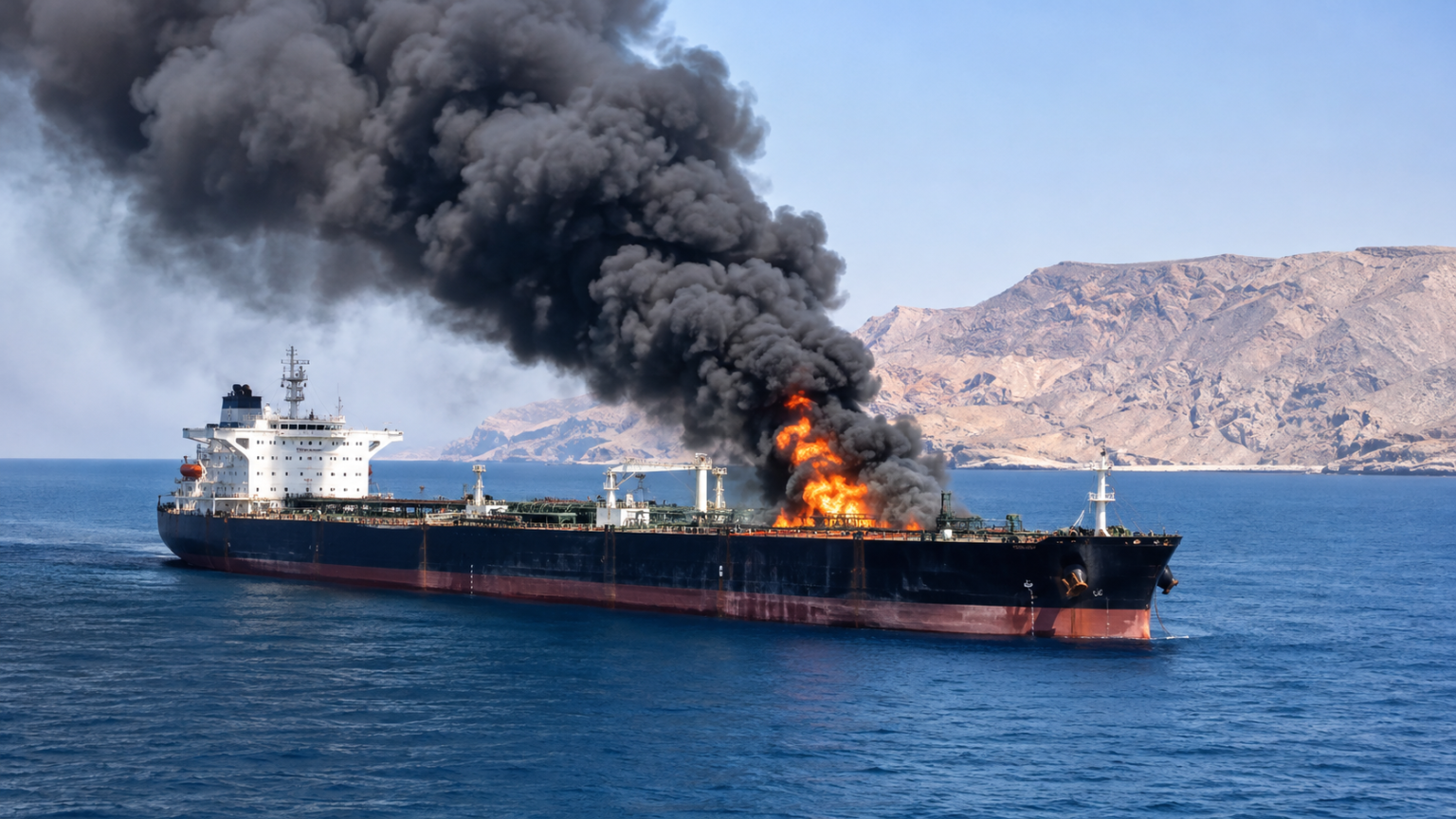
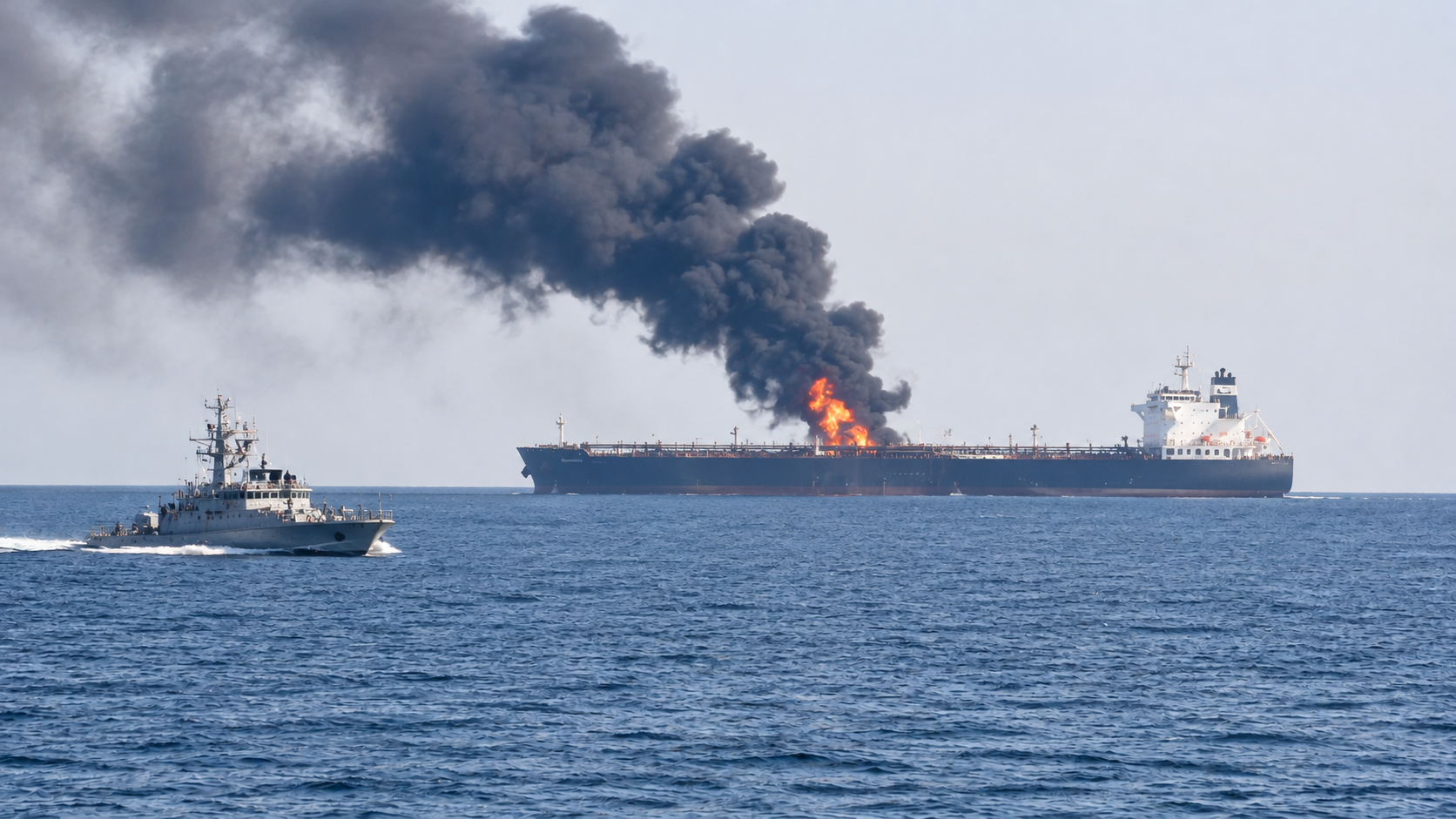
Iran, 29 November – Brussels Morning Newspaper – Strait of Hormuz tanker fire was reported by Iran’s Army Navy on Sunday, November 29, after an oil tanker allegedly struck a naval mine in a restricted area east of the strategic waterway. Iranian officials said the vessel caught fire and became immobilised, while two other tankers travelling with it turned back towards the Persian Gulf.
The Navy said the three vessels entered the area at about 11pm on Saturday after switching off their identification and navigation systems. The account was carried by Mehr News Agency and reported by Anadolu Agency.
Iran did not identify the tanker, disclose its flag or owner, or provide details about its cargo, crew or possible casualties. The reported cause of the fire has not been independently verified.
For that reason, the Strait of Hormuz tanker fire remains an allegation attributed to Iran’s military rather than a confirmed mine incident.
The incident adds to a series of claims by Iranian forces that commercial vessels have struck mines in waters around the passage. However, an international maritime assessment issued by the Joint Maritime Information Center (JMIC) on November 26 said Iranian claims that tankers had hit mines had not been confirmed by official or national authorities.
What Iran Says Happened
According to the Iranian Navy statement, three tankers entered what it described as a prohibited maritime zone east of the Strait of Hormuz late on Saturday. The vessels had allegedly disabled their detection and navigation systems.
The Navy said one tanker hit a naval mine, caught fire and was left unable to move. The other two vessels changed course and returned towards the Persian Gulf.
The statement did not say how long the fire lasted, whether the tanker remained at sea or whether rescue and firefighting teams were sent to the scene. It also did not name the vessels or identify the countries under whose flags they were sailing.
The Strait of Hormuz tanker fire has therefore not been confirmed through an independent account identifying the ship or establishing the cause of the incident. The available reporting does not establish whether the vessel was damaged by a mine, another explosive device or a different cause.
Iranian authorities have repeatedly warned commercial operators to coordinate passage with the country’s armed forces, use routes designated by Tehran and keep identification and tracking systems active. The Navy has said vessels that ignore those instructions risk entering unsafe or restricted waters.
Tehran has presented the Strait of Hormuz tanker fire as evidence of the dangers of disregarding its navigation rules.
Maritime Agencies Have Not Confirmed the Mine Claim
The distinction between Iran’s account and independently verified information is important. The JMIC’s November 26 advisory said 17 tankers had been struck in the Strait of Hormuz since November 1, while noting that Iranian claims of mine strikes had not been confirmed by official or national authorities.
The advisory also described continued incidents involving attacks, attempted attacks, surveillance and the harassment of merchant vessels. It said commercial traffic through the strait remained far below its 2025 baseline.
This wider pattern places the Strait of Hormuz tanker fire within a period of heightened risk for commercial operators, although it does not verify Iran’s explanation.
Separately, the UK Maritime Trade Operations (UKMTO) has issued warnings about incidents involving tankers in and around the waterway. In a November 16 warning, the agency said a tanker had reported being hit by an unknown projectile while travelling outbound through the strait. The impact caused a fire in the engine room.
The crew were accounted for and no casualties were reported, while damage and environmental assessments were still pending at the time of the notice.
That report did not establish that a naval mine was involved. The distinction matters when assessing the Strait of Hormuz tanker fire, because an unknown projectile and a sea mine are not interchangeable descriptions.
Why the Strait of Hormuz Is Important
The Strait of Hormuz links the Persian Gulf with the Gulf of Oman and the Arabian Sea. It is a narrow but vital route for oil and liquefied natural gas exports from Gulf producers, including Saudi Arabia, Iraq, Kuwait, Qatar and the United Arab Emirates.
A significant share of the world’s seaborne oil trade normally passes through the passage. Any sustained interruption can affect shipping schedules, insurance costs, energy prices and the availability of supplies in international markets.
The Strait of Hormuz tanker fire is unlikely, on the information currently available, to establish the scale of any disruption by itself. The wider concern is the accumulation of incidents and restrictions that could make shipowners more reluctant to send vessels through the area.
The Strait of Hormuz tanker fire is being reported against that backdrop of reduced confidence in safe passage.
When operators judge a route to be too risky, they may delay voyages, seek alternative arrangements or pay higher insurance premiums. Those costs can be passed through supply chains, even when global oil production is not directly affected.
Possible Consequences for Europe
European countries are exposed to developments in the Gulf through international energy markets and maritime trade. Although the European Union imports energy from a range of suppliers, a disruption to a major global shipping corridor can influence crude oil prices, freight rates and insurance costs.
Higher transport and energy expenses can affect refineries, manufacturers, airlines and households. The effect would depend on how long shipping conditions remain difficult and whether oil and gas exports are materially reduced.
The Strait of Hormuz tanker fire also underlines the importance of reliable maritime information for European governments and businesses. For European energy planners, the Strait of Hormuz tanker fire is another reason to monitor shipping advisories and developments in the Gulf closely.
Shipping companies need clear warnings and independently verified assessments to make decisions about routes, crew safety and insurance.
There is not yet enough confirmed information to quantify any effect from Sunday’s reported incident on oil prices or European energy costs.
What Remains Unknown
Several central details remain unanswered. Iranian authorities have not released the tanker’s name, flag, ownership, cargo or the number and condition of crew members. They have not published evidence showing the alleged mine strike, and no independent authority has confirmed the cause of the fire.
The Strait of Hormuz tanker fire should therefore be treated as an incident reported by Iran, not as a mine strike established by independent investigators.
The next important information about the Strait of Hormuz tanker fire is likely to concern the vessel’s identity and condition, the safety of its crew and whether maritime agencies or the ship’s operator provide a separate account. Any confirmation of damage, casualties or pollution would also help establish the incident’s practical consequences.
For now, the report adds to an already tense maritime environment. The Strait of Hormuz tanker fire is a reminder of the risks facing commercial shipping, but the cause and full circumstances remain subject to verification.