Brussels (Brussels Morning Newspaper) – Leaders from seven European Union member nations on Monday urged the bloc to move ahead quickly with the proposal to utilize frozen Russian assets to provide financing to Ukraine.
The European Commission has proposed using frozen Russian assets or international borrowing, an approach, to raise 90 billion euros for Ukraine’s war effort against Russia. However, significant concerns from the key stakeholder, Belgium, remain unresolved.
Why do 7 EU states demand faster action on funding?
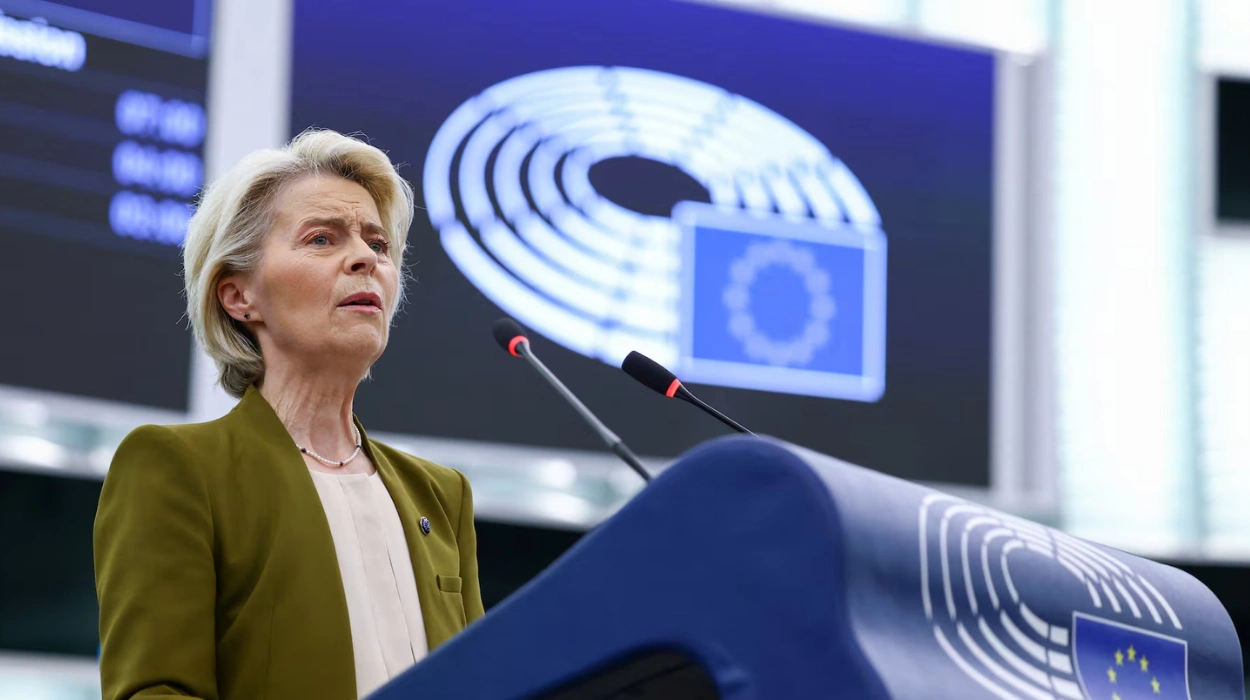
The leaders from Ireland, Latvia, Poland, Estonia, Finland, Lithuania, and Sweden, in a letter sent to European Council President Antonio Costa and the European Commission President Ursula von der Leyen, said:
“Supporting Ukraine in their fight for freedom and independence is not only a moral obligation – it is also in our own self-interest.”
“We must therefore move ahead quickly on the Commission’s proposals to use the cash balances from Russia’s immobilized assets for a reparations loan to Ukraine.”
What issues does Belgium highlight regarding financial and legal risks?
Belgian Foreign Minister Maxime Prevot reaffirmed Belgium’s concerns last Wednesday regarding the EU’s proposal to use profits from frozen Russian assets to aid Ukraine, stressing that these issues remain insufficiently addressed.
“We have the frustrating feeling of not having been heard; our concerns are being downplayed. The text the Commission will table today does not address our concerns in a satisfactory manner,”
Prevot briefed reporters before the NATO foreign ministers’ meeting in Brussels.
He further said that Belgium considers
“The option of the reparations loan the worst of all, as it is risky. It has never been done before. The reparation loans scheme entails consequential economic, financial and legal risks.”
He said the commission’s proposals do not address Belgium’s concerns,
“It is not acceptable to use the money and leave us alone facing the risks.”
How is Russia responding to the EU asset initiative?
A few days ago, Dmitry Medvedev, deputy chairman of Russia’s Security Council, warned that if Europe confiscates frozen Russian assets, Moscow could see it as a justification for war.
“If the crazy European Union does, after all, try to steal Russian assets frozen in Belgium under the guise of a so-called ‘reparations loan’, Russia may well view this move as tantamount to a casus belli with all the relevant implications for Brussels and individual EU countries,”
Medvedev said.