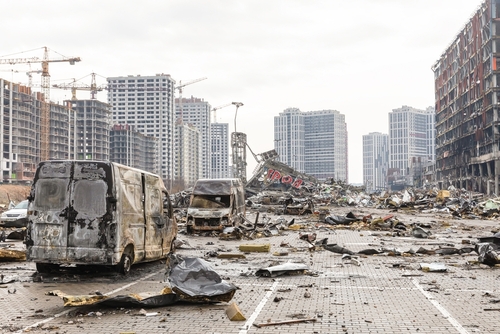
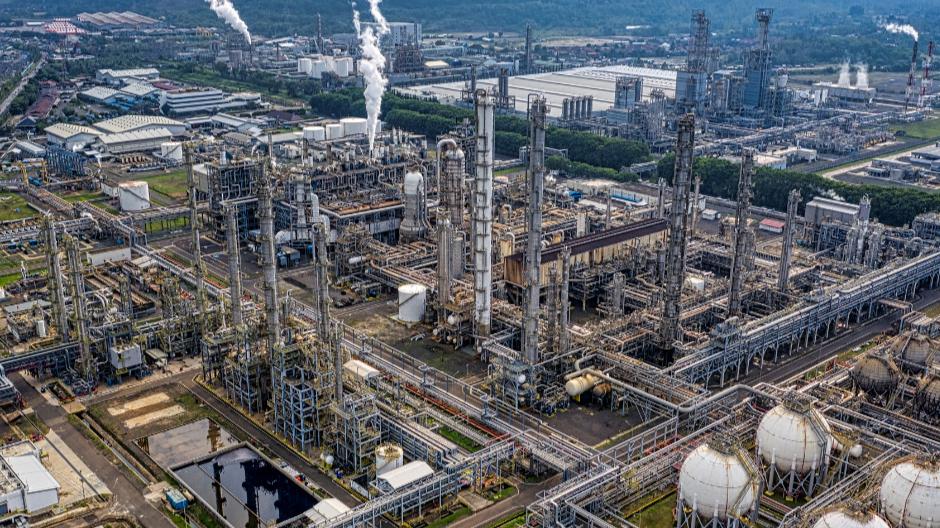
Kyiv, Ukraine, 6 October, (Brussels Morning Newspaper) – Ukraine says its expanding campaign of Russian refinery strikes has disabled more than half of Russia’s oil-refining capacity, marking what Kyiv describes as a major blow to the energy infrastructure supporting Moscow’s economy and military. The scale of the damage claimed by Ukraine has not been independently verified, making the distinction between confirmed attacks and Kyiv’s assessment important.
Ukraine says refinery attacks caused extensive disruption
Ukraine’s Defence Ministry said an assessment conducted with military and intelligence agencies concluded that more than 51% of Russia’s refining capacity had been disabled following repeated long-range attacks.
The figure represents Kyiv’s assessment rather than an independently established measurement of Russia’s currently operational refining capacity. Moscow has not published comprehensive figures confirming losses on that scale.
Ukraine has identified a series of Russian energy facilities as targets during its campaign, including refineries and associated infrastructure in Moscow, Yaroslavl, Perm, Saratov, Syzran, Kirishi and other locations.
The attacks demonstrate Ukraine’s increasing ability to reach strategically important facilities deep inside Russian territory using domestically produced long-range weapons.
Kyiv targets infrastructure supporting Russia’s war effort
Ukrainian officials argue that oil refineries are legitimate military-related targets because petroleum revenues contribute to Russia’s economy while refined fuels are required by its armed forces.
The Security Service of Ukraine previously confirmed Ukrainian involvement in an attack on the Moscow refinery at Kapotnya. The agency said the facility has an annual processing capacity exceeding 11 million tonnes of crude oil and supplies fuel to Moscow and the surrounding region.
The Russian refinery strikes are therefore intended to create pressure beyond the battlefield by disrupting fuel production, increasing repair requirements and placing additional strain on Russia’s energy sector.
Moscow acknowledges economic impact from attacks
Russian President Vladimir Putin has acknowledged that Ukrainian attacks on Russian energy facilities have caused economic damage, although Moscow disputes Kyiv’s broader portrayal of the campaign’s effectiveness.
Russia has also introduced restrictions affecting petroleum-product exports during periods of disruption to its domestic refining industry.
Russian Deputy Prime Minister Alexander Novak has said Moscow could adjust diesel export restrictions depending on domestic production and demand, highlighting the importance of maintaining sufficient fuel supplies inside Russia.
Long-range attacks reshape Ukraine’s strategy
Ukraine’s ability to strike targets far inside Russia has become an increasingly significant element of the conflict.
Kyiv has invested heavily in domestically produced long-range drones and other strike systems as it attempts to compensate for limitations affecting the use or availability of some Western-supplied weapons.
Refineries are particularly significant because Russia remains one of the world’s major oil producers and energy exports remain an important source of government revenue.
Damage to refining facilities does not necessarily remove their entire stated processing capacity for long periods. Plants can operate partially, while damaged equipment may be repaired. This makes independent assessment of nationwide capacity losses difficult.
Why Russia’s refinery network matters
Disruption to petroleum processing can affect domestic fuel availability, export volumes and refinery economics even when crude-oil production itself remains relatively stable.
For Ukraine, the strategy also creates a difficult defensive challenge for Moscow. Russia must protect military installations alongside geographically dispersed refineries, storage sites and other critical infrastructure.
The campaign nevertheless carries wider economic significance because sustained disruption to Russian refining could influence regional petroleum-product markets.
What happens next for Russia’s refineries?
Kyiv has indicated that attacks against Russian energy infrastructure supporting the war effort will continue, meaning Moscow faces continuing pressure to strengthen air defences around strategically important facilities.
The effectiveness of the campaign will ultimately depend on the duration of refinery shutdowns, Russia’s ability to repair damaged equipment and whether Ukraine can maintain its long-range strike tempo.
For now, Ukraine’s claim that more than half of Russian refining capacity has been disabled should be treated as an official Ukrainian assessment rather than an independently verified national figure. However, repeated Russian refinery strikes have established Russia’s energy infrastructure as a central target in Kyiv’s effort to impose greater economic and logistical costs on Moscow.