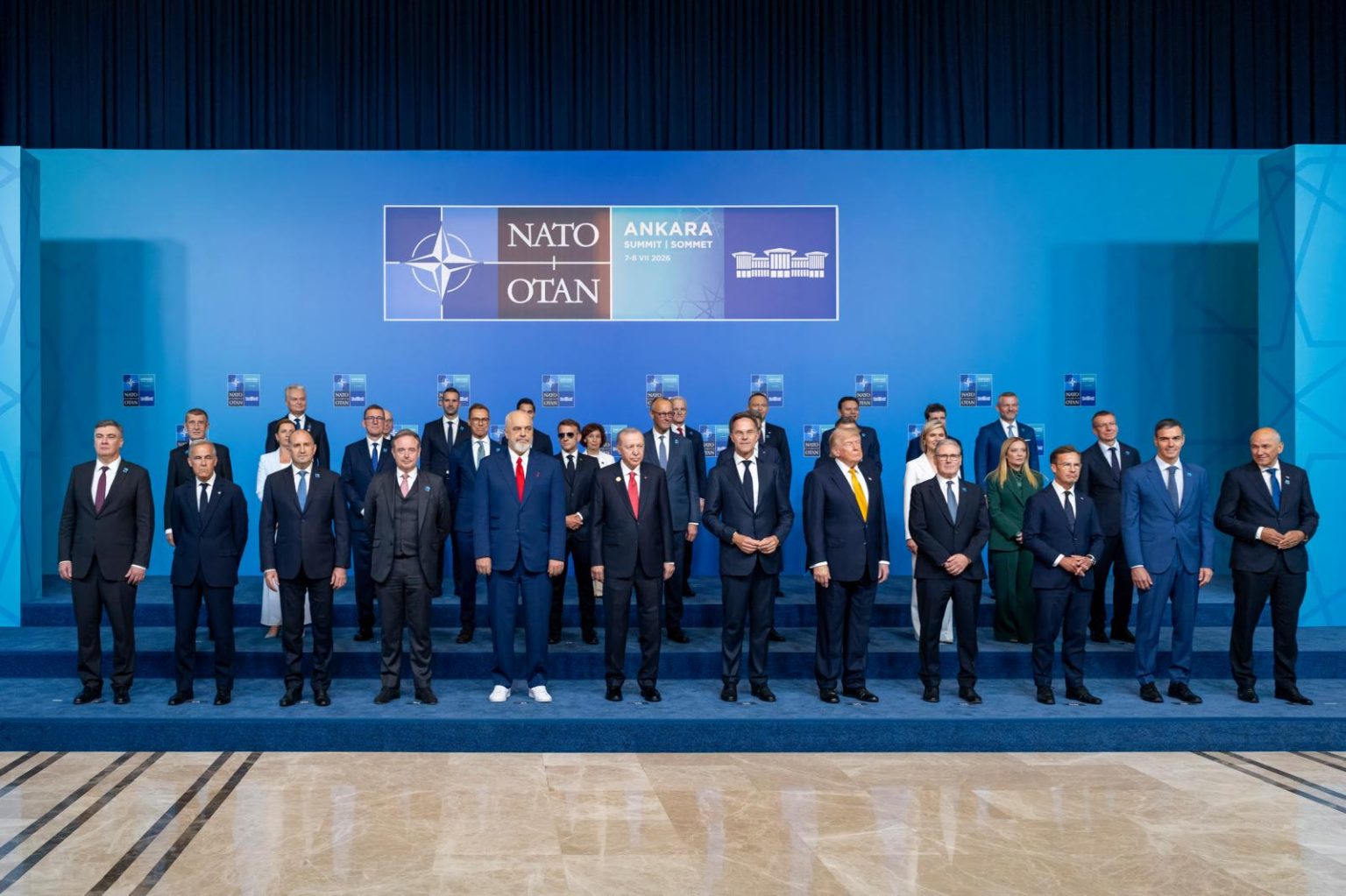
ANKARA , The NATO Summit in Ankara concluded with a renewed commitment to collective defence, increased military investment, and long-term support for Ukraine, as allied leaders confronted a rapidly evolving security landscape marked by war in Europe and rising instability beyond the continent.
Over two days, heads of state and government from the Alliance’s 32 member countries gathered in the Turkish capital to discuss the future of transatlantic security. While unity remained the summit’s central message, discussions also reflected a changing balance within NATO, with European allies expected to assume greater responsibility for their own defence.
One of the strongest outcomes of the meeting was the agreement to continue military and financial assistance to Ukraine. Added in the NATO statement . Allied leaders pledged additional support aimed at strengthening Ukraine’s ability to defend itself against Russia’s ongoing invasion, while reaffirming that the country’s security remains closely linked to the stability of the Euro-Atlantic region.
Defence spending was another dominant theme. Several governments announced new investments in military capabilities, reflecting a broader effort to modernise armed forces and expand defence production. NATO leaders argued that stronger industrial cooperation is essential if the Alliance is to respond effectively to future crises and maintain credible deterrence.
The summit also exposed ongoing political differences within the Alliance. U.S. President Donald Trump once again urged European allies to shoulder a larger share of the defence burden, questioning previous levels of military commitment while later reaffirming support for NATO’s collective defence principle. Although his remarks sparked debate, leaders sought to project unity throughout the summit. (AP News)
Hosting the summit allowed Türkiye to reinforce its strategic position within the Alliance. President Recep Tayyip Erdoğan welcomed allied leaders at the Presidential Complex, presenting Türkiye as both a regional security actor and an important bridge between Europe, the Black Sea and the Middle East. Ankara also highlighted the country’s expanding defence industry and its ambitions for closer cooperation with NATO partners.
Beyond Ukraine, leaders discussed challenges ranging from instability in the Middle East to cyber threats, emerging technologies and the protection of critical infrastructure. The agenda reflected NATO’s increasingly broad security focus, extending well beyond conventional military defence.
Analysts describe the Ankara Summit as a transition point for the Alliance. Rather than introducing dramatic policy changes, the meeting focused on implementing previous commitments, accelerating defence investment and adapting NATO to an international environment shaped by prolonged conflict and strategic competition.
As the summit closed, NATO leaders emphasised that strengthening deterrence requires more than political declarations. Delivering new capabilities, increasing defence production and maintaining solidarity among allies will determine whether the commitments made in Ankara translate into lasting security gains.
With geopolitical tensions unlikely to ease in the near future, the Ankara Summit demonstrated that NATO is preparing for a period in which European allies will play a greater role in safeguarding the continent, while preserving the transatlantic partnership that has remained the Alliance’s foundation for more than seven decades.