Arctic Circle, January, 2026 — Brussels Morning Newspaper. places the global spotlight on the Arctic Circle on April 14, 2026, as geopolitical attention intensifies across the planet’s northernmost region. Once viewed as a frozen buffer zone, the Arctic has become a central arena of strategic planning where climate change, security, and global power intersect. Governments with territory or influence near the pole are rapidly expanding military assets in the Arctic, transforming the region into one of the most consequential theaters of the modern security landscape.
The Arctic’s Strategic Awakening
For most of the twentieth century, the Arctic remained distant from daily geopolitical calculations. That reality has changed sharply. Shrinking ice coverage is opening new maritime routes, shortening transit times between major economies, and exposing mineral resources previously locked beneath ice. Defense planners now see the Arctic as a critical corridor rather than a remote frontier. This shift explains the growing emphasis placed on military assets in the Arctic as tools of deterrence, surveillance, and rapid response.
Geography That Shapes Global Power
The Arctic Circle surrounds the North Pole and touches North America, Europe, and Eurasia. Its geography offers the shortest routes for intercontinental missiles and long-range aircraft. Submarine patrols beneath polar ice can move undetected between oceans. These realities mean that developments in the Arctic affect security far beyond the region itself, elevating the importance of military assets in the Arctic to global strategic stability.
Key Arctic Stakeholders
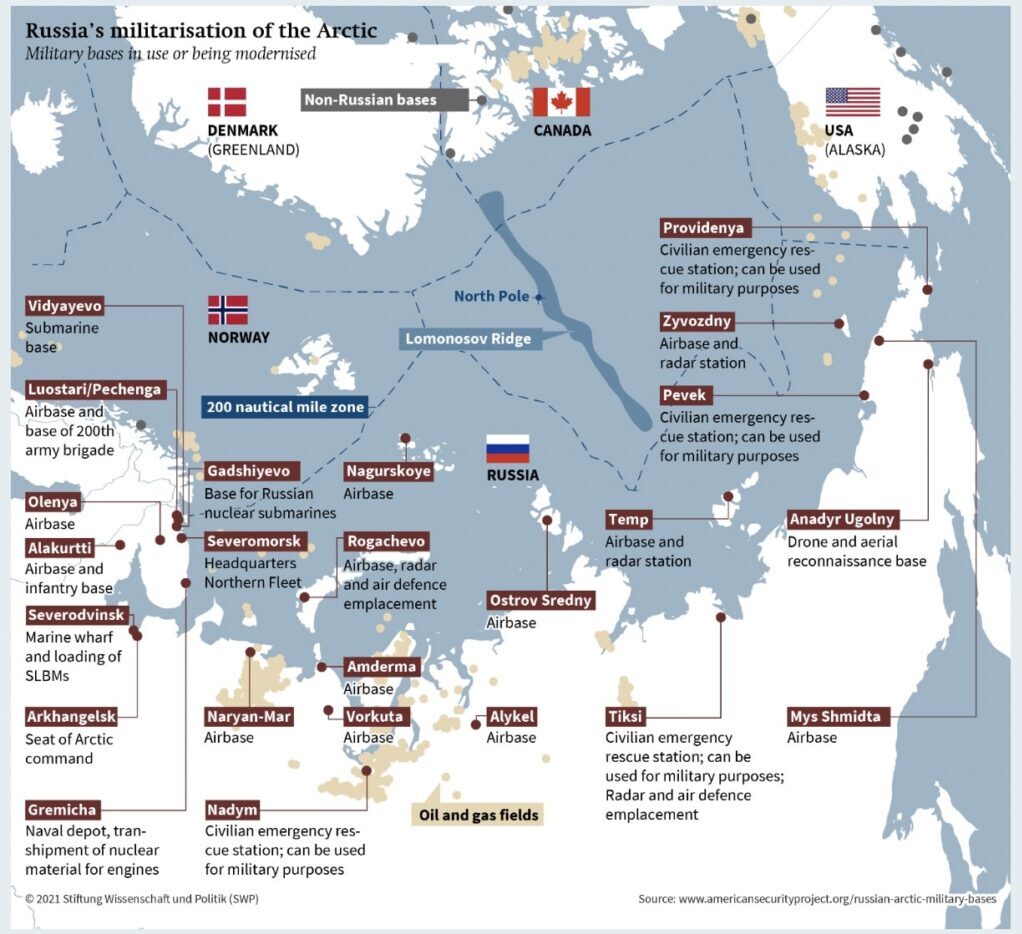
Several nations dominate Arctic security planning. The United States operates critical installations in Alaska. Russia maintains the largest Arctic footprint, stretching across thousands of kilometers of northern coastline. Canada focuses on sovereignty patrols and surveillance, while Norway and Denmark, through Greenland, anchor Europe’s presence. Each state’s investments highlight the rising value of military assets in the Arctic.
Permanent Bases and Forward Infrastructure
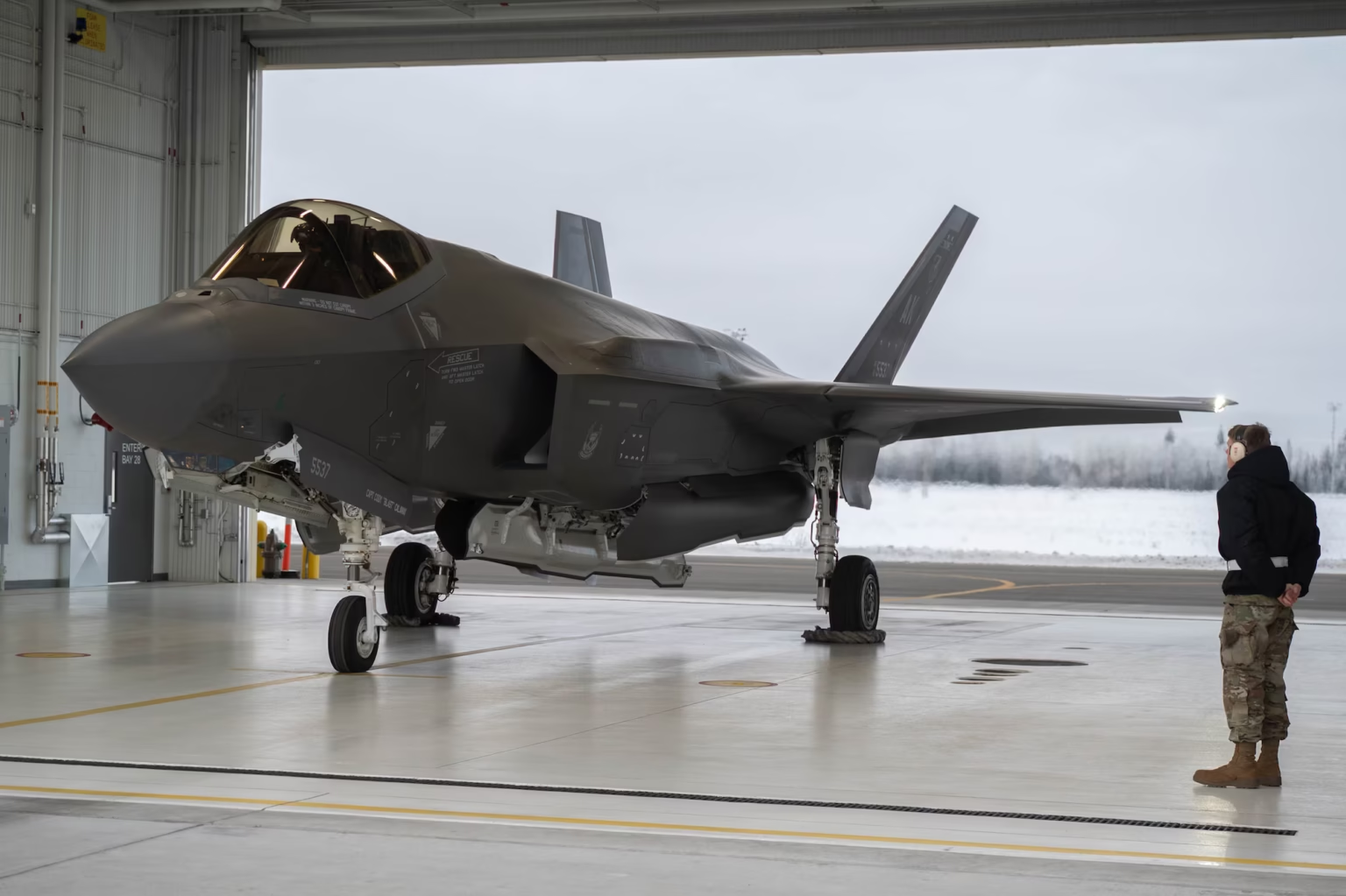
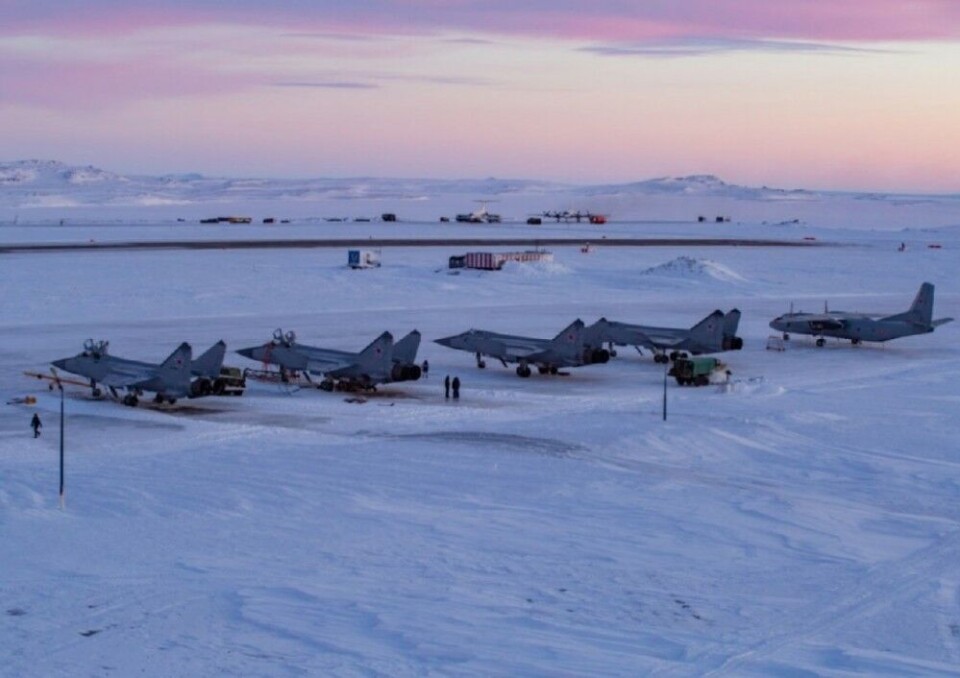
Fixed installations form the backbone of Arctic defense. Russia has reopened and modernized Cold War era airfields and radar stations, creating a chain of facilities across its northern territories. The United States relies on airbases and missile defense infrastructure in Alaska, while Canada emphasizes forward operating locations designed for rapid deployment. European allies maintain strategically placed bases in Scandinavia and the North Atlantic. Together, these sites ensure that military assets in the Arctic can be sustained year-round.
Naval Power Beneath Polar Ice
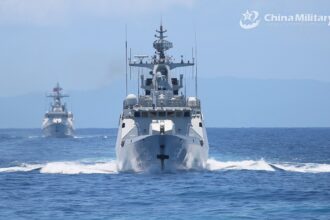
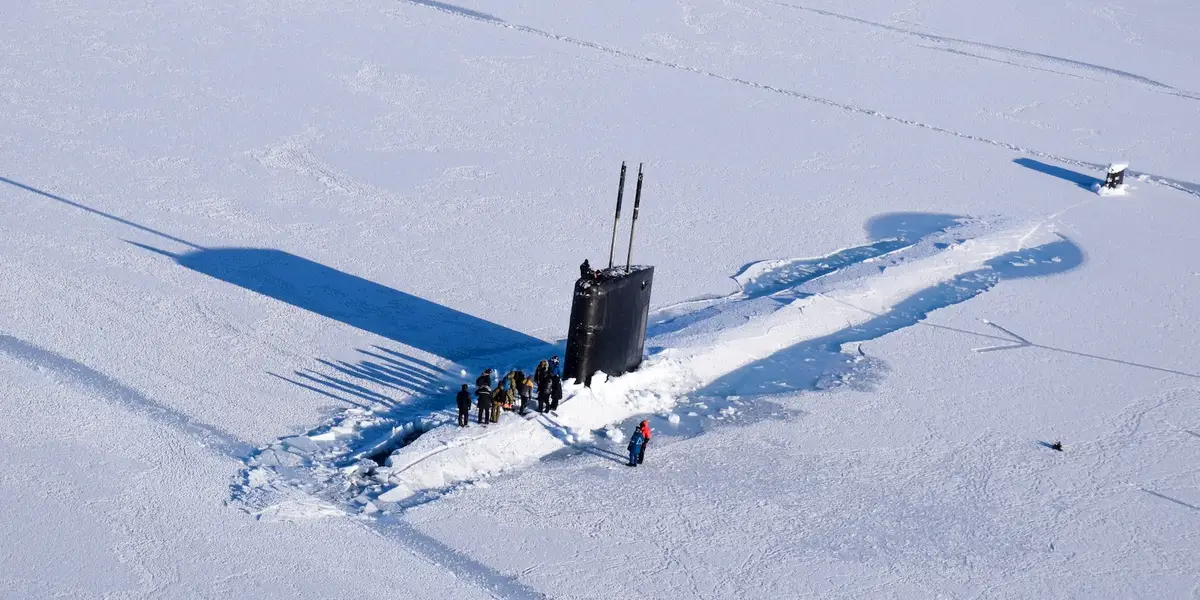
The Arctic Ocean is a domain where stealth defines power. Nuclear powered submarines from major powers patrol beneath thick ice, using the environment as cover for deterrence missions. Surface vessels designed for ice conditions escort patrols and protect sea lanes. Control of Arctic waters strengthens second-strike capability, making naval forces among the most sensitive military assets in the Arctic.
Air Power Across the High North
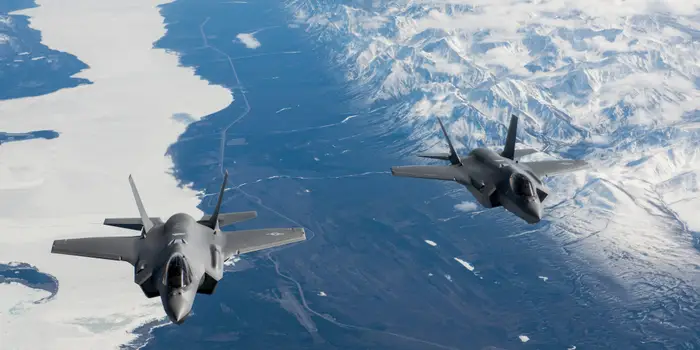
Air operations provide visibility and reach in a region where distances are vast and infrastructure sparse. Fighter jets, maritime patrol aircraft, and strategic bombers regularly operate from northern bases. Early warning aircraft and refueling tankers extend endurance. Integrated radar and satellite networks ensure continuous monitoring, reinforcing how military assets in the Arctic connect directly to continental defense systems.
Missile Defense and Early Warning Systems
Because polar routes offer the shortest paths for ballistic missiles, the Arctic hosts some of the world’s most advanced detection systems. Early warning radars track launches within seconds, while interceptor systems provide a defensive shield. These installations underscore the reality that military assets in the Arctic are central to homeland defense rather than merely regional security.
Icebreakers and Logistical Lifelines
Sustaining operations in extreme cold requires specialized support. Icebreakers clear routes for naval vessels and supply ships, enabling year-round access. Russia leads globally with a powerful fleet, including nuclear powered icebreakers, while the United States and Canada are expanding their programs. Though often labeled as support vessels, icebreakers are indispensable military assets in the Arctic.
Ground Forces and Arctic Expertise
Human presence remains essential. Specialized ground units trained for extreme cold conduct patrols, protect infrastructure, and assist in emergency response. These forces rely on equipment designed for snow and ice mobility and operate in isolated conditions for extended periods. Their deployment ensures that military assets in the Arctic include both advanced technology and trained personnel.
Alliance Operations and Exercises
Multinational exercises demonstrate readiness and deterrence. The NATO regularly conducts large-scale drills in northern Europe, integrating air, naval, and ground components. Russia stages comparable exercises across its Arctic territories. These activities showcase coordination, signaling that military assets in the Arctic can be mobilized quickly if tensions escalate.
Political Signaling and Strategic Messaging
Arctic deployments are rarely neutral. Governments emphasize defensive intentions, yet each new installation or patrol sends a message. One senior defense analyst remarked,
“The Arctic has become a stage where every move is read globally, even when framed as routine security.”
This single observation captures the delicate balance surrounding military assets in the Arctic.
Economic Dimensions of Security
Arctic militarization intersects with economic interests. Shipping lanes reduce travel time between Asia, Europe, and North America. Energy exploration and rare earth minerals attract investment. Infrastructure supporting commerce often overlaps with defense needs, blurring lines between civilian and military use and reinforcing debates around military assets in the Arctic.
Technology Driving Polar Defense
Rapid technological advances are reshaping operations. Unmanned aerial vehicles capable of enduring extreme cold extend surveillance reach. Improved satellites provide constant situational awareness. Secure communications systems ensure command continuity. Technology ensures military assets in the Arctic remain effective despite harsh environmental conditions.
Environmental Constraints and Responsibility
The Arctic’s fragile ecosystem complicates defense planning. Accidents can have lasting consequences. Governments face increasing pressure to balance security objectives with environmental stewardship. How states manage military assets in the Arctic amid climate concerns will influence public support and international cooperation.
Internal Policy Debates
Even among Arctic nations, strategy is contested. Some policymakers advocate restraint and confidence-building measures, while others prioritize deterrence. Budget pressures, public opinion, and alliance commitments shape these debates, influencing how military assets in the Arctic are deployed and justified.
Global Implications Beyond the Polar Region
Decisions made in the Arctic reverberate globally. Missile defense postures affect strategic stability elsewhere. Alliance coordination in the north influences credibility in other theaters. As a result, military assets in the Arctic are now integral to worldwide security calculations.
The Arctic’s Unique Balance of Power
Unlike densely populated regions, the Arctic combines sparse settlements with advanced military technology. This contrast creates a unique security environment where miscalculation can carry out sized consequences. Effective communication and transparency are essential to managing military assets in the Arctic responsibly.
What the Future Holds
Looking ahead, Arctic security is expected to intensify. Improved access will attract more activity, increasing the need for governance frameworks and confidence-building measures. Whether cooperation or competition dominates will depend on how military assets in the Arctic are managed in coming years.
The Arctic as a Defining Frontier of 2026
In 2026, the Arctic Circle stands at the crossroads of climate change and global rivalry. From submarines beneath ice to radars scanning polar skies, military assets in the Arctic shape how nations protect interests and deter threats. Understanding this evolving landscape is essential for grasping the future direction of global security