A senior Kazakh diplomat has shed a light on what it is like to have Russia and China as “neighbours.”
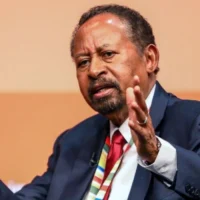
Roman Vassilenko, Ambassador of Kazakhstan to Belgium, EU & NATO, points out that Kazakhstan is located between the two largest countries in the world, by size and population (Russia and China respectively).
He also said that
“after 35 years of independence we have learned to appreciate and adopt a balanced and pragmatic approach to our foreign policy.”
His country, he stressed,
“1st and foremost promotes its own national interest.”
Kazakhstan, he told an audience at the Brussels Press Club Europe, is the 9th largest country in the world by territory though its population numbers only 20million.
He said living next door to such big neighbours like China under-scores the importance of “diplomacy” and that is something his country “has learned over time.”
He noted that, as of 2024, China had become his country’s largest trading partner, overtaking Russia, and said,
“It is obvious they are both important to us, just as is the United States and Europe.
“But as we develop our economy we also see great value in continuing cooperating closely with the EU.”
This, he said, included development of raw materials – his country is rich in raw materials – adding,
“this is a priority for us.”
The ambassador said his country’s “principled political position” and “values” regarding global challenges, including various current wars, has “earned respect.”
Cooperation with the West remains vital to the Kazakh people and its government but was, he added,
“contingent” on it being a prosperous nation.”
He said,
“That is our approach.”
The ambassador was the keynote speaker at an event focusing on EU/Kazakhstan relations. He has served in several senior roles, including as a deputy foreign minister, which makes him well positioned for such a discussion.
He said he wanted to highlight three aspects: to take stock of the ten years that has passed since the EU-Kazakhstan Enhanced Partnership and Cooperation Agreement was signed; to identify new drivers for economic cooperation and,thirdly,to explore priorities in security issues and also for the digital and green transition.
He started by saying his country and the “enjoy a solid, long standing” partnership, “grounded in mutual respect, shared interests and goals and a commitment to a rules based order.”
Referring to the 10th birthday of the agreement, he said his country had been the 1st central Asian state to sign and ratify such a deal which, he noted, spread across 29 areas.
The EU is, he also said, his country’s leading trade and investment partner.
On “challenges” like climate change and regional security, there was also a “dynamic political dialogue” taking place.
He noted that next week Brussels will host the 22nd meeting of the EU-Kazakhstan Cooperation Council, a chance, he said, to
“review the enhanced agreement and our rapidly expanding agenda.”
It was clear, he added, that, despite current economic instability in the world, relations with the EU “growing, were strong and more dynamic than ever.
Trade between the two sides amounted to some $50 bn in 2024 and his country accounted for no less than 90 percent of EU trade with Central Asia.
Since Kazakh independence the EU has invested $200bn in his country’s economy and 4,000 EU firms now operate there.
Particular attention is now being paid to expanding access to the EU market for Kazakh agricultural goods, he said.
“We are a responsible partner for the EU and contributed to Europe’s energy supplies of course.”
Kazakhstan accounts for some 13pc of oil consumption in Europe and 16 pc of its uranium needs, showing it is a “stable pillar” in the EU energy mix.
He also said the Middle Corridor transport route will be a “vital and strategic route, connecting the EU and central Asia.”
“The importance of this will become ever more evident.”
His country, he said,
“serves as a key bridge between the east and west”
with future plans including 13 new transport corridors, 13,000 km of new motorways, expanded air traffic and 5 railway lines carrying overland freight between Europe and Central Asia.
The digital era was also “central to our vision” and the country becoming a “full digital state.”
He said the Middle Corridor has itself already demonstrated “significant” growth, with cargo volumes rising by 62 pc year on year. By 2028 he predicts its capacity will reach some 10 m tonnes pa.
His country, he told the audience, is also a rich source of raw materials, possessing 21 out of 34 of such elements.
He also said that connectivity “is a path to peace” and was more than a mere transport route but also “connects people.”
There are many mutually beneficial aspects, but he wants the EU and member states to move faster and focus on implementing the soft and hard infrastructure plans agreed in 2023.
“We in turn remain committed to work with the EU to ensure the Middle Corridor evolves to be a sustainable artery for regional trade.”
Interparliamentary cooperation between the two continues to “demonstrate our strengthened partnership” and people to people contacts, education, culture and academic work “will be essential for our partnership”.
He also welcomed the tentative EU decision to grant visa facilitation for his country’s citizens as “a significant step.”
He concluded saying the two had
“built a mature, confident partnership, rooted in shared values, and mutual interests and we look forward to the next 10 years and working hand in hand with the EU in nurturing the human bonds that will sustain an ever successful partnership. We also hope to translate these goals into concrete achievements,”
he said.