Moscow (Brussels Morning Newspaper) – The Kremlin stated on Monday that the Ukrainian weekend attack on the Caspian Pipeline Consortium (CPC) infrastructure was outrageous, considering its international importance and the global participation involved.
During a call with reporters, Kremlin spokesman Dmitry Peskov described the Ukrainian attack as “outrageous” and criticised Ukraine’s sea drone attacks on oil tankers in the Black Sea, stating that these actions undermine the interests of Turkey and the vessel owners.
Peskov also confirmed that Russian President Vladimir Putin is scheduled to meet with United States Special Envoy for the Middle East, Steve Witkoff, on Tuesday afternoon. Last week, Peskov mentioned that the Russian government will review the Trump administration’s peace plan and discuss its proposals with Witkoff and the US team.
How did the Ukrainian drone strike damage the terminal?
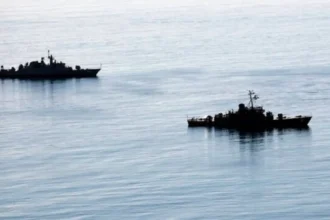
The CPC project, with Russian, Kazakh, and U.S. shareholders, announced on Saturday that one of its three mooring points at the Novorossiysk terminal in Russia was damaged by a Ukrainian drone attack, leading to a suspension of operations.
U.S. oil giant Chevron, a stakeholder in CPC, announced late Sunday that its Tengizchevroil venture’s crude oil loadings are ongoing at the Russian port of Novorossiysk. The consortium claims that neither CPC employees nor contractors were hurt in the attack on the oil terminal.
Preliminary reports state that the emergency protection system shut down the relevant pipelines at the time of the explosion, and no oil has leaked into the Black Sea.
“Shipments at the terminal will be carried out in accordance with established rules once the threats from unmanned boats and drones have been eliminated,”
CPC said.
How are Ukrainian strikes impacting Russia’s refining capacity?
In 2025, Ukraine carried out numerous large-scale drone attacks on Russian energy infrastructure, focusing on export terminals, pipelines, and refineries in an effort to interfere with the oil and gas revenues used to finance the conflict.
Due to these attacks, Russia’s refining capacity has decreased by 10–20%, resulting in domestic fuel shortages and a sharp decline in exports of refined products to levels not seen since early 2022. Naphtha exports fell 43% in October as a result of strikes on facilities like the Kirishi refinery and Ust-Luga terminal. Overall, oil tanker shipments hit 2 million barrels per day in September, the lowest since 2020.