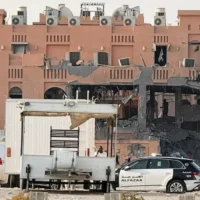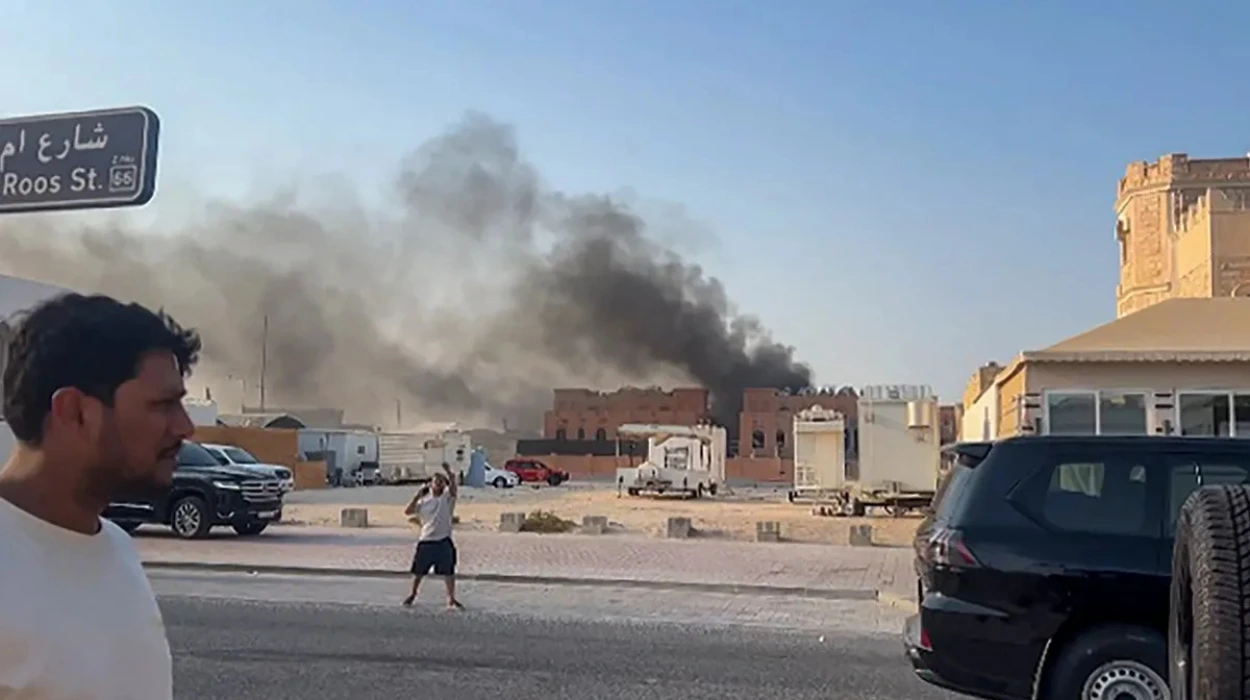
Israel’s recent airstrike on Hamas leaders in Doha, Qatar, has sparked widespread condemnation in Brussels and across Europe. The attack, which occurred on September 9, targeted a Hamas political bureau gathering amid ceasefire talks brokered by the United States.
José CEPEDA, MEP from Spain (Social Democrats), emphasized the EU’s stance on de-escalating the conflict:

“We must stop the escalation of violence in the Middle East. The attack that has taken place on Qatar breaks a basic principle, namely respect for sovereignty, which increasingly distances the possibilities of a just and lasting peace framed in respect for international law and human rights. From the European Union we must take steps towards a solution of coexistence and dialogue that restores peace to the region.”
Hilde Vautmans, MEP from Belgium (Renew Europe), also weighed in, stating:

“Israel’s attack is a violation of Qatar’s sovereignty and risk dangerous escalation in the region. Our priority remains an immediate ceasefire, the release of all hostages, and the rapid delivery of humanitarian aid into Gaza. We must do everything so that the atrocities happening in Gaza do not spread further across the Middle East.”
The airstrike represents a significant escalation, with Israel claiming the operation targeted senior Hamas officials responsible for recent attacks on Israel. Six people were reported killed, including a Qatari security officer, while senior Hamas negotiators reportedly survived the strike.
Qatar condemned the attack as a flagrant violation of international law and suspended its participation in ceasefire talks. The European Union has expressed deep concern over the strike’s impact on regional stability and reiterated calls for diplomatic solutions to end hostilities in the Middle East.
Swedish MEP Evin Incir (S&D) denounced the attack, stressing it violated Qatar’s sovereignty and exposed Israel’s lack of interest in peace.

Israel’s latest attack in Qatar is a grave violation of the country’s territorial integrity. It is yet another example on that the far-right Israeli government doesn’t want a ceasefire.
She added,
The EU must step up its actions to stop further escalation. Momentum towards a ceasefire cannot be lost at this point when famine is spreading in Gaza.
This incident has also fueled deeper discussions within the EU about the bloc’s policy toward Israel amid the ongoing war in Gaza. European Commission President Ursula von der Leyen announced intentions to seek sanctions and consider suspending some aspects of bilateral support to Israel through the EU’s executive mechanisms, reflecting divided opinions among member states but signaling a tougher stance.
Maltese MEP Daniel Attard (S&D) described the strike as a dangerous escalation, highlighting Israel’s widening military actions across the region.

The attack is a dangerous escalation and risks destabilising the entire region. Qatar has now become the sixth (Lebanon, Iran, Iraq, Yemen, Qatar, Syria) country where Israel has carried out military actions since 7 October 2023.
He also criticised the muted response of the international community, calling out silence and inaction as a form of complicity.
The silence and inaction of the international community amount to nothing less than complicity. Enough is enough.
The reactions from Members of the European Parliament and EU officials underscore the growing tensions in Europe over the Middle East conflict, the importance placed on respecting national sovereignty, and the call for renewed diplomatic engagement. With peace talks suspended and military confrontations intensifying, Europe wrestles with balancing its strategic partnerships and the imperative to uphold international law and human rights standards in one of the world’s most fraught regions.