The US-led coalition leaves Iraq on September 30, and Washington has attached a price to the exit: the country’s most powerful militias must hand their weapons to the state by the same day. Two months out, Baghdad is demonstrating the opposite. On Thursday, Prime Minister Ali al-Zaidi, who doubles as commander-in-chief, raised the alert level across Iraq and put his forces on a war footing — not against the remnants of ISIS, but against the possibility that militias funded by his own government could drag the country into a fight.
A week earlier, US and Saudi jets had struck Iran-aligned militia sites on Iraqi soil, answering drones those groups fired at Saudi Arabia. The strikes killed at least 20 fighters from the Popular Mobilization Forces. The deadline built to prove Baghdad controls its territory is arriving as Baghdad proves it does not.
Washington owns this deadline more than Baghdad does. September 30 is the date US troops leave under a 2024 agreement; an Iraqi spokesman, Haidar al-Aboudi, then set the disarmament cutoff for the same day. Withdrawal and disarmament were bundled into one transaction, and its terms were written in Washington. The foreign troops go home — but only after the host government promises to break up the armed groups the US spent two decades fighting.
That is a promise no Iraqi prime minister can keep without a war he has every reason to avoid.
Al-Zaidi, a businessman who took office in May after months of deadlock, made a state monopoly on weapons his signature policy. So did every premier before him. None delivered, because the militias are not outside the state. They sit inside its budget, its parliament and its ministries.
Hayder al-Shakeri of Chatham House puts the politics plainly: the ruling class has little appetite for a confrontation that could bring the government down.
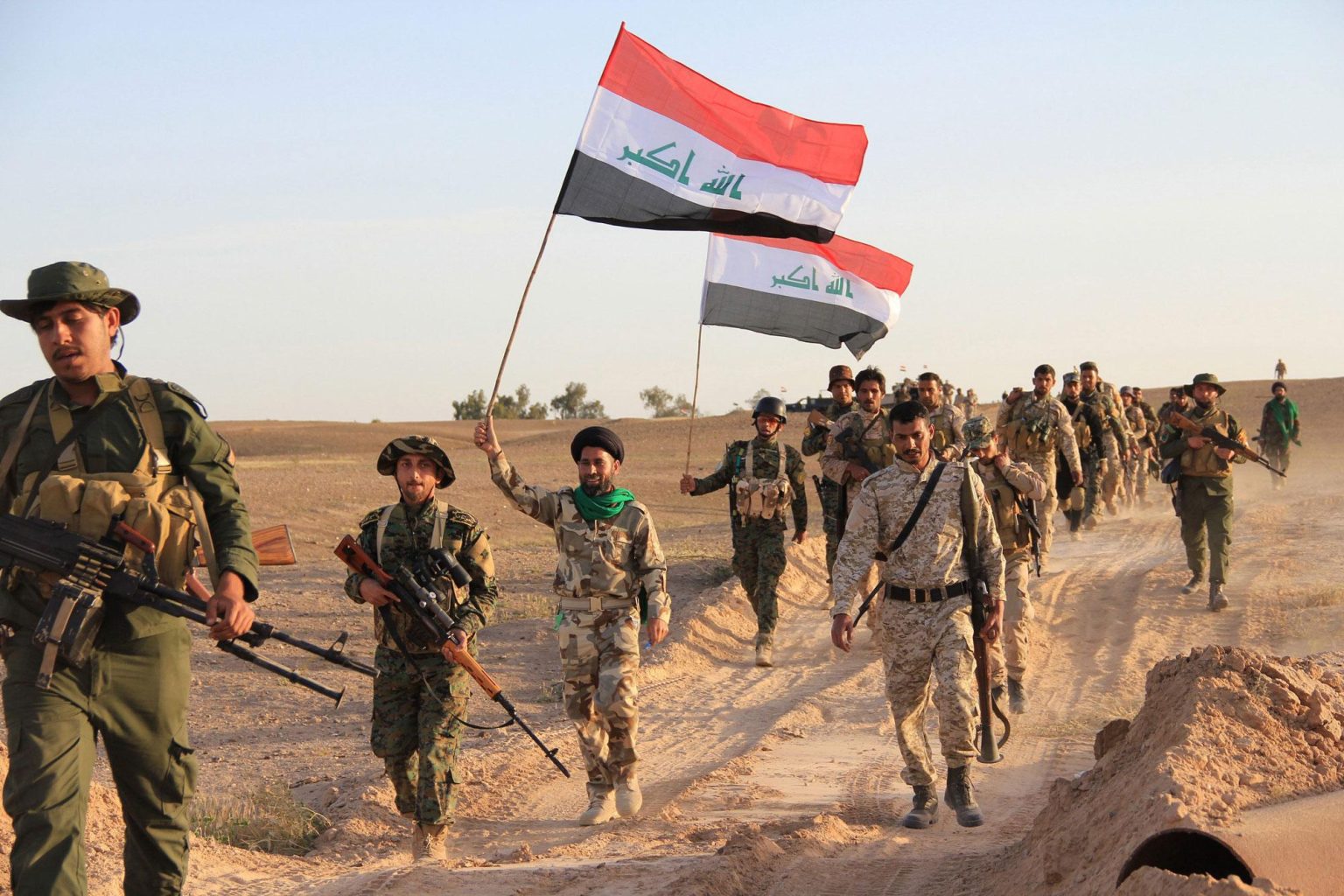
The refusal is loudest where the guns are heaviest. Kataib Hezbollah has rejected the order outright, vowing to keep and expand what it calls its resistance weapons. Akram al-Kaabi, who leads Harakat al-Nujaba and now carries a $10 million US bounty, calls the disarmament drive a project run for Israel and Washington.
Strip away the theology and a real claim survives: the fighters say their weapons come down after the last American soldier leaves, not before. It was a defensible position — until those same weapons started landing on a neighbour.
The legitimacy is not invented, which is what makes the order so hard to enforce. Most of the PMF dates to 2014, when Grand Ayatollah Ali al-Sistani called Iraqis to fight the Islamic State and tens of thousands answered as the regular army dissolved. A decade later, that memory works as armour. When the factions say their guns defended Iraq’s shrines and its people, they invoke a story most Shia Iraqis believe, and dare the government to call it a lie.
Some factions have read the moment and staged a show of compliance. Muqtada al-Sadr folded his Saraya al-Salam into the security forces; Asaib Ahl al-Haq, a US-designated terrorist group, said it would integrate too. Read the fine print and the pledges thin out. Rifles get filmed going into a warehouse; the men, the command chains and the loyalties stay put.
US envoy Tom Barrack has told Iraqi officials that statements of intent will not do, and that the transition has to be verifiable. He is right about the standard and wrong about who can meet it. Verification needs a state strong enough to inspect the very forces that keep it standing. Iraq does not have that state.
The leverage behind the deadline is money. Baghdad wants sanctions relief, investment and its oil revenue — much of it held at the New York Fed — flowing without interruption, and Washington has made militia disarmament the quiet condition.
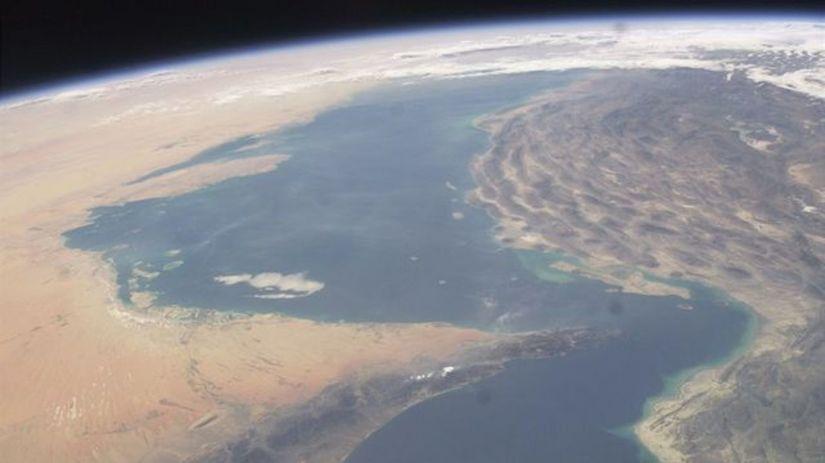
Oil funds roughly 90 per cent of the budget. Since Iran closed the Strait of Hormuz in late February, Iraq’s crude exports have fallen about 75 per cent, according to its oil minister. With the US-Israeli war on Iran in its sixth month and the strait opening and closing like a valve, Washington wants Tehran’s Iraqi allies pinned down before they open a second front.
The Gulf now wants the same thing for its own reasons, and that changes the maths. After drones flew at Saudi Arabia from Iraqi territory, Riyadh joined the US strikes, and Jordan warned it could hit the militias if attacks kept crossing its border.
Hadi al-Ameri, one of the most organised pro-Iran leaders, told his fighters to bite the wound and hold fire. The cross-sectarian bloc that runs the government answered the militias with its own ultimatum: disarm by September 30 or face terrorism charges.
Threats on paper are cheap, and everyone in Baghdad knows it.
So al-Zaidi has three roads and no good one. Enforce the deadline and risk the Shia-on-Shia fighting that has shadowed Iraq since 2003. Let it lapse and confirm the state’s writ stops at the militias’ gate. Or stage a handover convincing enough for Washington and Riyadh and hollow enough to keep the peace at home.
He will take the third road.
What has changed is the audience. A cosmetic handover once only had to fool an American envoy on his way out. Now it has to satisfy a Gulf capital that has already put warplanes over Iraq — and that will be watching the launch sites, not the warehouses.
September 30 will come. The coalition will pack up on schedule, because the date suits Washington whatever the militias do. The weapons will not move, or they will move for the cameras and move back.
The lesson is the uncomfortable one for the country heading out the door. Twenty-two years after the invasion, America can still set the date it leaves Iraq — but not who fires a weapon from Iraqi soil once it is gone.
And that question is now landing on the Gulf.